

Cationic Surfactant

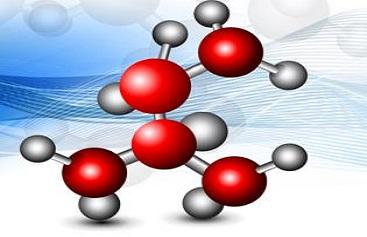
Cationic surfactants are mainly nitrogen-containing organic amine derivatives. Since the nitrogen atoms in their molecules contain lone pair electrons, they can bind hydrogen with hydrogen molecules in the acid molecule and bring the amino group to positive charge. Therefore, they have good surface activity in acidic media; they easily precipitate in alkaline media and lose surface activity. In addition to nitrogen-containing cationic surfactants, there are also a small number of cationic surfactants containing elements such as sulfur, phosphorus, and arsenic.
Palmity Tri-methyl Ammonium Chloride
Chemical Formula: C21H46ClN
CAS No.:112-02-7
Dangerous Grade: Non-dangerous
Stearyl Tri-methyl Ammonium Chloride
Chemical Formula: C21H46ClN
CAS No.: 112-03-8
Dangerous Grade: Non-dangerous
Cationic surfactants have a long history of industrial use, and demand has been increasing rapidly year by year, but due to its special use as fungicides, fiber softeners and antistatic agents, it has a small demand compared to anionic and non-ionic surfactants. The development and use of cationic surfactants in China started very late, but its development rate is faster.However, due to the narrow range of application of cationic surfactants and the small amount of use, the output is very small. Until 2002, the annual output was still only a few thousand tons, which was less than 1% of the total output of various surfactants.
Cationic surfactants generally have good emulsifying, wetting, washing, sterilizing, softening, antistatic and anti-corrosive properties. Due to their special properties and applications, they have a good development potential both in industrial and civil applications.
Cationic surfactants have good bactericidal, softening, anti-static, anti-corrosive, and certain emulsifying and wetting properties, and are often used as phase transfer catalysts. However, such surfactants are rarely used as detergents alone because many substrates are usually negative in aqueous solutions, especially alkaline aqueous solutions. In addition, the main application areas of these surfactants are not like other surfactants, which are used to reduce the surface tension, its structural characteristics make them used for other special aspects. Based on the chemical structure of cationic surfactants, they can be divided into four types: amine salt type, quaternary ammonium salt type, heterocyclic type, and barium salt type.
Nanjing Chemical Material Corporationis one of the best cationic surfactant supplier, which support various industries with superior quality products,including DMC Catalyst,monoammonium glycyrrhizinate, Methyl Iodide,Allyl Glycidyl Ether,glycolic acid, ect.Want to know more, please contact us.
Send product request
Other supplier products
 |
Polyether Polyol 8000 | Features of Polyether Polyol 8000 Product Name: polyether polyol china8000 Chemical Formula: N/A polyether polyol cas number.: N/A Dangerous Gr... |
 |
Phenyltrimethoxysilane | Features of Phenyltrimethoxysilane Product Name: Phenyltrimethoxysilane Chemical Formula: C9H14O3Si CAS No.: cas 2996-92-1 Dangerous Grade: NO Tech... |
 |
3-Methacryloxypropyltrimethoxysilane | Features of 3-Methacryloxypropyltrimethoxysilane Product Name: 3-Methacryloxypropyltrimethoxysilane Chemical Formula: C10H20O5Si CAS No.: 2530-85-0... |
 |
Pesticides | Pesticide is any substance or mixture of substances intended for Preventing, destroying, repelling or mitigating any pest. Use as a plant regulat... |
 |
Ethyl Vinyl Ether | Features of Ethyl Vinyl Ether Product Name: Ethyl Vinyl Ether Chemical Formula: C4H8O CAS 109-92-2 Dangerous Grade: 3 Technical Data of Ethyl Viny... |
Same products
 |
Pleasure Lifting Liquid Sex Toy Room Products Fun Women Pleasure Lifting Liquid | Seller: AmorSerere | **Product Name:** Pleasure Lifting Liquid Sex Toy Room Products Fun Women Pleasure Lifting ... |
 |
Custom Eco-Friendly Personal Lubricant Cylinder Packaging Luxury Kraft Lube OEM | Seller: AmorSerere | **Product Name:** Custom Eco-Friendly Personal Lubricant Cylinder Packaging Luxury Kraft Lu... |
 |
Factory Organic Super Drawing Water-Based Lubricant Enhanced Pleasure Personal Lube | Seller: AmorSerere | **Product Name:** Factory Organic Super Drawing Water-Based Lubricant Enhanced Pleasure Per... |
 |
OEM 60ML Menstrual Cup and Menstrual Disc Lube Gel Personal Lubricant | Seller: AmorSerere | **Product Name:** OEM 60ML Menstrual Cup and Menstrual Disc Lube Gel Personal Lubricant**Mo... |
 |
Flavored Lube 200ml Personal Lubricants Sex Lubricant Flavour Gel | Seller: AmorSerere | **Product Name:** Flavored Lube 200ml Personal Lubricants Sex Lubricant Flavour Gel**Model ... |

