

Silicone and modified silane

Introduction
Silicone and modified silane are adhesives with moderate adhesive strength, high flexibility, and low hardness, mainly used for bonding and sealing.
Silicone and modified silane are both important materials in the field of adhesives, sealants, coatings, and construction materials.
1. Silicone:
Silicones are polymers that include any inert compound with a structure consisting of repeating units of silicon atoms bonded to oxygen atoms (-Si-O-Si- backbone). They can be linear, cyclic, or crosslinked structures. Silicones are valued for their thermal stability, water repellency, flexibility, and chemical inertness. Common silicone products include silicone rubber, silicone oil, silicone resin, and silicone grease. These materials are widely used in sealing, bonding, lubrication, electrical insulation, and protective coatings.
2. Modified Silane:
Modified silanes refer to a category of materials that combine the advantages of both organic and inorganic substances by introducing functional groups onto the silane molecules. The most typical ones are amino-, epoxy-, methacryloxy-, vinyl-, and isocyanate-functional silanes. These modifiers improve the compatibility between inorganic fillers (like glass fibers, silica, or clay) and organic polymer matrices (such as polyethylene, polyester, or epoxy). As a result, they enhance mechanical properties, moisture resistance, electrical properties, and durability of composite materials. In construction, modified silanes are often used as primers or additives to strengthen adhesion between different substrates.
In summary,while silicones offer excellent environmental endurance and elasticity, modified silanes serve as coupling agents or reactive modifiers which bridge the gap between organic polymers and inorganic materials, thus expanding the application scope and performance levels of various composites and formulations.
Send product request
Other supplier products
 |
Composite materials – modified silane sealant | MT-667is a single component sealant based on silane modified polymer, which solidifies into an elastomer by reacting with moisture and has good adh... |
 |
CAS 2417-04-1 4,4′-dihydroxy-3,3′,5,5′-tetramethyl-biphenyl TMDE | Introduction 2417-04-1 – Names and Identifiers Name 4,4′-dihydroxy-3,3′,5,5′-tetramethyl-biphenyl Synonyms T... |
 |
Art Supplies Coloring | Introduction The series of educational and artistic colorants excels in washability on skin and fabrics. They boast a wide spectrum of radiant and... |
 |
Leveling agent STD-2033 | Composition: Polyether modified silicone oil Appearance: light yellow viscous liquid Active ingredient: 100% Solvent: None Application range: ... |
 |
Diacetone Alcohol CAS 123-42-2 | Introduction Products name : Diacetone Alcohol CAS NO. : 123-42-2 Molecular Formula: C6H12O2 Structural formula: Us... |
Same products
 |
Epoxy/Polyester Powder Coatings | Seller: Standard International Group (HK) Limited | Feature: -Good bond ability and mechanical performance -Smooth and glossy -Certified chemical ... |
 |
Polyester Clear Powder Coatings | Seller: Standard International Group (HK) Limited | This series of product are made of polyester resin (as hardener) and highly transparentmaterials.... |
 |
Acrylic Clear Powder Coatings | Seller: Standard International Group (HK) Limited | Feature: -Excellent exterior exposure durability -Excellent durable high gloss -Excellent clar... |
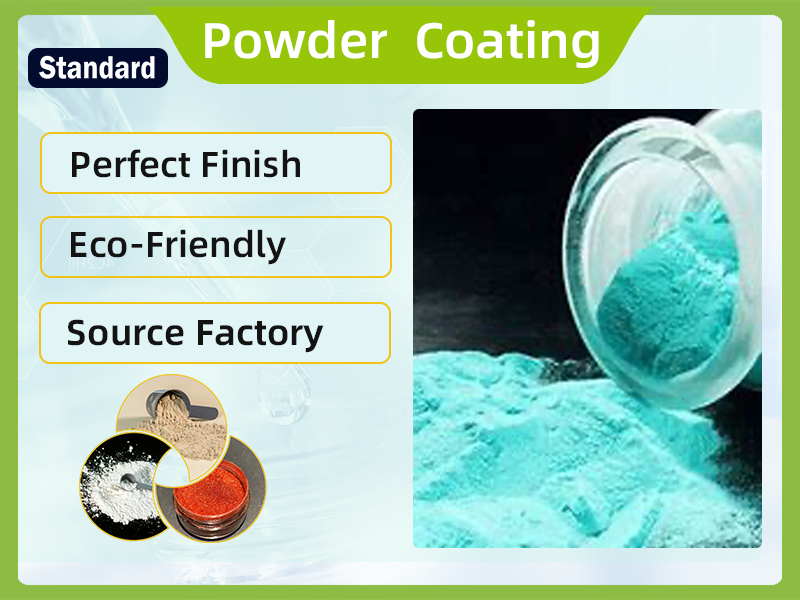 |
Polyurethane Powder Coatings | Seller: Standard International Group (HK) Limited | Feature: -Excellent exterior exposure durability -Good flowing -Excellent chemical resistance ... |
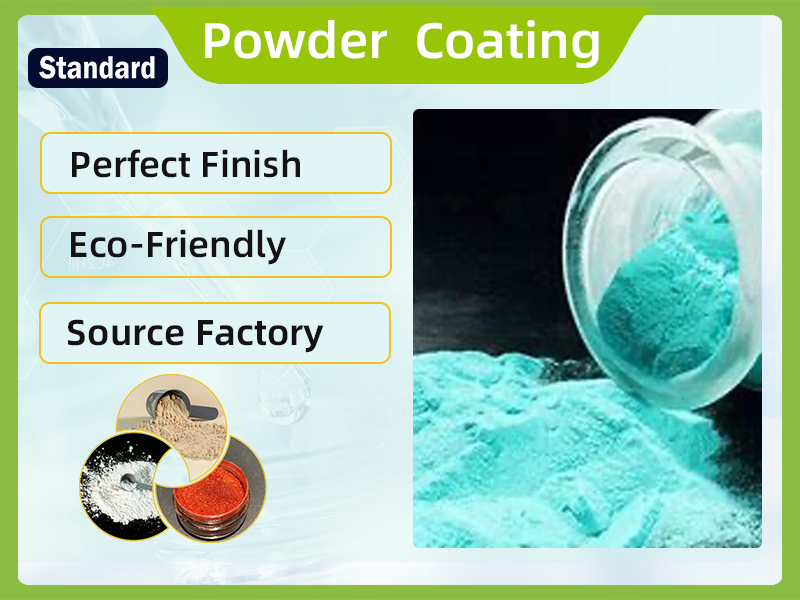 |
MDF Powder Coating | Seller: Standard International Group (HK) Limited | Feature: -Environmental friendly -No solvents and volatile organic compounds involved which are... |

