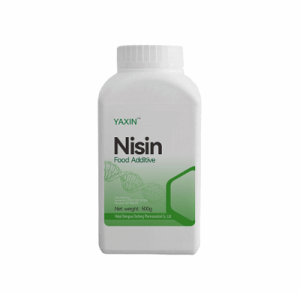
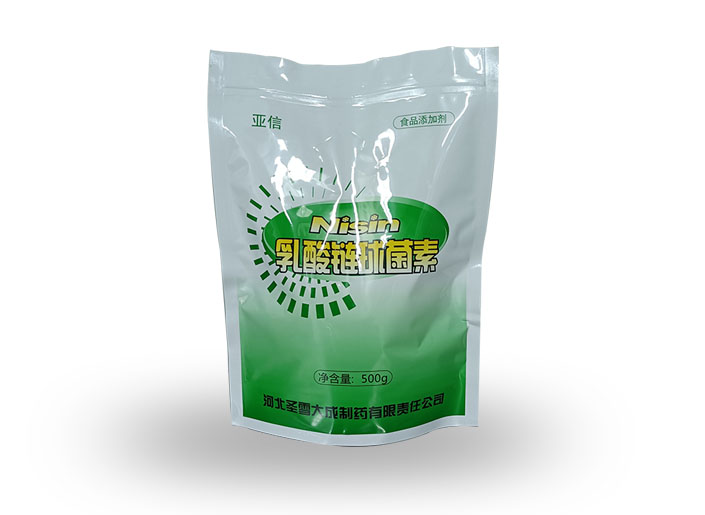
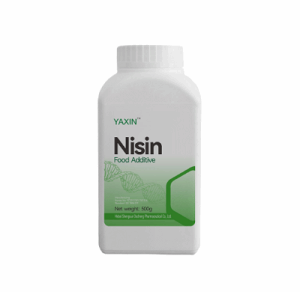
Nisin 500g
Safety risk control and precautions of Nisin
Dosage compliance: The usage limits stipulated in regulations such as GB 2760 must be strictly followed to avoid over-range and over-dose addition (for example, more than 0.5g /kg in meat products may cause a slight bitter taste, but there is no toxicity risk).
Safety of combination use: When combined with other additives (such as citric acid, phosphate), compatibility should be confirmed. For example, Nisin is more active under acidic conditions, but when used in combination with high-concentration calcium salts, it may affect the antibacterial effect (no toxic association).
Microbial drug resistance controversy: Although Nisin may induce drug resistance in some bacteria (such as the drug resistance genes of Streptococcus lactis itself), due to its low dosage and non-long-term continuous exposure, the World Health Organization (WHO) believes that its risk of drug resistance to public health can be ignored.
Other supplier products
|
|
Nisin as a natural antimicrobial peptide |
Nisin, a natural antimicrobial peptide produced by Lactococcus lactis, is widely used in food preservation and freshness retention due to its stron... |
|
|
Natamycin |
New products coming soon! Welcome to inquire and book! Proper storage of natamycin is crucial to maintaining its stability and effectiveness, wheth... |
|
|
Partners, long-term cooperation |
Unlike broad-spectrum preservatives that may disrupt beneficial microbial communities or alter food flavor, nisin exhibits highly specific antibact... |
|
|
Nisin Powder Price |
Nisin’s unique cross-linked structure confers heat resistance, a key advantage for high-temperature processed foods. Its stability under heat... |
|
|
Spectinomycin Hydrochloride and Lincomycin Hydrochloride Soluble Powder 10% 200g |
Product Name: Spectinomycin Hydrochloride and Lincomycin Hydrochloride Soluble PowderMain Ingredients: Spectinomycin Hydrochloride, Lincomycin Hydr... |
供应产品
Same products