

NES 713 Navy Engineering Smoke Toxicity Test Chamber,Ftir and Nbs Smoke Toxicity Test Chamber

Whats/App: +86 156 1874 6768
Web: standard-groups.com
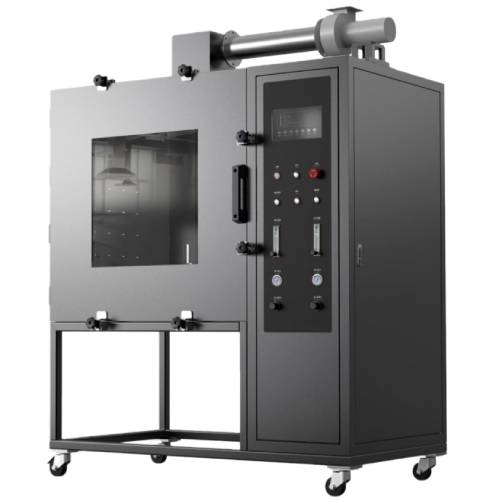
The NES 713 Navy Engineering Smoke Toxicity Test Chamber is a specialized fire testing instrument designed to evaluate the toxicity of combustion products generated by materials under controlled burning conditions. In accordance with the NES 713 standard, the chamber determines the smoke toxicity index produced after the combustion of a 100 g specimen. The system provides a controlled flame source, uniform smoke mixing, and multi-point gas sampling to support accurate assessment of toxic gases released during material combustion. It is widely used in industries with extremely high fire safety requirements, including marine engineering, rail transportation, and aerospace applications.
Application
The NES 713 Navy Engineering Smoke Toxicity Test Chamber is suitable for evaluating the combustion smoke toxicity of a wide range of materials, including but not limited to:
Marine engineering materials (interior panels, insulation materials, coatings)
Shipbuilding cables and cable sheathing materials
Rail transit interior decorative materials and flooring systems
Aerospace structural and cabin materials
Polymer composites and elastomer products
Fire-retardant materials and protective coatings
Typical test products include plastic sheets, rubber components, cable assemblies, composite laminates, and coated metal or non-metal substrates.
Standards
The equipment is designed and manufactured in compliance with the following standard:
(1) NES 713 – Determination of the Toxicity Index of the Products of Combustion from Small Specimens of Materials
Parameters
| Parameter | Specification |
|---|---|
| Flame height | 100–125 mm (blue flame) |
| Maximum hot spot temperature | 1150 ± 25 °C |
| Number of sampling ports | 12 |
| Exhaust capacity | ≥ 50 L/s |
| Gas supply | Compressed air, methane or natural gas |
| Power supply | AC 220 V, 50/60 Hz, 5 A |
| Equipment weight | Approx. 150 kg |
| Overall dimensions | 1.185 (W) × 700 (D) × 2.100 (H) mm |
Features
Rigid steel chamber with reinforced frame construction to ensure long-term structural stability
Large observation window with dark-coated inner walls to clearly observe the combustion behavior of specimens
Inner chamber walls treated with PTFE coating to reduce chemical corrosion caused by combustion gases
Built-in stirring fan to ensure uniform distribution of smoke and combustion gases inside the chamber
Top-mounted exhaust fan with stainless steel exhaust duct, automatically activated after test completion to discharge residual smoke
Integrated industrial design with panel-mounted structure, providing intuitive operation and ergonomic human–machine interface
High-voltage pulse automatic ignition system offering stable ignition performance and enhanced operational safety
Imported K-type thermocouples for accurate and reliable temperature measurement
Adjustable stainless steel specimen mesh tray allowing precise positioning relative to the flame
Imported precision rotameters for accurate control of gas and air flow rates
Branded pressure gauges, pressure regulators, and solenoid valves to control gas pressure and on/off status, ensuring safe operation
PLC and touchscreen control system enabling automatic control, detection, calculation, and data storage
Automatic waste exhaust mode to remove smoke upon test completion according to preset program logic
Manual and automatic test modes selectable to suit different testing requirements
Accessories
(1) Stainless steel adjustable specimen mesh tray
(2) K-type thermocouples
(3) Precision rotameters for gas and air control
(4) Pressure gauge and pressure regulating valve
(5) Stainless steel exhaust duct
(6) PLC controller with touchscreen interface
Test Procedures
1. Pre-Test Preparation
Environment confirmation:
The test area should be an independent, well-ventilated space, kept away from flammable materials and densely populated areas. The floor must be dry and free of standing water. The power supply should be properly grounded and meet AC 220 V, 50/60 Hz, 5 A requirements.
Equipment inspection:
Check all gas pipelines (methane or natural gas) for leakage and confirm the gas cylinder pressure is within 0.2–0.3 MPa. Verify that the exhaust fan and stainless steel exhaust duct are unobstructed and capable of providing an exhaust capacity of at least 50 L/s. Confirm normal operation of the K-type thermocouples, rotameters, and PLC touchscreen with no alarm indications. Ensure proper door sealing, intact polycarbonate observation window, and undamaged PTFE inner wall coating.
Safety protection:
Operators should wear high-temperature resistant gloves, safety goggles, gas masks equipped for CO and HCN protection, and safety shoes. A portable multi-gas detector (monitoring O₂, CO, HCN, NOₓ) and an emergency eyewash station should be available on site.
2. Specimen Installation
Specimens should conform to NES 713 requirements, typically measuring 100 mm × 100 mm with a thickness not exceeding 10 mm. Cable materials may be fixed using a coiled arrangement. No more than three specimens should be tested in a single run, evenly distributed on the stainless steel mesh tray to avoid flame obstruction. Adjust the tray position so that it is located directly above the burner, with a distance of 100–125 mm from the burner nozzle to ensure full flame coverage on the specimen underside.
3. Ignition and Test Execution
Close the chamber door and confirm the locking mechanism is engaged. Select “Automatic Mode” on the control screen and start the test. The system will automatically perform high-voltage pulse ignition for approximately three seconds, followed by flame stability detection. If a stable flame is not detected within five seconds, re-ignition will be attempted automatically, up to three times. The combustion process typically lasts 10–15 minutes, during which the internal fan continuously mixes smoke to maintain uniform concentration.
4. Gas Sampling
Gas sampling begins at the fifth minute after ignition and continues until the end of combustion. Twelve dedicated sampling ports are used to connect gas detector tubes (for gases such as HCN, CO, and HCl) or online gas analyzers. Each sampling port is equipped with an independent flow meter, with the sampling flow rate controlled at no more than 1 L/min to avoid negative pressure interference. After sampling, tubes are sealed immediately, labeled with time and port number, and sent for quantitative laboratory analysis.
Maintenance Information
Regularly inspect gas pipelines, solenoid valves, and pressure regulators to ensure leak-free operation. Clean the specimen tray and inner chamber surfaces after each test to prevent residue accumulation. Periodically check the condition of the PTFE inner wall coating and replace or repair it if damage is observed. Verify calibration status of thermocouples and rotameters according to laboratory quality requirements. Ensure the exhaust system and stirring fan remain unobstructed and operate smoothly.
Conclusion
The NES 713 Navy Engineering Smoke Toxicity Test Chamber provides a reliable and standardized solution for assessing the toxicity of combustion products from materials used in high-risk fire environments. With precise flame control, uniform smoke mixing, multi-point gas sampling, and automated control functions, the system ensures accurate evaluation of smoke toxicity indices in strict accordance with NES 713 requirements, supporting safety-critical material selection and certification.
在线联系供应商
Other supplier products
 |
UL 94 Vertical Flammability Test Equipment Supplier | Get a quote: Whats/App: +86 156 1874 6768 Web: standard-groups.com E-mail:info@standard-groups。com Parameter: Item Parameter Inner... |
 |
Professional Universal Abrasion Resistance Tester for Quality Control Laboratories | Get a quote: Whats/App: +86 156 1874 6768 Web: standard-groups.com Features 1. Fully automatic testing mode with automatic counting, automatic ... |
 |
Air Filter Flow Resistance and Efficiency Test Machine | Get a quote: Whats/App: +86 156 1874 6768 Web: standard-groups.com The Filter Flow Resistance Test Bench is designed to evaluate the differentia... |
 |
Robotic HEPA Filter Scanning System, ULPA Leak Detection Tester Manufacturer | Get a quote: Whats/App: +86 156 1874 6768 Web: standard-groups.com E-mail:info@standard-groups。com Parameters ParameterSpecification ... |
 |
Aluminum Tube Internal Coating Continuity Tester | Whats/App: +86 156 1874 6768 Web: standard-groups.com The continuity tester for the inner coating of aluminum tubes is an important device specif... |
Same products
 |
不锈钢焊剂芯焊丝 E308T1-1 E308HT1-1 E308LT1-1 用于304不锈钢焊接的气保焊丝 | 卖方: 863048 | 产品描述 不锈钢药芯焊丝 E308T1-1 E308HT1-1 E308LT1-1,FCAW不锈钢焊丝,AWS A5.22药芯焊丝,304不锈钢焊接耗材,低碳不锈钢药芯焊丝,耐高温不锈钢焊丝,... |
 |
E317LT1-1 焊剂芯线 CO2 不锈钢焊剂含量70% 直径1.0/1.2/1.6mm OEM定制 1200℃熔点 | 卖方: 863048 | 迅卓不锈钢药心焊丝 E317LT1-1 分类: Сварочная проволока E317LT1-1 с флюсом, нержавеющая сталь, 70% содержан... |
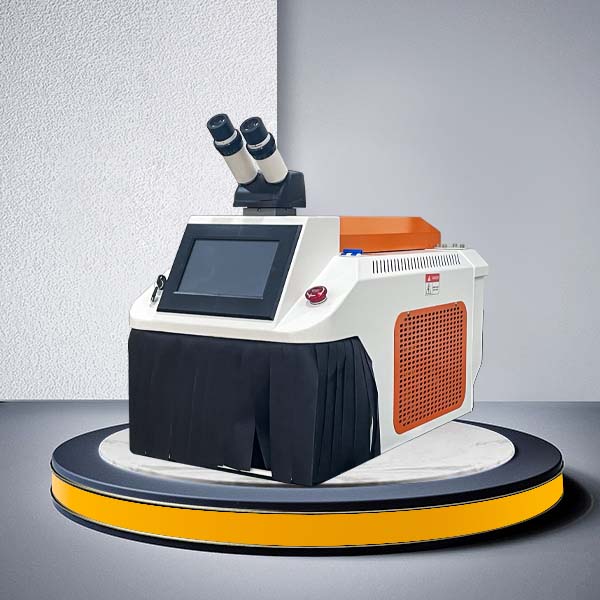 |
Mini Jewelry Laser Repair System – 60W to 400W Precision Welding | 卖方: Beijing JCZ Technology Co., Ltd | The Mini Jewelry Laser Welding Machineis an advanced mini laser welding system engineered for pre... |
 |
Portable Backpack Laser Cleaning Machine – Lightweight, Efficient Rust & Paint Removal | 卖方: Beijing JCZ Technology Co., Ltd | TheHCP-M SeriesBackpack Laser Cleaning Machinefeatures a compact pulsed fiber laser system, desig... |
 |
Suitcase Pulsed Laser Cleaning Machine | Ultra-Portable Handheld Fiber Laser Cleaner | 卖方: Beijing JCZ Technology Co., Ltd | The Suitcase Pulsed Laser Cleaning Machineis an ultra-portable, high-precision handheld fiber las... |

