Improve the processing efficiency of silicon wafers with titanium carbide powder

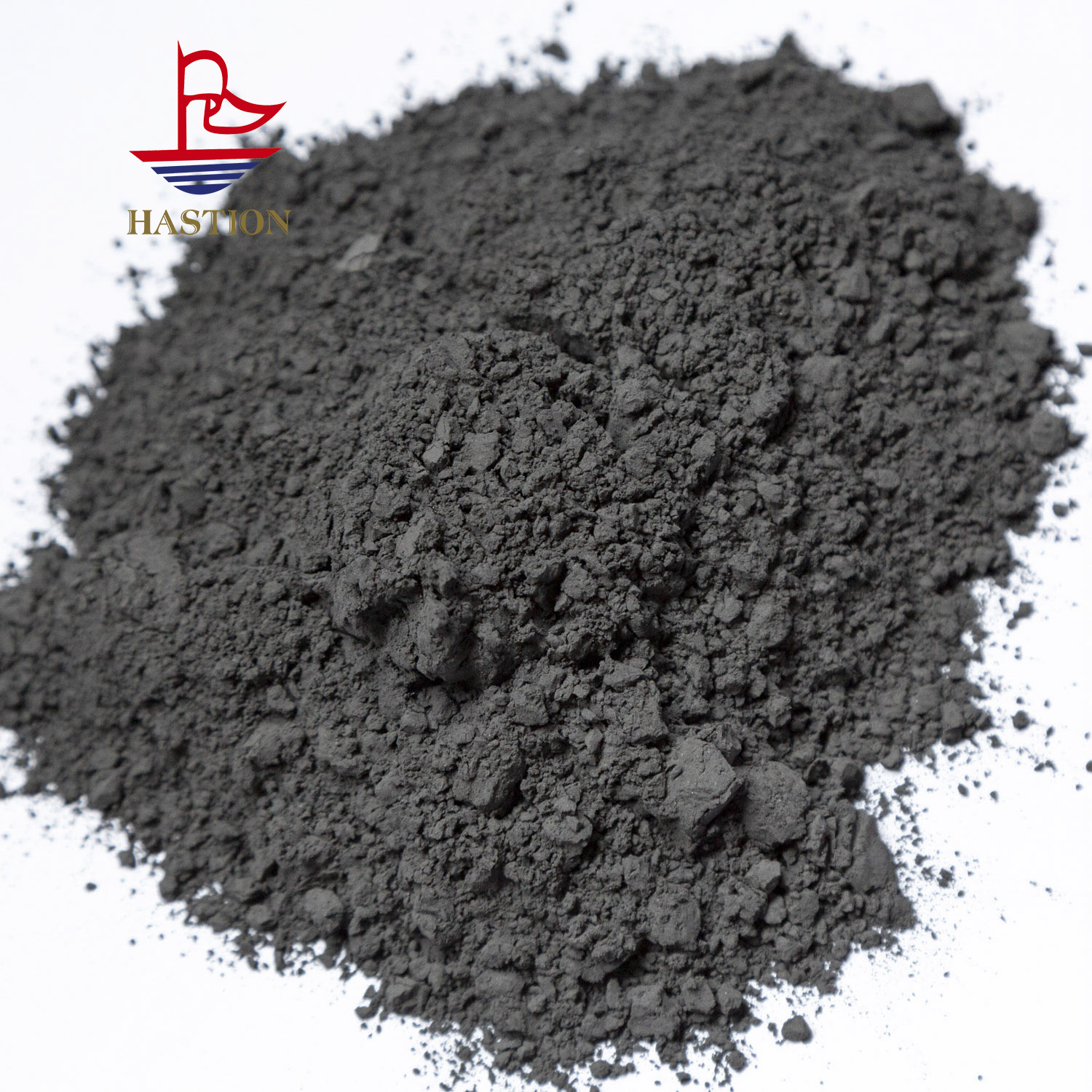
Titanium carbide powder can be mixed with other carbide powders (such as tungsten carbide and vanadium carbide) to form multi-component composite powders and customize materials with different properties. For instance, after adding 10% tungsten carbide powder, the flexural strength of the sintered body can be increased by 15%, making it suitable for manufacturing parts that bear impact loads. There are various methods for preparing powders, including carbothermal reduction and vapor deposition. Among them, the powder produced by carbothermal reduction has a relatively low cost and is suitable for large-scale application. In the mold industry, molds made of multi-component composite powders are not only wear-resistant but also impact-resistant, and have a wider range of applications. The particle morphology of this powder is controllable and can be made into spherical, quasi-spherical or irregular shapes to meet the requirements of different forming processes. Spherical powder has good fluidity and is suitable for laser 3D printing. The density of the printed parts can reach 99.8%, and its mechanical properties are comparable to those of traditional sintered parts. The bulk density of powder can be adjusted by particle size. Fine powder has a low bulk density and is suitable for pressing complex-shaped parts. Coarse powder has a high bulk density and is suitable for forming large-sized green bodies. In the field of personalized medical implants, 3D-printed titanium carbide parts are well compatible with human bones, and they are of high strength and light weight. Titanium carbide powder has excellent oxidation resistance. It is not prone to oxidation in the air below 600℃, and the oxidation rate at 800℃ is only 0.01mg/(cm²·h), making it suitable for manufacturing high-temperature wear-resistant components. Coating it on the surface of steam turbine blades can resist the erosion and oxidation of high-temperature gas, thereby extending the service life of the blades. The powder has a high grinding efficiency and can be used to make abrasives. When grinding hard alloys, its efficiency is twice that of alumina abrasives. In the processing of optical glass, the grinding tools made of this powder can ensure the high smoothness of the glass surface.
Other supplier products
|
|
High-strength titanium carbide round rods |
Titanium carbide alloy rods are alloy rods with titanium carbide as the main component, combining high hardness, wear-resistant properties, good ... |
|
|
Titanium Carbide Powder for Improving Product Performance |
Titanium carbide powder is gray-black ultrafine powder with high purity, uniform particle size, high hardness, high temperature resistance, corro... |
|
|
Spray uniform titanium carbide powder without pores |
Titanium carbide powder has excellent chemical stability. It is insoluble in common acids and bases such as water, hydrochloric acid and sulfuric a... |
|
|
Wear-resistant after-sales worry-free cable production with carbide guide wheel & roller |
A guide wheel is a mechanical element whose main function is to guide and stabilise movement, reducing resistance and ensuring that the equipme... |
|
|
High-quality titanium carbide rods for mining machinery |
Titanium carbide round rods of cemented carbide are high-performance rods made by powder metallurgy process, with titanium carbide as the main hard... |
供应产品
Same products