

Rubber Sleeve Rebound Tester


Get a quote:
Whats/App: +86 185 0176 3615
Web: qinsun-lab.com
The Rubber Sleeve Rebound Tester is designed to evaluate the resilience and compression performance of collection needle rubber sleeves. It measures the force exerted when the needle tube passes vertically through a die hole, providing quantitative data to ensure product consistency and compliance with medical device standards.
Application
The tester is applicable to a variety of medical and laboratory products, including:
(1) Collection tubes and blood sampling needles – assessing rubber sleeve rebound force to ensure secure sealing and consistent operation.
(2) Pre-filled syringes – verifying the compression and resilience of protective rubber stoppers.
(3) Catheter and infusion system components – evaluating the elasticity and durability of rubber components.
(4) Quality control in production – ensuring each batch meets predefined resilience specifications.
(5) Research and development – optimizing rubber formulations for medical applications.
Standards
The Rubber Sleeve Rebound Tester is designed to comply with the following standards:
(1) YY/T 1618-2018: Collection Needle Rubber Sleeve Resilience Test (China)
(2) DIN 53 512: Testing of Rubber – Rebound Resilience (Germany)
(3) ISO 4662: Rubber, Vulcanized or Thermoplastic – Determination of Rebound Resilience
(4) ASTM D7121: Standard Test Method for Rubber Compression Set
Features
(1) Accurate measurement of rubber sleeve resilience at multiple distances.
(2) Adjustable test speed and pressure for various sample requirements.
(3) Real-time display of test force and calculated results.
(4) Onboard printing for test reports, including average values and deviation.
(5) Supports testing of needles and collection tubes with minimal setup.
(6) Compact design suitable for laboratory and production environments.
Parameters
| Parameter | Specification |
|---|---|
| Pressure test range | 0 – 50 N, error ≤ ±1%, resolution 0.01 N |
| Test time | 1 – 999 s, error ≤ ±0.5 s |
| Test speed | 50 mm/min, 80 mm/min, 100 mm/min, error ≤ ±2% |
| Measuring distance | 0 – 50 mm, error ≤ ±0.1 mm |
| Rebound force range | 0.5 – 1.5 N |
| Printing capability | 8, 10, or 13 test data points, including average and deviation |
| Machine dimensions | Customizable depending on model and fixture |
| Power supply | AC220 V, 50 Hz (standard) |
Send product request
Other supplier products
 |
Carbon Arc Aging Tester | Get a quote: Whats/App: +86 185 0176 3615 Web: qinsun-lab.com carbon arc aging chamber is a comprehensive climate testing device mainly used t... |
 |
Double-station Taber abrasion tester | Get a quote: Whats/App: +86 185 0176 3615 Web: qinsun-lab.com Email: serving@qinsun-lab。com Double-station Taber abrasion tester The Taber Abr... |
 |
Air Intake Filter Test System | Get a quote: Whats/App: +86 185 0176 3615 Web: qinsun-lab.com The Air Intake Filter Test System is designed for testing industrial air filters a... |
 |
Rain Test Chamber | Get a quote: Whats/App: +86 185 0176 3615 Web: qinsun-lab.com Email: serving@qinsun-lab。com This instrument can simulate rain horizontally spra... |
 |
Leather edge oil fatigue testing machine | Get a quote: Whats/App: +86 185 0176 3615 Web: qinsun-lab.com Email: serving@qinsun-lab。com Leather edge oil is made of polyvinyl chloride and ... |
Same products
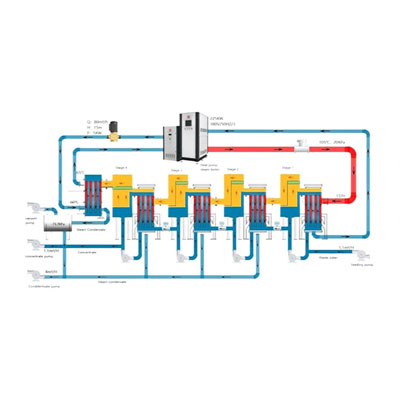 |
PanEVAP & MVR system | Seller: Yangzhou Panstar Heat Exchanger Equipment Co., Ltd | A multiple-effect evaporator is a device that efficiently uses steam heat to evaporate water. Wat... |
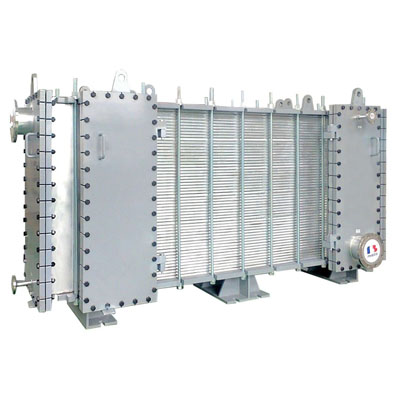 |
PanGAP wide gap welded plate heat exchanger | Seller: Yangzhou Panstar Heat Exchanger Equipment Co., Ltd | PanGAP wide gap welded plate heat exchangerconsists of a welded plate pack with different channel... |
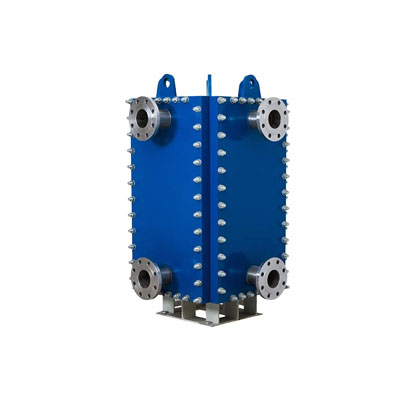 |
PanBloc welded plate heat exchanger | Seller: Yangzhou Panstar Heat Exchanger Equipment Co., Ltd | PanBloc welded plate heat exchangeris compact and efficient, although fully welded, is totally ac... |
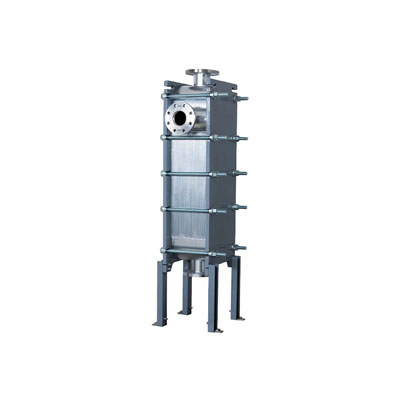 |
PanBox welded plate heat exchanger | Seller: Yangzhou Panstar Heat Exchanger Equipment Co., Ltd | PanBox welded plate heat exchangerconsists of a laser welded plate pack with optimized corrugated... |
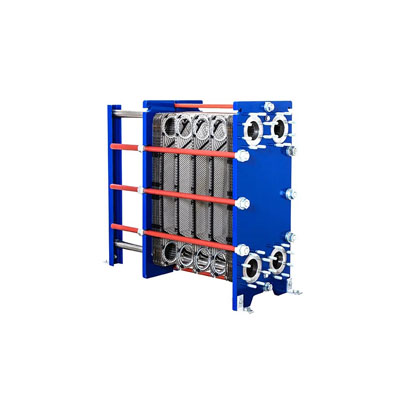 |
PanPHE gasketed plate heat exchangers | Seller: Yangzhou Panstar Heat Exchanger Equipment Co., Ltd | PanPHE gasketed plate heat exchangersare designed with easy access for regular servicing and for ... |

