

Contact heating and cooling tester STD-F7,cold and warm contact feedback analyzer


Whats/App: +86 156 1874 6768
Web: standard-groups.com
The Contact Heating and Cooling Tester (Thermo Labo) evaluates the sensation of coldness or warmth experienced when skin comes into contact with a fabric. This sensation, known as "coldness and warmth feeling," varies depending on the heat transfer from the skin to the fabric. The Thermo Labo measures this sensation by evaluating the qmax value (peak heat flux), providing objective data on the contact thermal properties of textiles. It can also measure thermal conductivity and heat retention properties when equipped with optional accessories, enabling a comprehensive evaluation of fabric thermal comfort.
Application
The Thermo Labo is suitable for testing and evaluating:
Bedding materials designed to provide a cooling effect in summer
Underwear and clothing materials intended for warmth in winter
Textile products where contact thermal comfort (coldness or warmth) is a critical property
Fabrics for both dry skin/clothing conditions and wet/sweaty skin conditions (using wet mode)
Standards
JIS L 1927 — Textiles: Measurement method of cool touch feeling property
GB/T 35263-2017 — Textiles: Testing and evaluation for cool sensation at contact instant
CNS15687 / L3272 — Method of test for the instantaneous cool sensation of fabrics
Technical Parameters
| Parameter | Specification |
|---|---|
| Dimensions (W × D × H) | Thermo Labo: 230 × 360 × 80 mm Amplifier: 180 × 400 × 400 mm Thermo Cool: 180 × 180 × 110 mm Thermo Cool Amplifier: 230 × 310 × 220 mm Wind Tunnel Unit (optional): 460 × 320 × 1100 mm Wind Tunnel Amplifier (optional): 125 × 200 × 100 mm |
| Weight | Thermo Labo: 3 kg Amplifier: 15 kg Thermo Cool: 2.5 kg Thermo Cool Amplifier: 5 kg Wind Tunnel Unit (optional): 7 kg Wind Tunnel Amplifier (optional): 1.3 kg |
| Power Supply | 100 VAC, 50/60 Hz |
| Interface | USB ADPU (optional), Data logger output |
| PC Compatibility | Windows 7 / 8 / 8.1 / 10 (PC optional) |
| Sample Size | 180 × 180 mm (standard) |
| Maximum Sample Thickness | 2 mm |
| Measurement Modes | Dry (direct contact) / Wet (sweaty contact) |
| Optional Accessories | Thermo Cool for heat retention, Wind Tunnel Unit for airflow simulation |
Features
Realistic Contact Simulation:
The heat plate load and contact area mimic the sensation of touching an object with human skin, allowing more accurate measurement of peak heat flux (qmax).
Thermal Conductivity Measurement (Optional):
Evaluates how quickly heat transfers from a heat plate at a constant temperature (30℃) through a sample to another heat plate at 20℃.
Heat Retention Measurement (Optional):
Determines the heat retention rate (%) by measuring heat loss from a sample placed on a heat plate with constant temperature under continuous airflow.
Dry and Wet Mode:
Dry mode simulates contact with dry skin or clothing; wet mode simulates contact with sweaty skin or clothing.
Compact and Flexible Design:
Multiple modules (Thermo Labo, Thermo Cool, Wind Tunnel) allow customization depending on measurement requirements.
Easy Operation and Data Management:
USB and data logger interface enable seamless PC connectivity for data acquisition, recording, and analysis.
Test Principle
The instrument employs heat flux measurement to quantify thermal sensations. The sample is placed between two thermally controlled plates. Heat transfer from the upper plate (simulating skin) to the lower plate is recorded, and the peak heat flux (qmax) is calculated. Optional accessories allow measurement of thermal conductivity and heat retention under controlled airflow conditions.
Operation Instructions
Prepare a flat sample (standard size 180 × 180 mm, thickness ≤2 mm).
Place the sample on the heat plate, ensuring uniform contact.
Select measurement mode: dry or wet.
Set heat plate temperature and number of measurements via touch panel or software.
Start test; the system records qmax and optional thermal conductivity or heat retention data.
Export and save results via PC or data logger.
Ensure safety precautions to avoid burns and maintain stable environmental conditions.
Send product request
Other supplier products
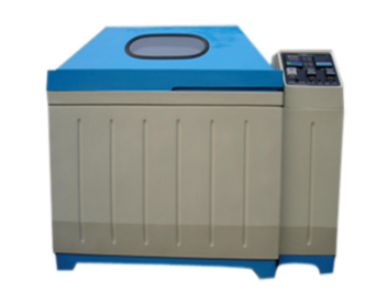 |
SO2 H2S HCL Corrosion Test Equipment | Whats/App: +86 156 1874 6768 Web: standard-groups.com TheSO₂ H₂S HCl Corrosion Test Equipmentis designed to simulate corrosive environments using... |
 |
PV module soiling performance tester factory direct | Get a quote: Whats/App: +86 156 1874 6768 Web: standard-groups.com The test system serves laboratory testing according to VDI 3956 (Test method ... |
 |
Large Corrosion Salt-Spray Walk-In Chamber | Whats/App: +86 156 1874 6768 Web: standard-groups.com Applications 1. Automotive Industry Testing the corrosion resistance of complete vehicles... |
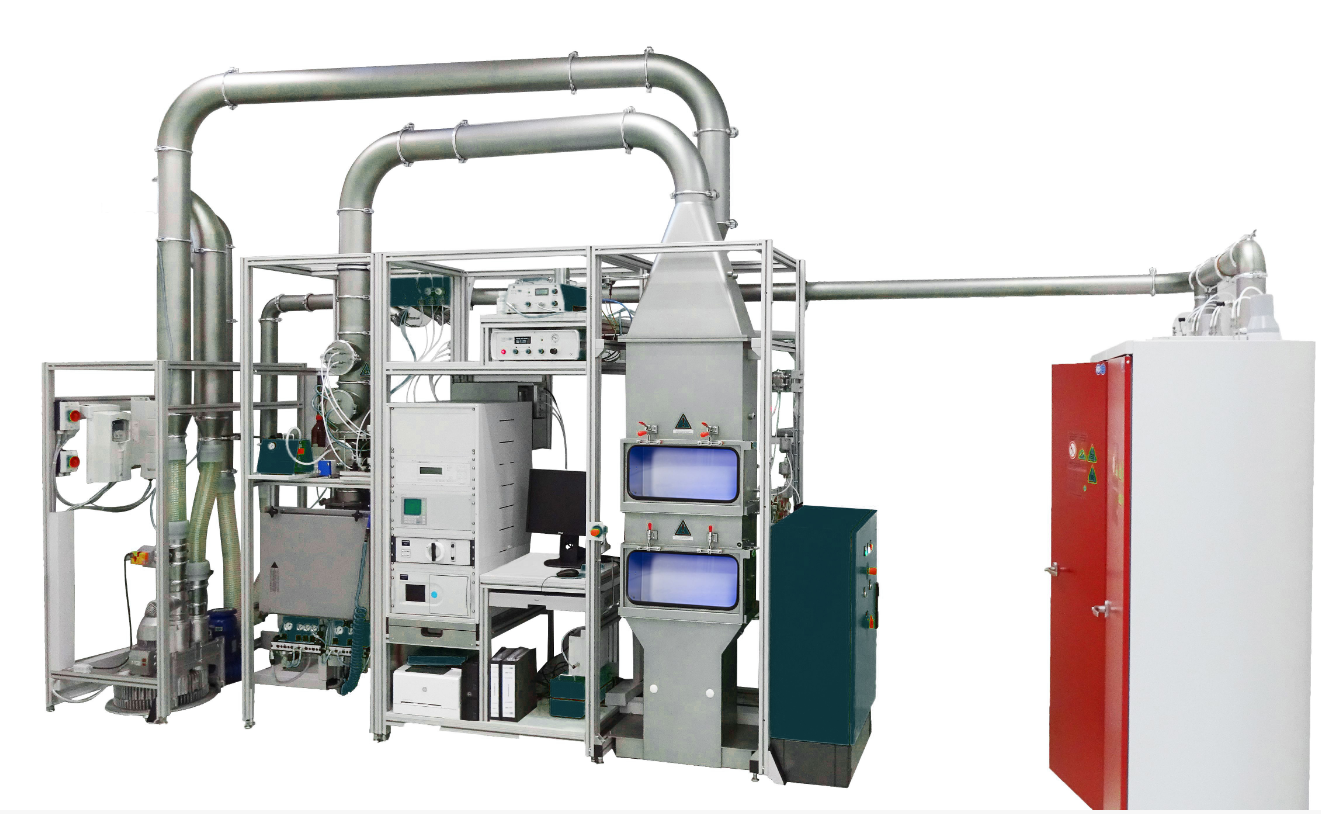 |
Automotive Cabin Air Filter Particle & Gas Adsorption Measurement Equipment | Whats/App: +86 156 1874 6768 Web: standard-groups.com Applications Fractional efficiency according to ISO 11155-1 (DIN 71460-1) Gas adsorption ... |
 |
Retroreflection and Chromaticity Testing Machine | Whats/App: +86 156 1874 6768 Web: standard-groups.com Application The tester is suitable for a wide range of applications: Traffic Safety Mater... |
Same products
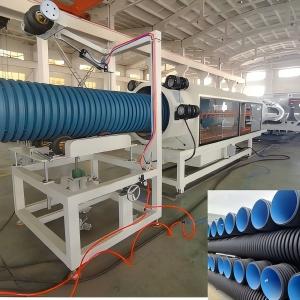 |
HDPE High Speed Water Cooled Double Wall Corrugated Pipe Extrusion Line | Seller: Shandong HUASU Plastic Technology Co.,Ltd. | The molds adopt the double flow channel structure and nitriding polishing processed die head. Thi... |
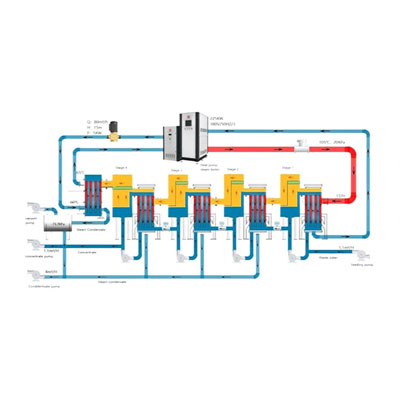 |
PanEVAP & MVR system | Seller: Yangzhou Panstar Heat Exchanger Equipment Co., Ltd | A multiple-effect evaporator is a device that efficiently uses steam heat to evaporate water. Wat... |
 |
PanGAP wide gap welded plate heat exchanger | Seller: Yangzhou Panstar Heat Exchanger Equipment Co., Ltd | PanGAP wide gap welded plate heat exchangerconsists of a welded plate pack with different channel... |
 |
PanBloc welded plate heat exchanger | Seller: Yangzhou Panstar Heat Exchanger Equipment Co., Ltd | PanBloc welded plate heat exchangeris compact and efficient, although fully welded, is totally ac... |
 |
PanBox welded plate heat exchanger | Seller: Yangzhou Panstar Heat Exchanger Equipment Co., Ltd | PanBox welded plate heat exchangerconsists of a laser welded plate pack with optimized corrugated... |

