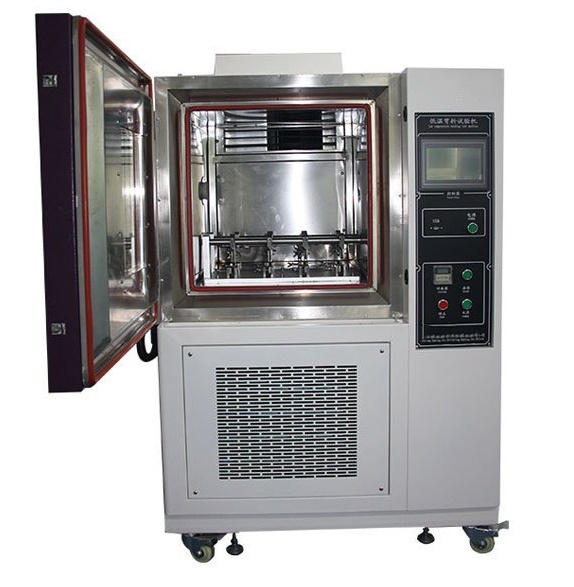
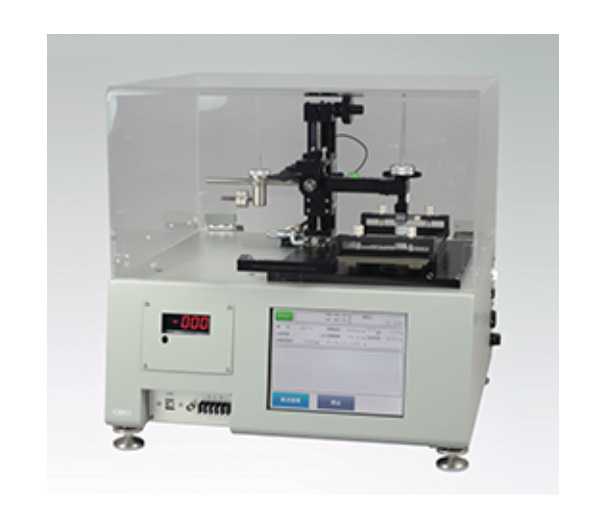
leather crack resistance tester at low temperature


Whats/App: +86 156 1874 6768
Web: standard-groups.com
Applications
Leather Low-Temperature Flexing Tester is used to evaluate the cold resistance and flexing durability of leather and leather-coated materials, assessing their suitability for low-temperature climates or cold regions. Constructed entirely of stainless steel, this machine can be fitted with various fixtures to accommodate different testing requirements.
Standards
QB/T 2714-2018 Leather - Physical and Mechanical Tests - Determination of Flexing Resistance
GB/T 20991:Personal Protective Equipment — Safety Footwear
JIS K6545 Specification for Testing Flexing Resistance (or Flexing Strength) of Leather
ISO 20344:Personal Protective Equipment — Test Methods for Footwear
ASTM D1790:Standard Test Method for Brittleness Temperature of Plastic Materials by Impact
ASTM D1593:Standard Test Method for Resistance to Impact of Plastic Film by the Falling Dart Method
ASTM D1052:Standard Test Method for Measuring Rubber Deterioration — Cut Growth Using Ross Flexing Apparatus
CNS 7705:Footwear — Test Method for Abrasion Resistance of Outsole Materials
Accessories
Main Unit: 1 unit
Flexing Fixture: 1 set
Chinese Instrument Manual: 1 copy
Instrument Warranty Card: 1 copy
Upper Material Low-Temperature Flexing Test Piece: 70×65mm
Product Certificate of Conformity: 1 sheet
Laser Engraving Die Cutter: 1 piece
Product Operation Manual: 1 copy
Delivery Note: 1 sheet
Acceptance Note: 1 sheet
Test Procedures
1. Equipment Preparation
Installation and Calibration: Position the testing machine on a level, stable workbench to ensure no wobbling. Connect the power supply and verify electrical connection. Install the bending die, adjust the fixture position to align with the power output center, and set appropriate clamping force based on specimen thickness.
Environmental Check: Confirm the laboratory environment meets standard test conditions (e.g., temperature, humidity) to prevent external factors from interfering with test results.
2. Specimen Preparation
Cutting and Inspection: Cut specimens according to standards (e.g., ASTM D1790 or QB/T 2714), typically sized 70mm × 45mm or 70mm × 25mm. Inspect edges for neatness, ensuring no notches or cracks, and verify the weathering surface shows no significant defects.
Folding and Securing: Fold the sample 180° with the weathered surface facing outward, aligning edges flush. Secure with clamps or tape to prevent misalignment.
3. Parameter Settings
Temperature Setting: Configure the low-temperature chamber based on material properties (e.g., standard leather or cold-resistant specialty materials). Range typically spans -30°C to -50°C with ±0.5°C temperature control accuracy.
Bending Parameters: Set the bending angle (e.g., 22.5° ± 0.5°) and speed (100 ± 5 cycles/minute) to comply with test standards (e.g., ASTM D813 or ISO 132).
4. Test Execution
Pre-cooling Treatment: Place the specimen and fixture into the low-temperature chamber. Maintain at the set temperature for 1-2 hours to ensure uniform specimen temperature.
Initiate Test: Within 1 second, press the upper plate of the flexing machine to the preset gap. Hold for 1 second before removing the specimen. Start the testing machine and monitor its operation to ensure temperature, speed, and angle align with settings.
Process Monitoring: Continuously check instrument displays. Immediately halt the machine and investigate if temperature anomalies or flexing deviations occur.
5. Result Evaluation
Recovery and Inspection: After the specimen returns to room temperature, examine the bending area with a magnifying glass. Document any cracks, delamination, or fractures. Results are graded as “No Cracks” or “Number of Bends at Crack Occurrence.”
Data Recording: Meticulously log test parameters and defect types for material performance assessment.
Send product request
Other supplier products
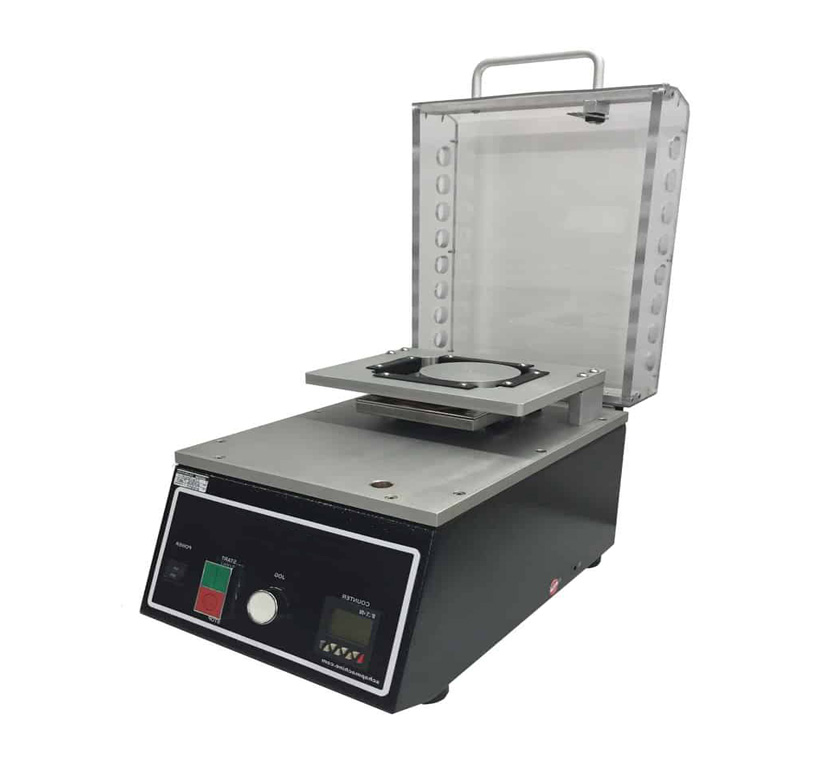 |
Perforated Leather Abrasion Tester,Leather Puncture Abrasion Tester | Whats/App: +86 156 1874 6768 Web: standard-groups.com The Perforated Leather Abrasion Tester is designed to evaluate the abrasion resistance and ... |
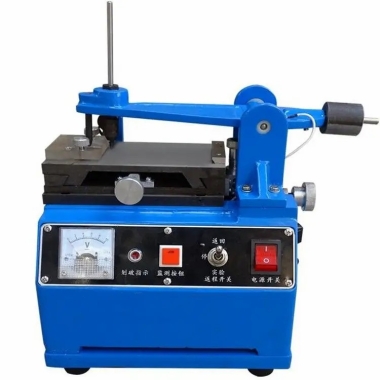 |
Pipe Coating Scratch Resistance Tester (for Pipe coating scratch tester) | Whats/App: +86 156 1874 6768 Web: standard-groups.com Product Introduction: Paint and varnish scratch resistance tester, also known as scratch r... |
 |
Scratch Hardness Testing Machine | Whats/App: +86 156 1874 6768 Web: standard-groups.com Application Primary applications: Quantitative assessment of scratch and surface hardness... |
 |
Carpet tuft length measuring instrument | Standard BS 4223:1989 (British Standard): Specifies methods for determining the pile length of cut-pile carpets, ensuring consistency in quality... |
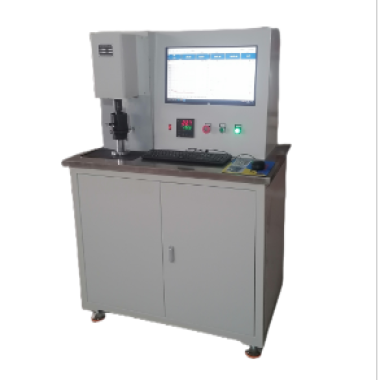 |
Thrust Washer Friction Testing Machine | Whats/App: +86 156 1874 6768 Web: standard-groups.com Applicable standards When the end face rotary friction and wear testing machine is tested,... |
Same products
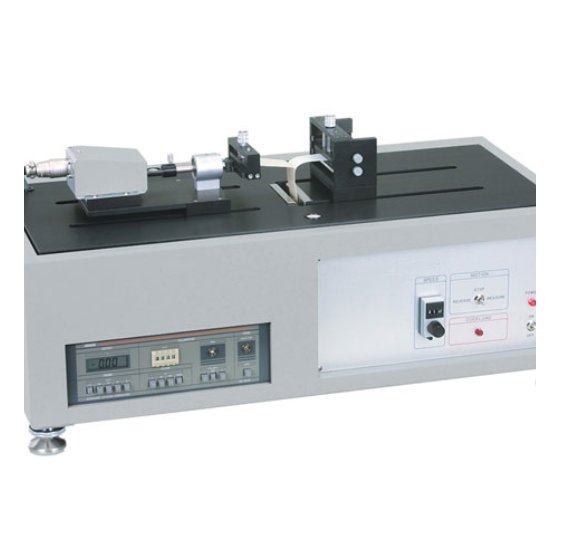 |
Surface adhesion testing equipment factory price | Seller: Standard International Group (HK) Limited | Whats/App: +86 156 1874 6768 Web: standard-groups.com Standards JIS L 1066 (Testing Methods fo... |
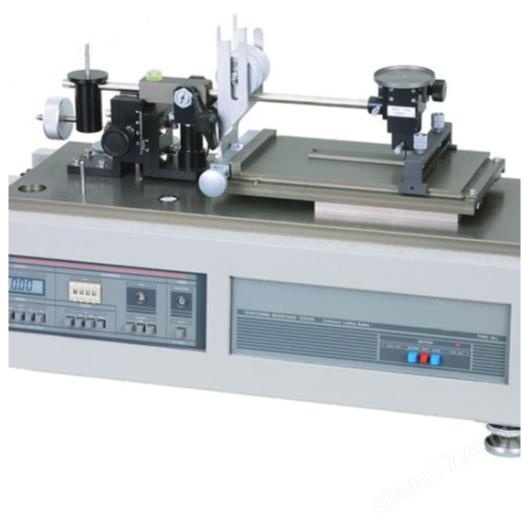 |
Continuous load scratch resistance tester manufacturer | Seller: Standard International Group (HK) Limited | Whats/App: +86 156 1874 6768 Web: standard-groups.com Standards ISO DIS 12137-2 (Plastics &mda... |
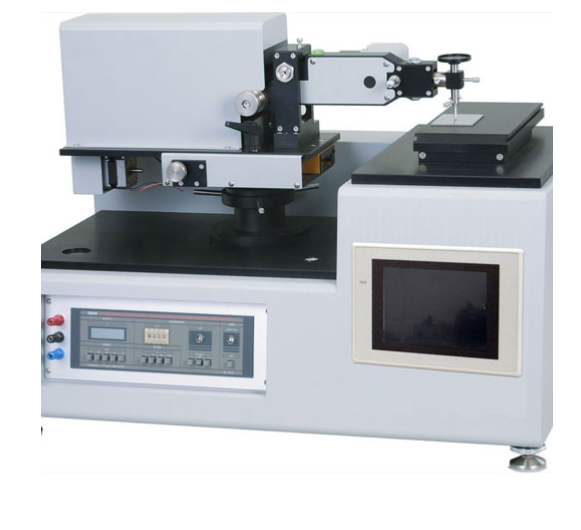 |
High precision continuous load surface tester | Seller: Standard International Group (HK) Limited | Whats/App: +86 156 1874 6768 Web: standard-groups.com Standards GB/T 6040-2008 Test Method for... |
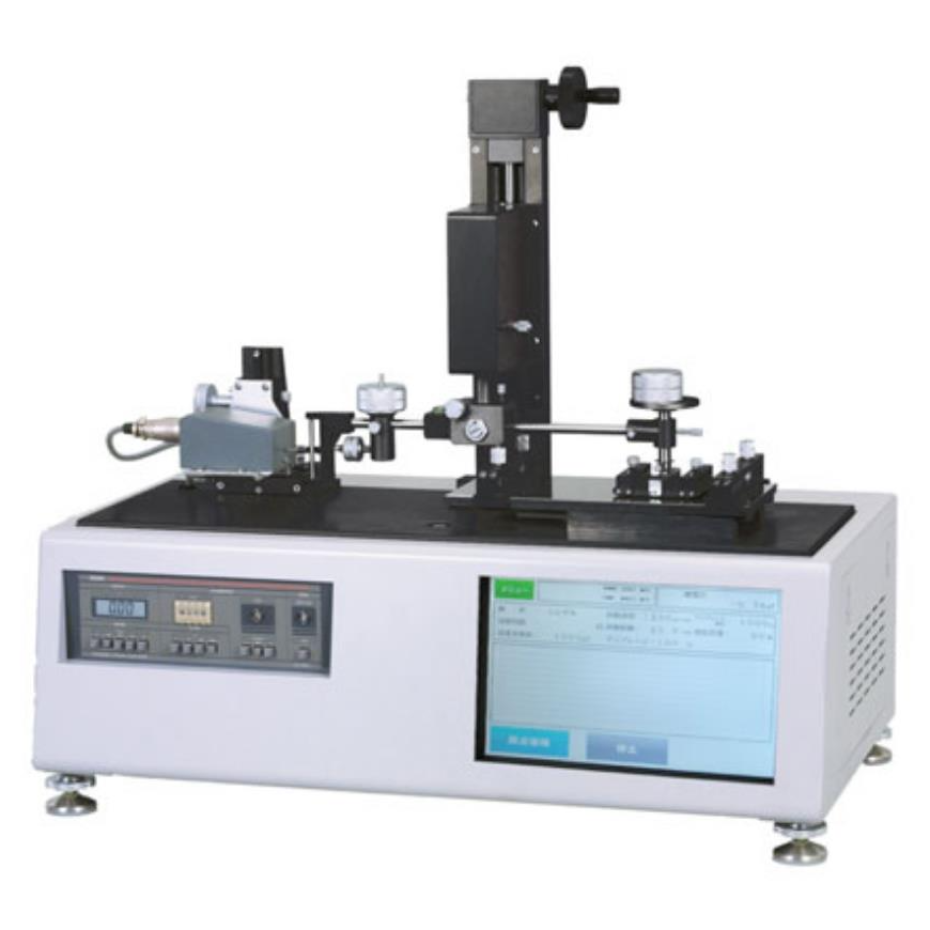 |
Multi-function surface performance test system | Seller: Standard International Group (HK) Limited | Whats/App: +86 156 1874 6768 Web: standard-groups.com Standards GB/T 6040-2008 Test Method for... |
 |
Laboratory tribology research equipment | Seller: Standard International Group (HK) Limited | Whats/App: +86 156 1874 6768 Web: standard-groups.com Standards GB/T 6040-2008 Test Method for... |