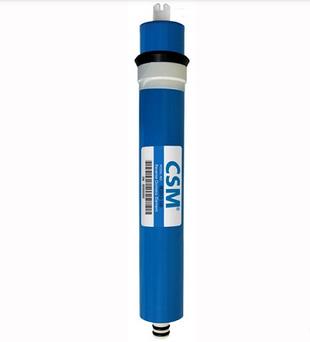
RO Membrane

Membrane Characteristics. Membranes are generally classified as isotropic or anisotropic. Isotropic membranes are uniform in composition and physical nature across the cross-section of the membrane. Anisotropic membranes are non-uniform over the membrane cross-section,Website:, and they typically consist of layers which vary in structure and/or chemical composition. Isotropic membranes can be divided into various subcategories. For example, isotropic membranes may be microporous. Microporous membranes are often prepared from rigid polymeric materials with large voids that create interconnected pores3 . The most common microporous membranes are phase inversion membranes (Figure 2a)3 . These are produced by casting a film from a solution of polymer and solvent and immersing the cast film in a nonsolvent for the polymer. Most polymers used in such applications are hydrophobic, so water is the most common nonsolvent4 . Upon contact with water, the polymer precipitates to form the membrane. Another type of microporous membrane is the track-etched membrane (Figure 2b)3 . This type of membrane is prepared by irradiating a polymer film with charged particles that attack the polymer chains, leaving damaged molecules behind. The film is then passed through an etching solution, and the damaged molecules dissolve to produce cylindrical pores, many of which are perpendicular to the membrane surface. A less common microporous membrane is an expanded-film membrane (Figure 2c)3 . Expanded film membranes are oriented crystalline polymers with voids created by an extrusion and stretching process. First, the material is extruded near its melting temperature using a rapid draw-down rate. Then, the extruded material is cooled, annealed, and stretched up to 300% of its original length. This stretching process creates slit-like pores ranging in size from 200 to 2500 Å. Isotropic membranes can also be dense films which either lack pores or contain pores that are so small as to render the membrane effectively non-porous3 . These films are prepared by solution casting followed by solvent evaporation or melt extrusion. (a) (b) ׀ ׀ ׀ ׀ ׀ ׀ ׀ ׀ 1 µm (c) Figure 2. SEM images showing top surfaces of a) a phase inversion membrane5 , b) a track
Другие товары поставщика
|
|
|
Product DescriptionJBR series small sized seawater desalination equipment is designed not only based on sufficient consideration of the requirement... |
|
|
|
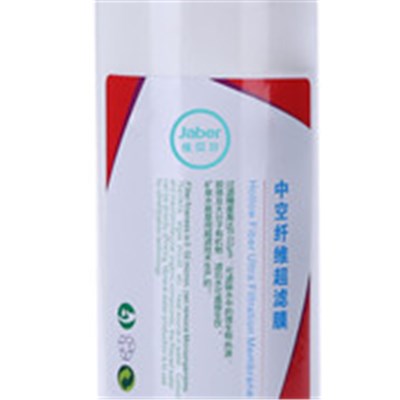
Fuction of filter:1)PPF High quality PP cotton fiber carry on preparing a processing to the running water for getting into filter,Website:, in addi... |
|
|
|
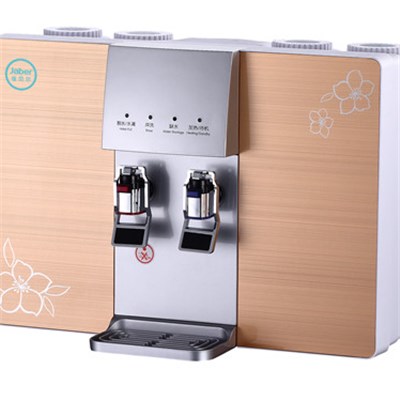
Reverse Osmosis filtration system:JBR-RO-DSimple construction,Website: intelligent, change filter easier.International advanced technology, Five st... |
|
|
|
Detailed Imagesmade of AS and PPfood grade materail NO odor more luster and durable•ideal for a widerange of applications•available with clear styr... |
|
|
|
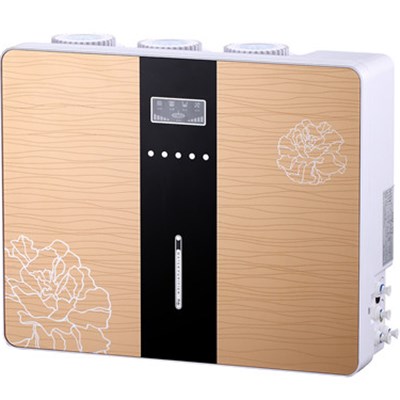
Intelligent water purification system: JBR-RO-E(Golden)Characteristic and Advantage:1)Sturdy and durable membrane’s housing,Website:, Use life more... |
Все товары поставщика
Похожие товары