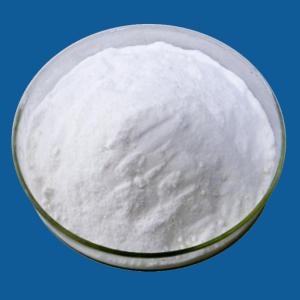
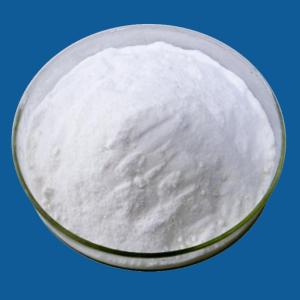
Glycyl-glycyl-glycine

Glycyl-glycyl-glycine, also known as triglycine, is a tripeptide with several practical applications across various fields. Here are its common uses: 1. Biochemical Buffer in Laboratories pH Stabilization: Triglycine is widely used as a buffer in biochemical experiments, particularly in the pH range of 7 to 9. Its amide and carboxyl groups effectively absorb or release protons, maintaining stable pH conditions for enzyme assays, protein purification, and electrophoresis (e.g., SDS-PAGE). Example: It is a key component in buffers for separating proteins by size in gel electrophoresis, ensuring optimal conditions for protein migration. 2. Intermediate in Peptide Synthesis Building Block for Larger Peptides: As a simple tripeptide, triglycine serves as a synthetic intermediate in the production of more complex peptides and proteins. It can be incorporated into longer peptide chains using solid-phase peptide synthesis (SPPS) or solution-phase methods. Research Tool: Scientists use it to study peptide structure-function relationships, such as how chain length affects solubility, stability, or biological activity. 3. Pharmaceutical and Biomedical Research Drug Delivery Studies: Its low immunogenicity and simple structure make it a useful model for studying peptide-based drug delivery systems, such as how peptides cross cell membranes or interact with biological targets. Enzyme Substrate/Inhibitor: Triglycine may be used as a substrate or inhibitor to study protease activity, helping researchers understand how enzymes break down or modify peptide bonds. 4. Cosmetic and Skincare Applications Moisturizing and Stability: In some cosmetic formulations, triglycine is included for its potential to improve skin hydration or stabilize active ingredients. Its small size and water solubility make it compatible with lotions, serums, or creams. Anti-Aging Research: While not a primary active ingredient, short peptides like triglycine are sometimes explored for their role in supporting skin health, though evidence of specific benefits is limited. 5. Nutritional and Food Science Dietary Supplement (Theoretical): As a simple peptide, triglycine could theoretically be used as a nutritional supplement, though it is less common than individual amino acids (e.g., glycine) in this context. Food Preservation: In research, it may be tested for its ability to prevent protein denaturation or microbial growth in food systems, though practical applications are rare. 6. Industrial and Chemical Processes Chelating Agent: Triglycine’s amino and carboxyl groups give it weak chelating properties, allowing it to bind metal ions. This can be useful in processes requiring metal ion removal or stabilization. Solvent Additive: In some chemical reactions, it may act as a co-solvent or additive to improve the solubility of hydrophobic compounds in aqueous systems. Key Advantages for These Uses: Chemical Stability: Triglycine is resistant to degradation under normal conditions, making it reliable for long-term storage and use. Low Toxicity: It is generally non-toxic and has minimal biological activity, reducing risks in laboratory or industrial settings. Simple Structure: Its linear, unbranched design allows for easy manipulation in synthetic reactions or as a model compound in research. While triglycine’s applications are diverse, its role is often as a supporting component (e.g., buffer or intermediate) rather than a primary active agent in most fields.
Другие товары поставщика
|
|
DL-Tryptophan |
DL-Tryptophan, a racemic mixture of L-tryptophan (the biologically active enantiomer) and D-tryptophan, has diverse applications across several fie... |
|
|
Trans-4-[(tert-butoxycarbonyl)amino] cyclohexanecarboxylic acid |
1. Basic Information Product Name: Trans-4-[(tert-butoxycarbonyl)amino] cyclohexanecarboxylic acid CAS Number: 53292-89-0 Aliases: Cis-4-(tert-Buto... |
|
|
L-Cystine dihydrochloride |
L-Cystine dihydrochloride in Food & Health Products IndustryFood nutritional fortifierAdded to beverages, protein powders, infant food, and hea... |
|
|
L-Cystine dihydrochloride |
L-Cystine dihydrochloride in Cell Culture & Biomanufacturing Industry Essential additive in cell culture media Promotes cell growth, protein fo... |
|
|
L-Cysteine S-Sulfate Na |
Carboxylate Group (-COO^-) Reactivity of L-Cysteine S-Sulfate Na The carboxylate group is in a deprotonated state in neutral and alkaline solutions... |
Все товары поставщика
Похожие товары



![Trans-4-[(tert-butoxycarbonyl)amino] cyclohexanecarboxylic acid](/images/products/products_946819_f222fcf9d56af71253e99fe06ba063ba.jpeg)