

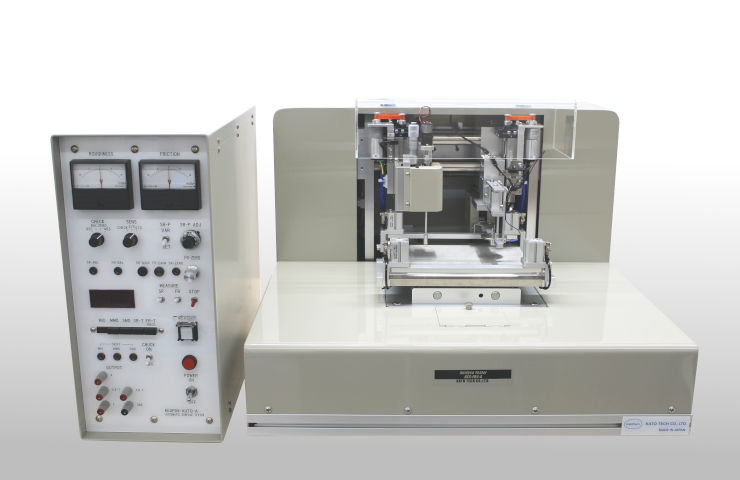
Surface Performance Tester STD-FB4-A,flexible material surface performance tester

Whats/App: +86 156 1874 6768
Web: standard-groups.com
The Surface Performance Tester is a high-precision instrument designed to quantify the surface friction and roughness characteristics of fabrics, paper, nonwoven materials, and films. By simulating the tactile “stroking” motion of artisans and professionals, this device accurately measures friction coefficients, surface roughness, and displacement variations. The results provide objective data for tactile attributes such as fullness, smoothness, and stiffness, making it widely applicable in textile, paper, and film industries for research, quality control, and material evaluation.
Application
The Surface Performance Tester is suitable for a broad range of surface property evaluations, including:
Textile Industry: Surface performance testing of fabrics, fibers, and nonwovens.
Paper Industry: Measurement of surface friction and roughness of various paper types.
Film Materials: Evaluation of friction and roughness of films and membrane-like samples.
Coatings: Assessment of surface friction properties of coated materials.
Polymeric Materials: Surface evaluation of engineering plastics and polymer sheets.
Surface Treatment: Comparison of friction and roughness before and after surface treatments.
Research Institutions and Universities: Study of material tribological properties and surface structures.
Quality Control: Inspection of raw materials and finished products to ensure consistency of surface properties.
Standards
The Surface Performance Tester complies with the following standards:
(1) GB/T 1804 – Test methods for surface friction of textiles
(2) GB/T 12915 – Friction testing of nonwoven fabrics
(3) GB/T 19392 – Friction coefficient testing of paper
(4) ISO 8295 – Determination of frictional properties of textiles
(5) ISO 25178 – Surface roughness measurement
(6) ASTM D1894 – Coefficient of friction of plastics
(7) JIS L 1096 – Friction properties of textiles
(8) ASTM D3354 – Surface friction properties of textiles
Parameters
| Parameter | Specification |
|---|---|
| Testing Methods | Friction measurement, surface roughness measurement, surface displacement measurement |
| Maximum Friction Force | 200 gf |
| Friction Force Accuracy | ±0.5% full scale |
| Surface Roughness Accuracy | ±1.0% full scale |
| Maximum Surface Displacement | 30 mm |
| Surface Displacement Accuracy | ±0.5% full scale |
| Surface Roughness Sensor | Differential transformer |
| Surface Displacement Sensor | Potentiometer |
| Measurement Speed | 1 mm/sec |
| Sensor Dimensions | Friction probe: 10 × 10 mm; Roughness probe: 5 mm width |
| Operating Environment | 20–30°C, 50–70% RH |
| Power Supply | AC 100 V, max 50 W (air compressor 100 W) |
| Dimensions (W × D × H) | 550 × 520 × 420 mm |
| Weight | 50 kg |
Features
(1) Simulated fingertip sensor: Specially designed sensor mimics fingertip load and contact characteristics for accurate friction and roughness measurements.
(2) Multifunctional testing: Combines friction, roughness, and surface displacement measurements for comprehensive surface analysis.
(3) High precision: Ensures reliable, repeatable data for quality assessment and research.
(4) Stability and reliability: High-stability measurement system minimizes errors and environmental interference.
(5) Environmental adaptability: Operates across a wide range of temperature and humidity conditions.
(6) Automated operation and analysis: Integrated software provides real-time display, storage, and analysis of test data.
Accessories
(1) Main unit: Surface Performance Tester
(2) Friction sensor: Measures friction force and coefficient
(3) Roughness sensor: Measures surface roughness
(4) Displacement sensor: Measures surface displacement and deformation
(5) Optional pneumatic system: Provides additional load adjustment
(6) Optional air compressor: Supports air pressure requirements during testing
(7) Consumable probes: Interchangeable according to sample material or shape
Test Procedures
Sample preparation: Prepare and clean the sample surface, ensuring it is free of contaminants.
Device setup: Fix the sample on the platform and set test parameters (friction, roughness, displacement).
Testing: Start the device and monitor real-time contact between sensors and sample.
Data collection: The system captures friction, roughness, and displacement data, generating curves in real time.
Data analysis: Analyze and save the results for comparison and reporting.
Maintenance Information
Regularly clean sensors and sample platform to avoid dust accumulation.
Verify calibration of friction and roughness sensors periodically.
Ensure stable power supply and environmental conditions during operation.
Inspect mechanical parts and replace worn probes as needed.
Avoid exposure to excessive humidity or temperature extremes.
Отправить запрос, связаться с поставщиком
Другие товары поставщика
 |
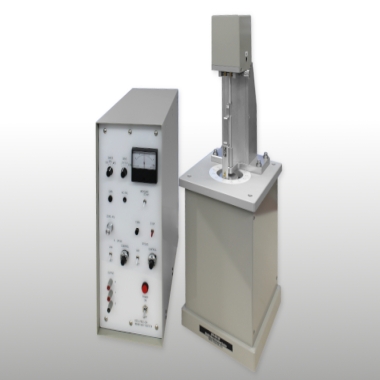
High Precision Automotive Electrical Wire Gas Corrosion Test Equipment OEM Supplier | Get a quote: Whats/App: +86 156 1874 6768 Web: standard-groups.com Features 1. The chamber is molded from epoxy fiberglass. Asbestos board is p... |
 |
Single - Strand Bending Tester STD - FB2 - SH | Whats/App: +86 156 1874 6768 Web: standard-groups.com Standards ASTM A370. ASTM A416. ISO6934.4 The Single Fiber Bending Tester makes it possib... |
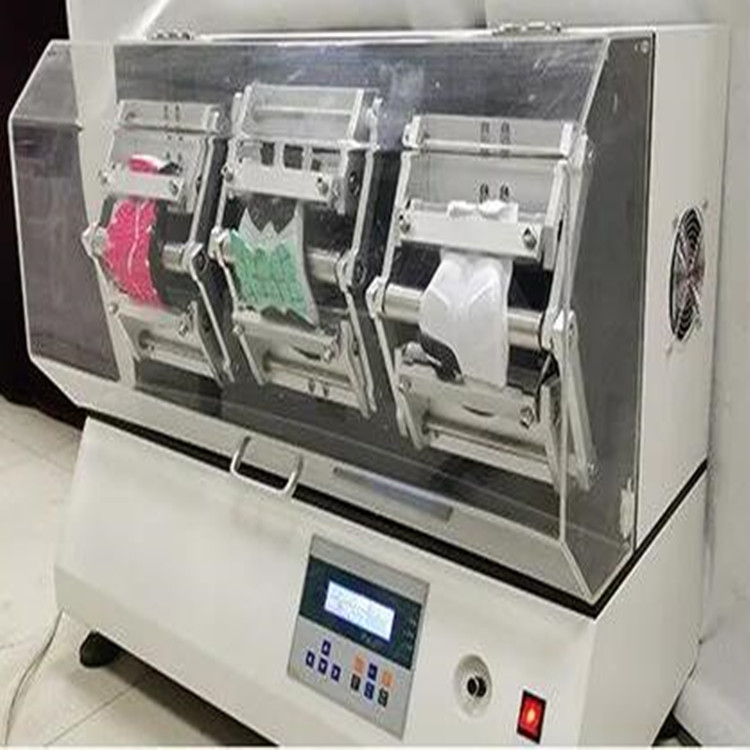 |
EN sole bending tester | Whats/App: +86 156 1874 6768 Web: standard-groups.com The EN Sole Bending Tester is designed to assess the bending resistance and zigzag durabili... |
 |
Automotive Wire Insulation Manual Bend Test System Factory Direct | Get a quote: Whats/App: +86 156 1874 6768 Web: standard-groups.com Parameters ParameterSpecification Clamp Type Manual Clamp S... |
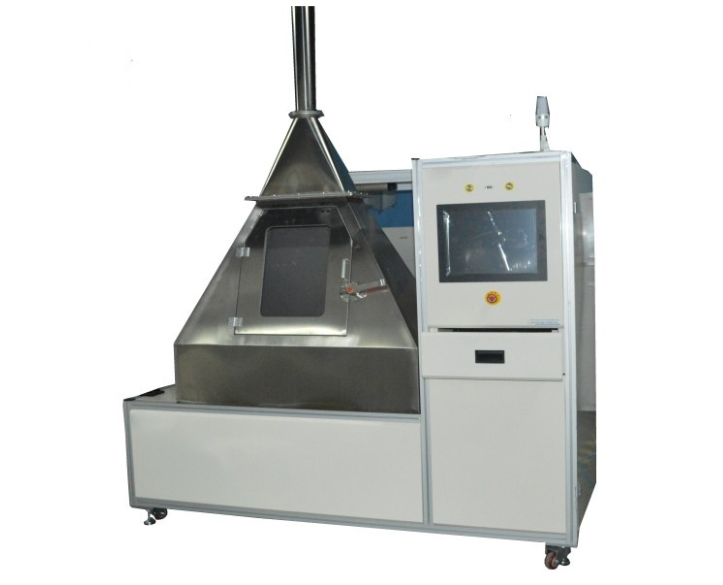 |
ISO Certified Vacuum Cleaner Filter Efficiency Tester Factory | Get a quote: Whats/App: +86 156 1874 6768 Web: standard-groups.com Standards IEC 60312-1: Vacuum cleaners for household use – Methods for... |
Похожие товары
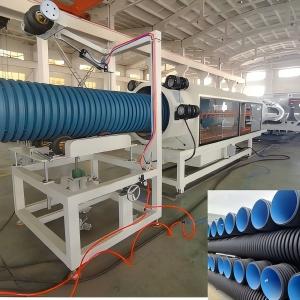 |
Высокоскоростная экструзионная линия для производства гофрированных труб с двойными стенками из ПЭВП с водяным охлаждением | Продавец: Shandong HUASU Plastic Technology Co.,Ltd. | Формы имеют структуру с двойным каналом потока и фильерную головку, обработанную азотированием и ... |
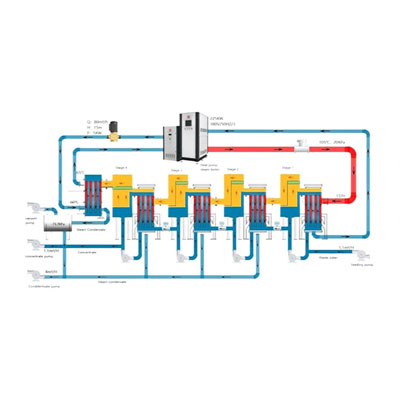 |
PanEVAP & MVR system | Продавец: Yangzhou Panstar Heat Exchanger Equipment Co., Ltd | A multiple-effect evaporator is a device that efficiently uses steam heat to evaporate water. Wat... |
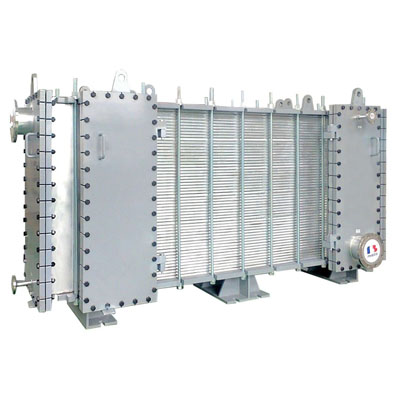 |
PanGAP wide gap welded plate heat exchanger | Продавец: Yangzhou Panstar Heat Exchanger Equipment Co., Ltd | PanGAP wide gap welded plate heat exchangerconsists of a welded plate pack with different channel... |
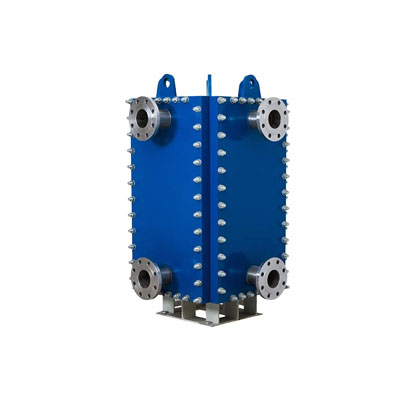 |
PanBloc welded plate heat exchanger | Продавец: Yangzhou Panstar Heat Exchanger Equipment Co., Ltd | PanBloc welded plate heat exchangeris compact and efficient, although fully welded, is totally ac... |
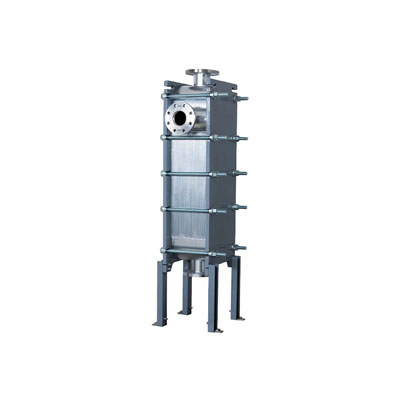 |
PanBox welded plate heat exchanger | Продавец: Yangzhou Panstar Heat Exchanger Equipment Co., Ltd | PanBox welded plate heat exchangerconsists of a laser welded plate pack with optimized corrugated... |

