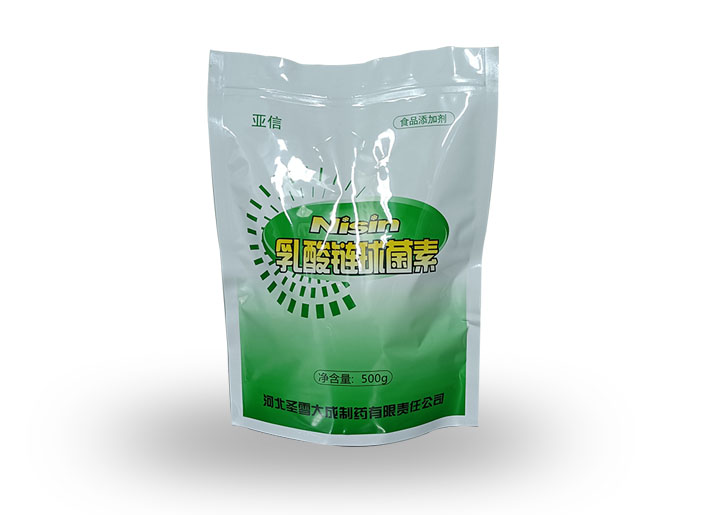
Nisin's antimicrobial activity

The stability of nisin is intrinsically linked to its antimicrobial efficacy, as it directly determines the integrity of its molecular structure, bioavailability, and sustained activity in food systems. Any factor that impairs nisin’s stability—such as pH fluctuations, temperature extremes, or interactions with food components—will compromise its ability to bind to bacterial targets, form transmembrane pores, and inhibit microbial growth. Nisin’s antimicrobial activity is highly dependent on pH stability, as its peptide chain and lanthionine cross-links (critical for structural rigidity) are vulnerable to hydrolysis under non-acidic conditions. Acidic environments (pH 2.0–6.0): Nisin maintains >90% structural integrity, ensuring high free concentration and strong binding affinity to Lipid II (its core target on Gram-positive bacterial membranes). In this pH range, it efficiently forms transmembrane pores, leading to rapid bacterial lysis. For example, in acidic foods like yogurt (pH ~4.0) or fruit juices (pH 3.0–4.5), nisin retains full efficacy for extended periods, inhibiting spoilage bacteria such as Lactobacillus spp. and Staphylococcus aureus at low concentrations (5–20 mg/kg). Neutral/alkaline environments (pH > 7.0): Nisin undergoes peptide bond hydrolysis and deamidation, resulting in structural degradation and reduced Lipid II binding capacity. At pH 7.5, its antimicrobial activity decreases by 50% within 24 hours at 25℃; at pH 10.0, it is almost completely inactivated. This directly impairs efficacy in neutral/alkaline foods (e.g., meat products, soy sauce), where even high addition levels (50–100 mg/kg) may fail to control bacterial growth. To mitigate this, pH adjustment (e.g., adding lactic acid) or modification (e.g., microencapsulation) is required to stabilize nisin and preserve its antimicrobial function.
Other supplier products
|
|
Nisin Supplier |
Nisin is a naturally occurring antimicrobial peptide produced by certain strains of lactic acid bacteria, primarily Lactococcus lactis.It is common... |
|
|
Wholesale Nisin 25KG |
Core Antibacterial Mechanism Nisin acts by disrupting the cell membrane of gram-positive bacteria, a process that occurs in two main steps (as intr... |
|
|
Natamycin |
Natamycin is a polyene macrolide antifungal compound produced by the fermentation of Streptomyces.In 1955, Struyk et al. isolated this substance fr... |
|
|
Natamycin Raw Material |
New products coming soon!Welcome to inquire and book! In Baked Goods Bread: In bread production, natamycin can be incorporated during the dough pre... |
|
|
Key Application Precautions of Nisin |
Key Application Precautions of Nisin Antibacterial Spectrum Limitation: Nisin is ineffective against Gram-negative bacteria (e.g., E. coli) and mol... |
All supplier products
Same products