Nisin in Meat and Poultry Products

Application in Meat and Poultry Products: Inhibiting Pathogens and Reducing Spoilage
Meat and poultry products (e.g., fresh meat, cooked ham, sausages) are prone to contamination by pathogens (e.g., Listeria monocytogenes, Staphylococcus aureus) and spoilage bacteria (e.g., Bacillus species), leading to short shelf life and safety risks. Nisin addresses these issues through targeted antibacterial action:
Key Applications & Mechanisms
Fresh meat (beef, pork, chicken):
Method: Spray or soak fresh meat in a 0.1–0.2 g/L Nisin solution before packaging, or incorporate Nisin into edible coatings (e.g., chitosan-Nisin composite coating).
Effect: Inhibits the growth of surface pathogens (e.g., Listeria) and aerobic spoilage bacteria. For example, chilled pork treated with Nisin has a shelf life extended from 3–5 days to 7–10 days at 4°C, with no significant changes in color, texture, or flavor.
Cooked meat products (ham, sausages, canned meat):
Method: Add 0.05–0.1 g/kg Nisin directly to meat emulsions during processing, or combine with mild heat treatment (e.g., 80°C for 15 minutes).
Effect: Prevents post-sterilization "recontamination" by heat-resistant bacterial spores (e.g., Clostridium botulinum). Canned ham with Nisin avoids "swelling" caused by bacterial fermentation, and its shelf life at room temperature extends from 6 months to 12 months.
Advantage
Reduces reliance on chemical preservatives (e.g., nitrites) and high-temperature sterilization, avoiding nitrite residues and overcooking-induced texture loss (e.g., tough ham).
Other supplier products
|
|
Natamycin |
Natamycin differs from other food preservatives in ingredient sources:Natamycin is a polyene macrolide antibiotic produced by the fermentation of S... |
|
|
Natamycin 7681-93-8 |
The application fields of natamycin1. Food industryAnti-corrosion and preservation: As a natural preservative, it is widely used in foods such as c... |
|
|
Partners, long-term cooperation |
Unlike broad-spectrum preservatives that may disrupt beneficial microbial communities or alter food flavor, nisin exhibits highly specific antibact... |
|
|
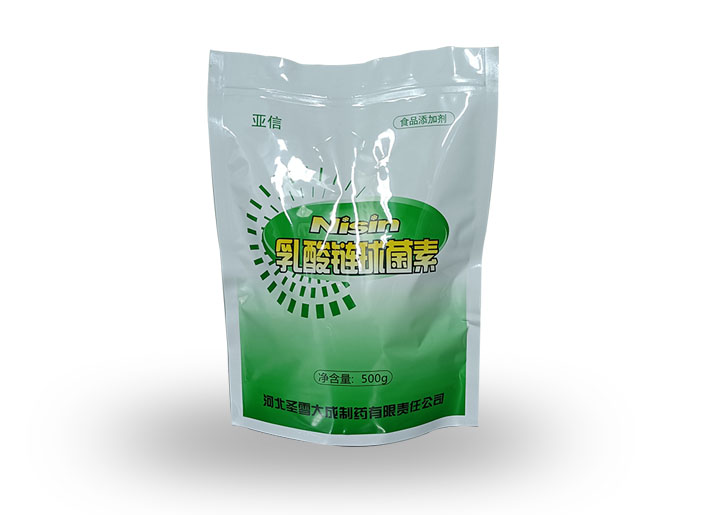
Nisin |
Nisin, a natural antimicrobial peptide, has various applications in the food industry due to its ability to inhibit the growth of certain bacteria,... |
|
|
Nisin 25KG |
Nisin maintains strong antibacterial activity under heat treatment conditions, especially in acidic environments (pH < 5)—a key advantage ... |
供应产品
Same products