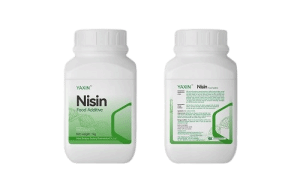
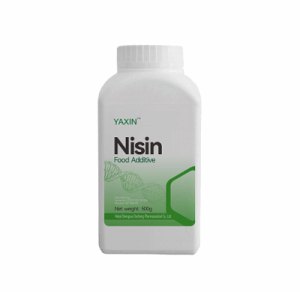
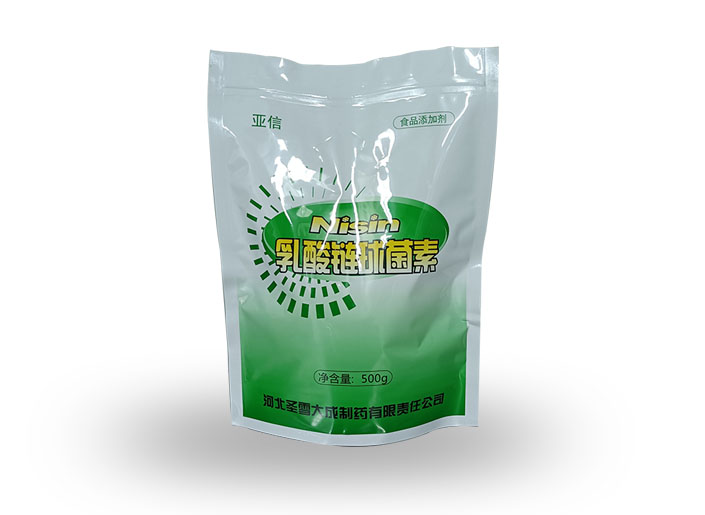
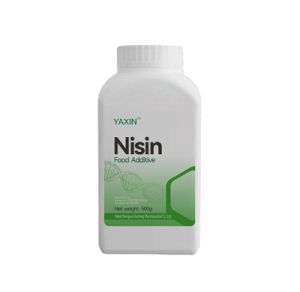
Nisin


Nisin is a natural antimicrobial peptide with specific properties and characteristics that make it suitable for various applications, particularly in the food industry.
Nisin exhibits strong antimicrobial activity against a wide range of Gram-positive bacteria, including some pathogens and spoilage organisms.It is particularly effective against species such as Listeria, Staphylococcus, and Clostridium.
Nisin disrupts bacterial cell membranes by forming pores, leading to leakage of cellular contents and ultimately cell death.This mode of action makes it difficult for bacteria to develop resistance.
Nisin is relatively heat-stable, allowing it to withstand common food processing conditions, such as pasteurization.This stability makes it suitable for use in a variety of food products.
Nisin remains active over a broad pH range, making it adaptable to different food systems.It is effective in both acidic and neutral pH environments.
Nisin is soluble in water, which facilitates its incorporation into aqueous solutions and food matrices.This solubility contributes to its ease of use in various applications.
Nisin can exhibit synergistic effects when used in combination with other antimicrobial agents. This can enhance its overall antimicrobial activity and effectiveness in food preservation.
Nisin is generally considered safe for consumption, and it has been approved as a food additive in many countries.It has low toxicity to humans and animals at effective concentrations.
When consumed, nisin does not get absorbed into the bloodstream or accumulate in tissues.It acts locally in the gastrointestinal tract, making it suitable for use in foods intended for human consumption.
Nisin has a low likelihood of inducing bacterial resistance due to its complex mode of action, which involves multiple targets on the bacterial cell membrane.
Nisin has received regulatory approval as a food preservative in many countries, including the United States, the European Union, and others.It is assigned the E-number E234 in the European food additive numbering system.
Nisin is commonly used in the preservation of a variety of food products, including dairy, meat, and canned goods, to extend their shelf life and improve safety.
Understanding these properties and characteristics allows for the effective utilization of nisin in food preservation and other applications, contributing to the development of safe and high-quality food products.
Other supplier products
|
|
Chlortetracycline Premix |
Chlortetracycline Premix in livestock and poultry feed: 1. Purpose: · Promote the growth of livestock and poultry: Chlortetracycline Premix ... |
|
|
Nisin 500g |
Nisin is permitted for use in infant formula foods (such as in baby cheese approved by the European Union, with a limit of 0.2g /kg), and its proba... |
|
|
Colistin Sulfate Soluble Powder 10% 500g |
Colistin Sulfate Soluble Powder is a type of antibiotic medication that is widely used in veterinary medicine to treat bacterial infections in live... |
|
|
Natamycin 7681-93-8 |
The application fields of natamycin1. Food industryAnti-corrosion and preservation: As a natural preservative, it is widely used in foods such as c... |
|
|
Nisin Supplier |
In addition to its preservative effects, nisin can also improve food quality. It does not alter the color, aroma, flavor, or texture of the food, a... |
供应产品
Same products