

Powder Wet Vibrating Screen System For Lithium Battery Material Testing

Whats/App: +86 156 1874 6768
Web: standard-groups.com
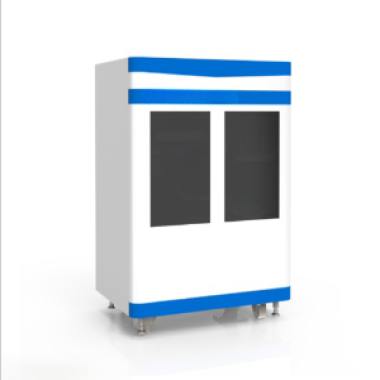
The Powder Wet Vibrating Screen System is designed for particle size separation and distribution analysis of lithium battery materials under wet conditions. The system combines controlled vibration with liquid-assisted sieving to accurately classify fine powders and slurry-based materials. It is suitable for quality control, formulation verification, and process optimization of electrode materials and functional powders used in lithium-ion battery manufacturing.
Application
(1) Wet particle size distribution (PSD) analysis of lithium battery cathode and anode materials.
(2) Classification and screening of slurry-based powders containing solvents or binders.
(3) Quality consistency evaluation of active materials, conductive additives, and ceramic powders.
(4) Agglomeration and dispersion assessment during material development and scale-up.
(5) Incoming inspection and batch-to-batch comparison of battery raw materials.
(6) Laboratory and pilot-scale material research for lithium-ion and solid-state batteries.
Standards
(1) ASTM E11 – Standard Specification for Woven Wire Test Sieve Cloth and Test Sieves.
(2) ISO 3310-1 – Test Sieves – Technical Requirements and Testing – Metal Wire Cloth Sieves.
(3) IEC 62660-3 – Secondary Lithium-Ion Cells – Safety Requirements (reference application).
(4) RoHS – Restriction of Hazardous Substances Directive.
(5) CE Certification – Conformité Européenne.
Features
(1) Wet sieving design suitable for fine powders and slurry-based materials.
(2) High-precision vibration control for stable and repeatable particle stratification.
(3) Anti-clogging structure supporting continuous wet screening.
(4) Corrosion-resistant construction for use with acidic, alkaline, and organic solvents.
(5) Multi-layer sieve stack enabling simultaneous multi-size classification.
(6) Integrated control system for standardized and repeatable test operation.
(7) Low-noise operation suitable for laboratory environments.
(8) Safety-oriented design with emergency drainage and protective enclosures.
Parameters
| Parameter | Specification |
|---|---|
| Sieve Diameter | 200 mm, 300 mm, 450 mm (interchangeable) |
| Mesh Range | 5 μm – 5 mm (ASTM E11 compliant) |
| Vibration Amplitude | 0.5 – 3.0 mm (adjustable) |
| Vibration Speed | Variable frequency control |
| Power Supply | AC 100–240 V, 50/60 Hz |
| Noise Level | < 65 dB (A-weighted) |
| Wet Operation Mode | Continuous or batch |
| Dimensions (W×D×H) | 500 × 450 × 800 mm |
| Weight | 85 kg (net) / 105 kg (gross) |
Accessories
(1) Stainless steel test sieves with standard mesh sizes.
(2) Sieve pan and cover with sealing structure for wet operation.
(3) Wet screening liquid circulation and drainage components.
(4) Variable frequency vibration controller.
(5) Sieve cleaning tools for wet powder removal.
(6) Operation and data recording software.
(7) Power and safety protection modules.
Test Procedures
(1) Assemble the required sieve stack according to the target particle size range.
(2) Secure the sieve stack and connect the wet circulation or drainage system.
(3) Add the powder sample and appropriate liquid medium to the top sieve.
(4) Set vibration amplitude, frequency, and test duration.
(5) Start the system and perform wet sieving until completion.
(6) Collect retained and passed materials from each sieve for analysis and reporting.
Maintenance Information
(1) Clean sieves, drainage lines, and contact components immediately after wet testing.
(2) Inspect sieve mesh integrity regularly to prevent measurement deviation.
(3) Verify vibration amplitude and frequency calibration at scheduled intervals.
(4) Check sealing components and corrosion-prone parts for wear.
(5) Store sieves and accessories in a clean and dry environment after use.
Send product request
Other supplier products
 |
FPC Folding Life Tester for Electronics Laboratory | Get a quote: Whats/App: +86 156 1874 6768 Web: standard-groups.com Application (1) Flex durability testing of FPC (Flexible Printed Circuits) u... |
 |
Anti-stain tester for indoor wall paint | Whats/App: +86 156 1874 6768 Web: standard-groups.com The Building Coating Stain Resistance Tester is designed and manufactured in accordance wit... |
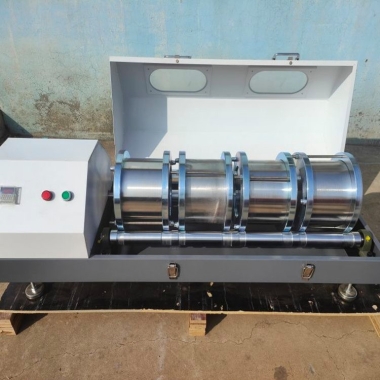 |
Deval abrasion testing machine | Whats/App: +86 156 1874 6768 Web: standard-groups.com The Deval Abrasion Testing Machine is designed to measure the wear resistance of stones and... |
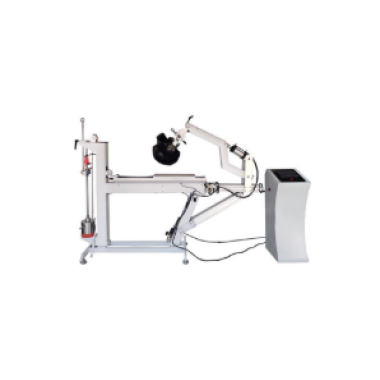 |
Helmet Surface Friction Testing Machine | Whats/App: +86 156 1874 6768 Web: standard-groups.com A helmet surface friction testing machine is a device used to test the frictional force bet... |
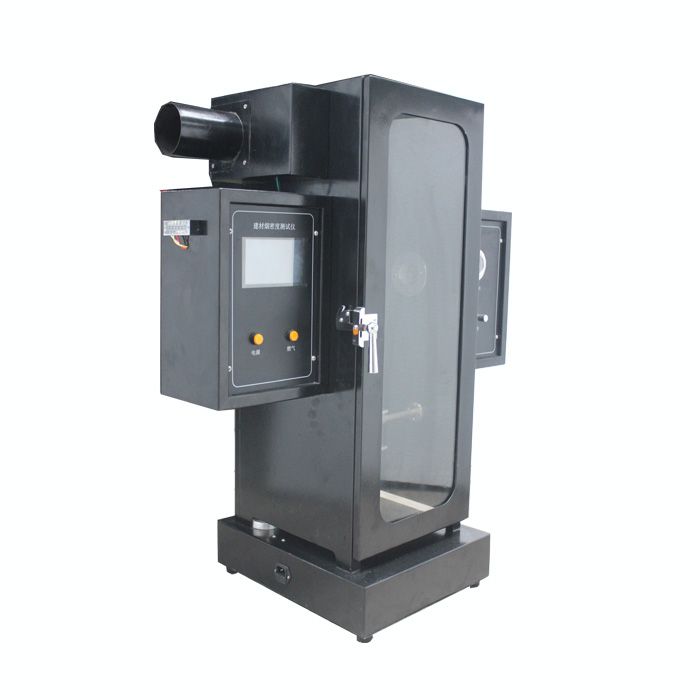 |
Smoke Density Tester | Whats/App: +86 156 1874 6768 Web: standard-groups.com The Smoke Density Tester, developed by Rohm and Haas in the 1970s based on ASTM D2843. meas... |
Same products
 |
Battery Diaphragm Gas Permeability Tester ISO | Seller: Standard Groups | Get a quote: Whats/App: +86 185 0176 3615 Web: qinsun-lab.com The Battery Diaphragm Gas Permea... |
 |
Torsion Testing Tester ASTM, JIS, and DIN | Seller: Standard Groups | Get a quote: Whats/App: +86 185 0176 3615 Web: qinsun-lab.com The Universal Torsion Testing Ma... |
 |
Wire Torsion and Winding Tester ASTM and JIS | Seller: Standard Groups | Get a quote: Whats/App: +86 185 0176 3615 Web: qinsun-lab.com The Wire Torsion and Winding Tes... |
 |
Metal Wire Repeated Bending Tester ISO/DIS 7801 | Seller: Standard Groups | Get a quote: Whats/App: +86 185 0176 3615 Web: qinsun-lab.com The Metal Wire Repeated Bending ... |
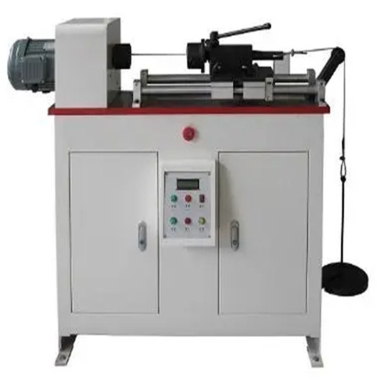 |
Metal Wire Wrap Tester ISO 4101 | Seller: Standard Groups | Get a quote: Whats/App: +86 185 0176 3615 Web: qinsun-lab.com The Metal Wire Wrap Tester is de... |

