

Silanes & Siloxanes

SiSiB SILICONES is a leader ofsilicone gel manufacturers, and hasbeen producing silane coupling agents since 1989.
SiSiBis a leading manufacture of silanes and silicones, such as alkyl silanes, allyl silanes, silylating agent, etc. It started producing Silane Coupling Agentin 1989. Silane coupling agents are predominately used as mediators, binding organic materials to inorganic materials. The silane coupling agent will improve the electrical and mechanical strength properties of materials in wet or dry conditions.
Organo silanesor organofunctional silanes are also a very important pharmaceutical and chemical industry, most notably as derivatizing and protecting reagents, intermediates in organic synthesis, reducing agents, surface modifiers, adhesion promoters, crosslinking agents. SiSiB silane siloxane concrete sealersalso play an important role in silane siloxane chemistryindustry.
Silane Coupling Agent Mechanism
Silane coupling agents are generally illustrated as X-Si-(OR)3.
Silicone (Si) is the center of the silane molecule which contains an organic functional group (X) [ex: vinyl, amino, chloro, mercapto, epoxy silanes, etc.], with a second functional group (R) [ex: methoxy, ethoxy, etc.]. The functional group (R) will attach to an organic resin while the functional group (R) attaches to an inorganic material or substrate to achieve a "coupling" effect.
Silane coupling agents are predominately used as mediators, binding organic materials to inorganic materials. As a result, silanes will improve the electrical and mechanical strength properties of materials in wet or dry conditions.
The inorganic group (R) of the silane molecule will hydrolyze to produce silanol, which forms a metal hydroxide or siloxane bond with the inorganic material. The organic group (X) of the silane molecule will react with the organic material to produce a covalent bond. As a result, the organic material and the inorganic material are tightly bound together after heating.
This unique property of silane coupling agents is utilized widely in the application of the silane coupling agents for the surface treatment of glass fiber products, performance improvement of fiber-reinforced plastics by the direct admixture to the synthetic resin, improvement of paints and other coating materials and adhesives, modification of surface properties of inorganic fillers, surface priming of various substrate materials, etc.
How Silane Coupling Agent Is Used To Treat The Inorganic Fillers?
Wet Method
By mixing slurry of the inorganic materials in a dilute solution of the silane coupling agent, a highly uniform and precise surface treatment of the inorganic material can be obtained.
Dry Method
A high shear, high speed, mixer is used to disperse the silane coupling agent into the inorganic materials. The silane is generally applied either neat or as a concentrated solution. When compared to the Wet Method, the Dry Method is most often preferred for large-scale production, treating a large amount of filler in a relatively short time and generating relatively little mixed waste; however, it is more difficult to obtain uniform treatment with this method.
Spray Method
Spray the silane coupling agent on high temperature filler that was just taken out from furnace. The method may omit dry procedure and make the process simplify, but pay attention to perflation and ignite.
You may have doubt that is silicone good for waterproofing? If you want to know the answer, please visit our website.
Send product request
Other supplier products
 |
Silicone Textile Softener | Since our establishment as a silicone softenersmanufacturer in 1989, silicone has been our core business, especially custom food and medical grade ... |
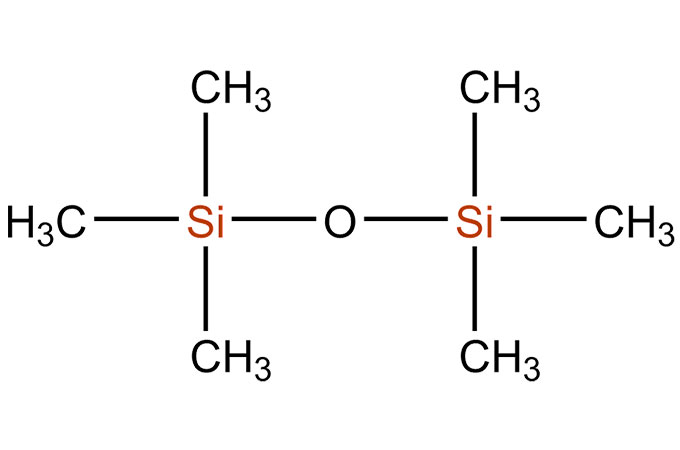 |
SiSiB® PC9200 | Hexamethyldisiloxane(MM) SiSiB® PC9200, also called as HMDSOor HMDO, is a colorless clear liquid. Technical Data CAS No. 10... |
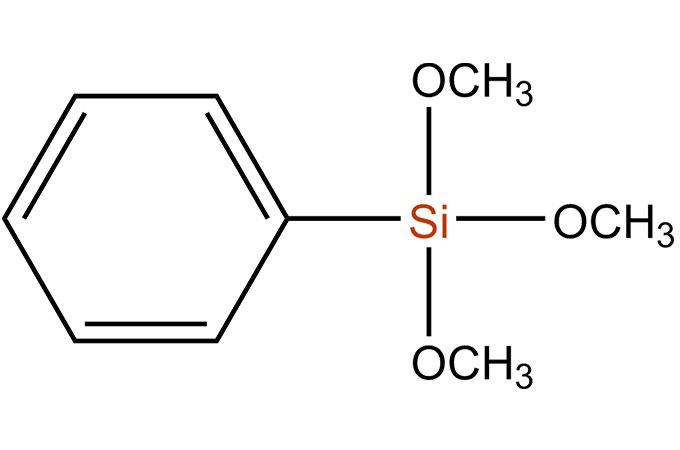 |
SiSiB® PC8131 Phenyltrimethoxysilane | SiSiB® PC8131 Phenyltrimethoxysilane SiSiB® PC8131 is a colorless, low-viscosity liquid. SiSiB® PC8131 is regarded as trifunctional s... |
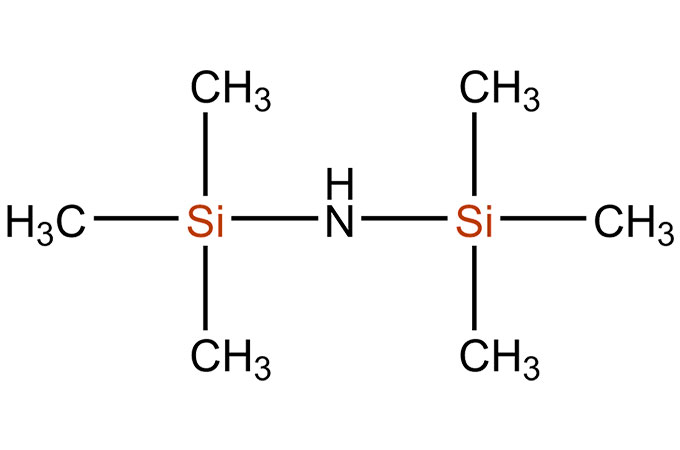 |
SiSiB® PC9210 | Hexamethyldisilazane SiSiB® PC9210 (also called as Bis trimethylsilyl amine; HMDS chemical; HMDZ) is an extremely versatile and strong silylat... |
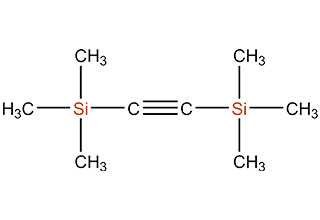 |
SiSiB® PC9233 | Bis trimethylsilyl acetylene SiSiB® PC9233 (BTMSA) is a colorless clear liquid (solid in winter). Technical Data CAS No. 14... |
Same products
 |
OSi PEMS 57 CAS 70914-12-4 | Seller: OSi Holding Limited | Other descriptions: Siloxanes and Silicones, di-Me, 3-hydroxypropyl Me, ethers with polyethylene... |
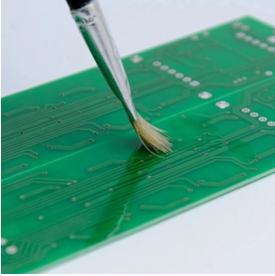 |
LC12 Two-Component Solvent Free Silicone Conformal Coating | Seller: Nanjing Silfluo New Material Co., Ltd. | Conformal Coating, also called silicone coating pcbelectronic circuit board protection oil, coati... |
 |
LA-17 Polyether Modified Short Chain Polysiloxane | Seller: Nanjing Silfluo New Material Co., Ltd. | Polyether modified trisiloxaneshort chain polysiloxane. Compared to trisiloxane surfactant,it has... |
 |
LA-14 A Modified Trisiloxane and an Silicone Surfactant | Seller: Nanjing Silfluo New Material Co., Ltd. | (It is a substitution of Silwet ECOand Xiameter(R) OFX-0309) A modified Trisiloxane and an silico... |
 |
LA-11 A Modified Trisiloxane and an Silicone Surfactant | Seller: Nanjing Silfluo New Material Co., Ltd. | (It is a substitution of silwet l 77) A modified Trisiloxane and an silicone surfactant with supe... |

