Single/two-component epoxy adhesive
Epoxy adhesive is a structural adhesive with high bonding strength. Suitable for bonding various substrates, especially with high bonding strength to metal materials.
| Property | Single-Component Epoxy | Two-Component Epoxy |
|---|
| Composition |
Single resin with latent curing agent. |
Resin + separate curing agent (e.g., polyamide). |
| Curing Method |
Heat-activated (e.g., 80–180°C). |
Mixing resin and curing agent; room temp. or heat-cured. |
| Key Applications |
Fast-production electronics, low-temp processes, consumer goods. |
High-strength bonding (metals, composites), aerospace, automotive. |
| Advantages |
Simplified storage, rapid curing in heat, no mixing required. |
Superior adhesion, chemical resistance, adjustable cure speed. |
| Limitations |
Brittle when cured, limited shelf life (requires refrigeration). |
Shorter pot life after mixing, requires precise mixing ratio. |
Compared to other types of adhesives, epoxy adhesiveshave better resistance to high temperatures and chemical corrosion, low shrinkage and cohesive strength, and are widely used in the fields of electronics, automotive, industry, and aviation.
Epoxy adhesives are divided into two types:single component and two-component. Single component epoxy adhesives can be divided into low-temperature curing epoxy, medium temperature curing epoxy, and high-temperature curing epoxy according to different curing temperatures. Low temperature curing epoxy is widely used in consumer electronics products. Its advantage is that the curing temperature is as low as 80 ℃ and the curing time can be controlled within 15-30 minutes. It can effectively meet the demand for fast production pace. Compared to single component products, two-component epoxy adhesives have a wider range of application scenarios and lower storage requirements. Typically, two-component epoxy does not require low-temperature storage.
At present,Moutainchem Electronics’ single component epoxy has mature applications in industries such as magnet bonding, motor bonding, VCM motor bonding, camera module bonding, and optical communication.
Epoxy Adhesive Systems Technical Summary
| Property | Single-Component | Two-Component |
|---|
| Composition |
Pre-mixed resin/hardener |
Separate resin & hardener |
| Curing Mechanism |
Heat-activated |
Chemical reaction at RT or heat-accelerated |
| Pot Life |
N/A (pre-mixed) |
5 min – 24 hrs (varies by formulation) |
| Cure Time |
15-60 min @ 120-180°C |
2 hrs – 7 days (RT cure) |
| Typical Viscosity |
10.000-50.000 cP |
5.000-30.000 cP (resin) |
| Storage Conditions |
-20°C to 5°C (uncured) |
RT (separate components) |
| Shelf Life |
3-12 months |
12-24 months |
Performance Characteristics
| Parameter | Both Systems |
|---|
| Tensile Strength |
20-50 MPa |
| Shear Strength |
15-40 MPa |
| Temperature Resistance |
-40°C to +150°C (standard) |
| Chemical Resistance |
Excellent to oils, solvents |
| Shrinkage |
<1% |
Application Comparison
| Feature | Single-Component | Two-Component |
|---|
| Ease of Use |
Simple application |
Requires mixing |
| Equipment Needed |
Heating oven |
Mixing tools |
| Best For |
High-volume production |
Custom applications |
| Bondable Substrates |
Metals, ceramics |
Metals, plastics, composites |
Safety & Handling
| Aspect | Both Systems |
|---|
| Skin Contact |
Wear nitrile gloves |
| Eye Protection |
Safety goggles required |
| Ventilation |
Adequate airflow needed |
| Cured Material |
Non-hazardous |
Note:Single-component systems offer processing efficiency while two-component systems provide formulation flexibility. Selection depends on production requirements, substrate types, and performance needs.
Other supplier products
|
|
PUR reactive polymer |
Introduction
PUR reactive polyurethane is a single component, moisture reactive structural adhesive.
It has the characteristics of fast initi... |
|
|
MDF Powder Coating |
Feature:
-Environmental friendly
-No solvents and volatile organic compounds involved which are harmful to the environment
-Energy saving,low cu... |
|
|
Butylated Urea Formaldehyde Resin |
Butylated Urea-Formaldehyde Resin(BUF) is a modified product of urea-formaldehyde resin (synthesized by the polycondensation of urea and formaldehy... |
|
|
Thermal interface material |
Thermal conductive sealant
There are two types of thermal conductive joint fillers: silicon-based and non silicon. They are usually two-component ... |
|
|
A7750 77PD CAS 3081-14-9 N,N’-BIS(1,4-DIMETHYLPENTYL)-P-PHENYLENEDIAMINE |
Introduction
Chemical Name :Mixture of N,N’- bis(1,4- dimethylpentyl) – p- phenylenediamine and black carbon N 330
CAS NO. :3081-14-9... |
All supplier products
Same products
|
|
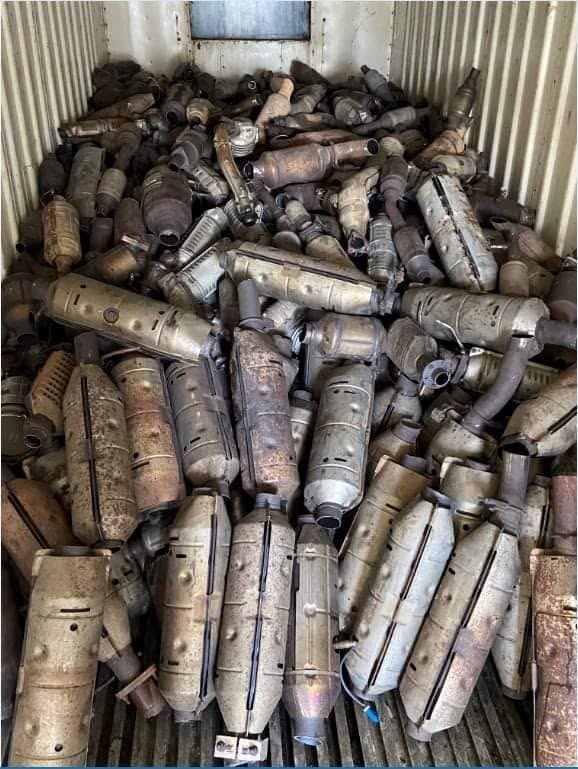
Catalytic Converter Scrap Supplier, Catalytic Converter Scrap for Sale, , Catalytic Converter Scrap, Catalytic Scrap for Sale, Catalytic Scrap Supplier, Scrap Catalytic Supplier |
Seller: Trucont LLC |
At Trucont LLC, we have ongoing Catalytic converter scrap available for immediate loading and shi... |
|
|
Natural cypress cat litter |
Seller: DALIAN ZZ INT'L TRADE CO.,LTD. |
Natural cypress cat litter
Eco-friendlyLightweightFlushableLow tracking and low dustWill not gro... |
|
|
DTG ink for Brother Printhead |
Seller: Guangzhou SAVEN Technology Co., Ltd |
DTG inkhas a strong fluency on the kinds of print head, it can be satisfied with the production d... |
|
|
Direct to Garment (DTG) Pigment Ink DTG-100W |
Seller: Guangzhou SAVEN Technology Co., Ltd |
DTG inks are a range of digital textile pigment inks. Direct to Garment pigment inks offer an eas... |
|
|
Premium CMYK color DTF for Epson Printheads |
Seller: Guangzhou SAVEN Technology Co., Ltd |
Unlock unmatched vibrancy with Premium CMYK DTF Ink. Engineered for professional Direct-to-Film p... |