Leather Low-Temperature Flexing Tester,import Leather Freezing Flexing Tester


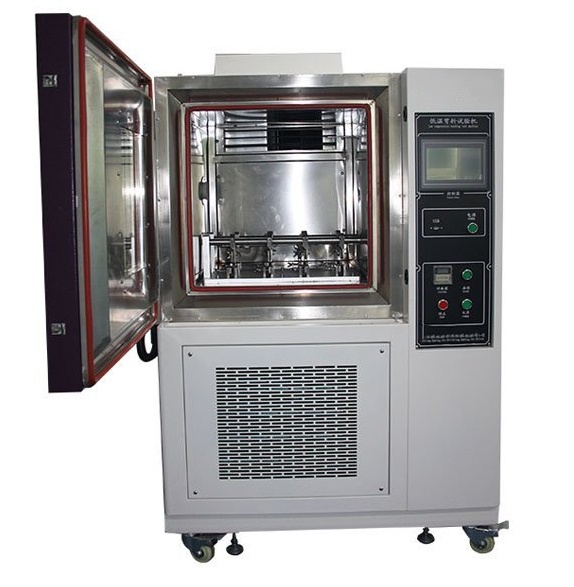
The Leather Low-Temperature Flexing Tester is a high-precision durability assessment system specifically engineered to evaluate the flexing endurance and crack resistance of leather and synthetic coatings under extreme cold conditions. By simulating harsh sub-zero environments within an integrated stainless steel cooling chamber, this tester allows you to determine how materials or finished products perform in cold climates or high-altitude regions. Featuring a robust mechanical drive and modular gripping system, it provides a standardized platform to observe the physical transformation, delamination, or fracture points of leather surfaces during repetitive bending cycles.
Applications
Leather Low-Temperature Flexing Tester is used to evaluate the cold resistance and flexing durability of leather and leather-coated materials, assessing their suitability for low-temperature climates or cold regions. Constructed entirely of stainless steel, this machine can be fitted with various fixtures to accommodate different testing requirements.
Standards
QB/T 2714-2018 Leather - Physical and Mechanical Tests - Determination of Flexing Resistance
GB/T 20991:Personal Protective Equipment — Safety Footwear
JIS K6545 Specification for Testing Flexing Resistance (or Flexing Strength) of Leather
ISO 20344:Personal Protective Equipment — Test Methods for Footwear
ASTM D1790:Standard Test Method for Brittleness Temperature of Plastic Materials by Impact
ASTM D1593:Standard Test Method for Resistance to Impact of Plastic Film by the Falling Dart Method
ASTM D1052:Standard Test Method for Measuring Rubber Deterioration — Cut Growth Using Ross Flexing Apparatus
CNS 7705:Footwear — Test Method for Abrasion Resistance of Outsole Materials
Features
1. Inner and Outer Tank Material: Stainless Steel #304
2. Controller: PLC Control System with Touchscreen Display
3. Protective Devices: Thermal Protection Shutdown, Ground Fault Protection Shutdown, Over-Temperature Protection, Overload Protection, and other functions
Parameters
| Item | Specifications |
|---|---|
| Temperature Range | Room temperature ~ -30°C |
| Inner Chamber with Low-Temperature Flexing Fixture | - Fixture quantity: 12 sets- Sample size: 70mm×45mm- Flexing angle: (22.5±0.5)°- Flexing rate: (100±5) cycles/min- Flexing count range: 0 ~ 999.999 cycles- Distance between upper edge of lower fixture and upper fixture: (25.0±0.5) mm |
| Control Accuracy | ±0.5°C, V4.0 |
| Temperature Uniformity | ±2°C |
| Cooling Rate | Approximately 45 minutes from room temperature to -30°C |
| Refrigerant | R404 (environmentally friendly refrigerant) |
| Compressor Start Delay | 5 minutes |
| Power Consumption | 4KW |
| Insulation Material | Rigid foam and glass wool |
| Counter | Touchscreen display, adjustable from 0 ~ 999.999 |
| Viewing Window | (210×35×270) mm, two-layer vacuum glass |
| Viewing Window Light | P1 lamp, 5W |
| Power Supply | AC220V 50Hz |
| Motor | Beltless, multi-imported gear reduction motor |
| Inner Chamber Dimensions | (60×60×55) cm |
| Overall Dimensions | (110×105×160) cm |
| Weight | Approximately 420 kg |
Accessories
Main Unit: 1 unit
Flexing Fixture: 1 set
Chinese Instrument Manual: 1 copy
Instrument Warranty Card: 1 copy
Upper Material Low-Temperature Flexing Test Piece: 70×65mm
Product Certificate of Conformity: 1 sheet
Laser Engraving Die Cutter: 1 piece
Product Operation Manual: 1 copy
Delivery Note: 1 sheet
Acceptance Note: 1 sheet
Test Procedures
1. Equipment Preparation
Installation and Calibration: Position the testing machine on a level, stable workbench to ensure no wobbling. Connect the power supply and verify electrical connection. Install the bending die, adjust the fixture position to align with the power output center, and set appropriate clamping force based on specimen thickness.
Environmental Check: Confirm the laboratory environment meets standard test conditions (e.g., temperature, humidity) to prevent external factors from interfering with test results.
2. Specimen Preparation
Cutting and Inspection: Cut specimens according to standards (e.g., ASTM D1790 or QB/T 2714), typically sized 70mm × 45mm or 70mm × 25mm. Inspect edges for neatness, ensuring no notches or cracks, and verify the weathering surface shows no significant defects.
Folding and Securing: Fold the sample 180° with the weathered surface facing outward, aligning edges flush. Secure with clamps or tape to prevent misalignment.
3. Parameter Settings
Temperature Setting: Configure the low-temperature chamber based on material properties (e.g., standard leather or cold-resistant specialty materials). Range typically spans -30°C to -50°C with ±0.5°C temperature control accuracy.
Bending Parameters: Set the bending angle (e.g., 22.5° ± 0.5°) and speed (100 ± 5 cycles/minute) to comply with test standards (e.g., ASTM D813 or ISO 132).
4. Test Execution
Pre-cooling Treatment: Place the specimen and fixture into the low-temperature chamber. Maintain at the set temperature for 1-2 hours to ensure uniform specimen temperature.
Initiate Test: Within 1 second, press the upper plate of the flexing machine to the preset gap. Hold for 1 second before removing the specimen. Start the testing machine and monitor its operation to ensure temperature, speed, and angle align with settings.
Process Monitoring: Continuously check instrument displays. Immediately halt the machine and investigate if temperature anomalies or flexing deviations occur.
5. Result Evaluation
Recovery and Inspection: After the specimen returns to room temperature, examine the bending area with a magnifying glass. Document any cracks, delamination, or fractures. Results are graded as “No Cracks” or “Number of Bends at Crack Occurrence.”
Data Recording: Meticulously log test parameters and defect types for material performance assessment.
Send product request
Other supplier products
 |
Single - Strand Bending Tester STD - FB2 - SH | Standards ASTM A370. ASTM A416. ISO6934.4 The Single Fiber Bending Tester makes it possible to easily measure and quantify softness, elasticity, ... |
 |
Automatic Reaction Calorimeter | This instrument is a professional testing instrument that simulates the specific process of chemical reactions on a liter scale, and measures and c... |
 |
Helmet Xenon Aging Tester | Standards GB/T2014-9-19. ISO 4892 ASTM G151. G154. D4329 d4587、d4799、sae j2020 Xenon lamp aging test box structure 1. the box is molded by CNC... |
 |
Helmet Projection and Surface Friction tester | The helmet projection and surface friction tester is a device used to test the frictional force between the helmet surface and other objects. Its m... |
 |
Elastic Tape Fatigue Testing Machine | This instrument is used to test the elasticity of elastic belt after reciprocating movement. Application Elastic Tape Fatigue Testing Machineis u... |
Same products
 |
Air Intake Filter Test System | Seller: Standard Groups | The Air Intake Filter Test System is designed for testing industrial air filters and engine air f... |
 |
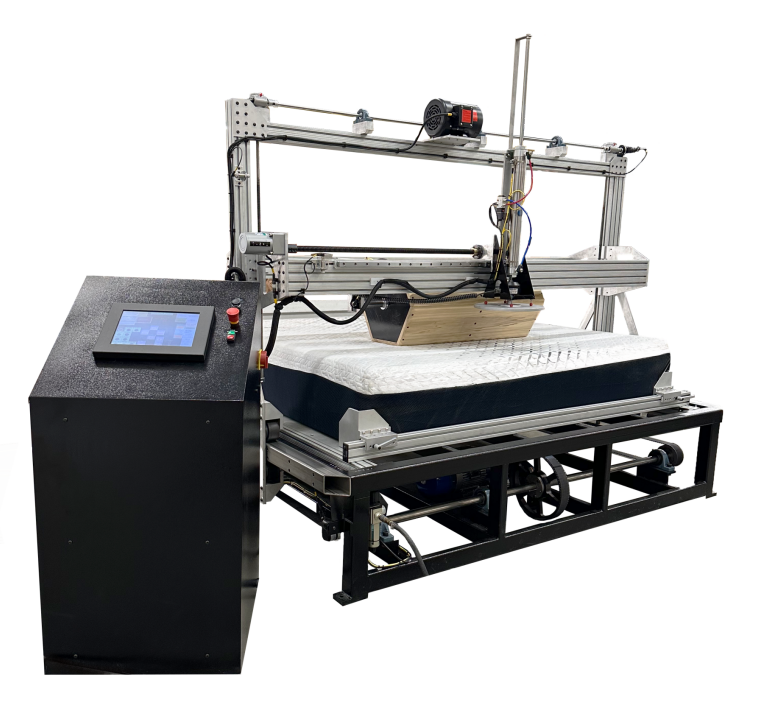
Mattress Spring Fatigue Tester,ASTM D3574 ,how to test mattress for sagging | Seller: Standard International Group (HK) Limited | The King Size Foam Fatigue Tester is a single-station pneumatic fatigue testing system designed f... |
 |
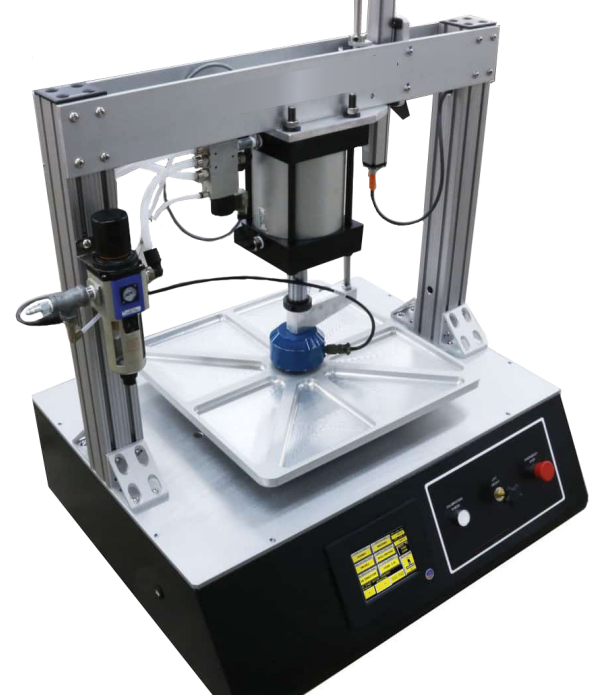
Mattress Rollator,ASTM F1566 ,Mattress Durability Tester,Mattress Fatigue Tester | Seller: Standard International Group (HK) Limited | The Mattress Rollator is a laboratory durability testing system designed to evaluate the long-ter... |
 |
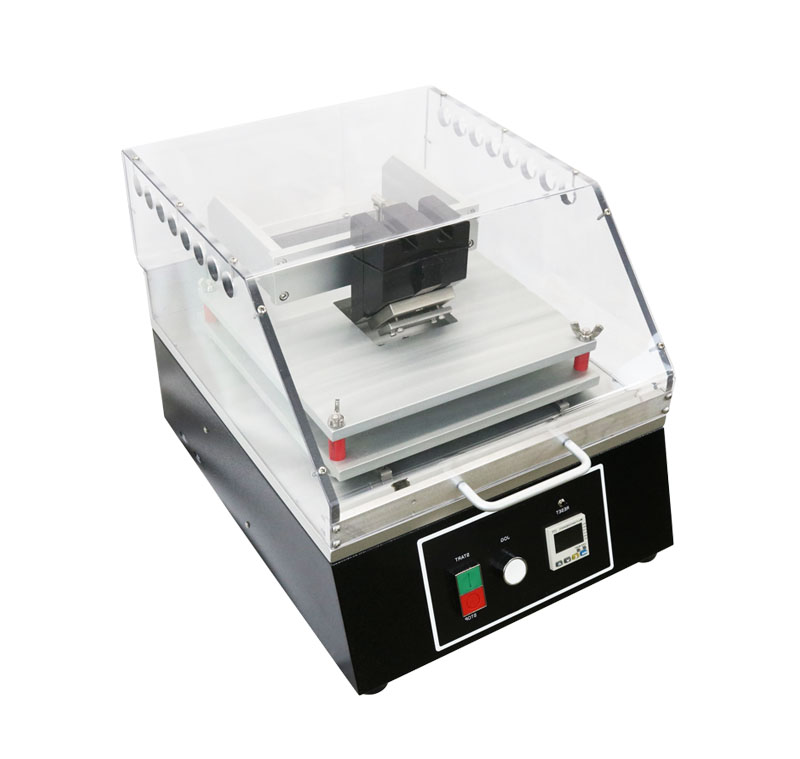
HD2 Pneumatic Foam Fatigue Tester,ISO 3385,Foam Fatigue Testing Machine | Seller: Standard International Group (HK) Limited | The HD2 Pneumatic Foam Fatigue Tester is a heavy-duty, single-station laboratory testing machine ... |
 |
VW Heel Abrasion Tester,ISO 4649 ,Heel Performance Testing Machine | Seller: Standard International Group (HK) Limited | The VW Heel Abrasion Tester is designed to evaluate the wear resistance of floor covering materia... |