

Cargo Compartment Liner Burn-Through Fuel Test System,Aviation fuel fire penetration test system

Whats/App: +86 156 1874 6768
Web: standard-groups.com
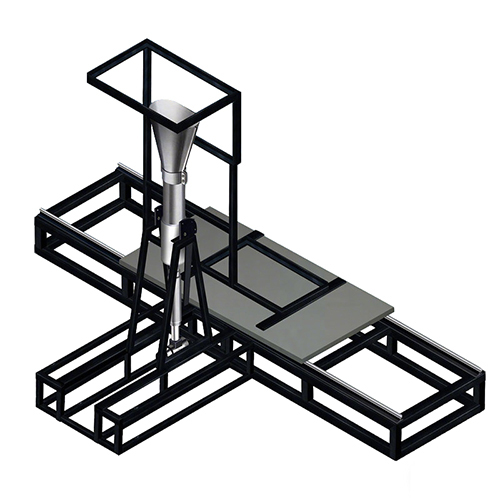
The Cargo Compartment Liner Burn-Through Fuel Test System is a specialized aviation fire testing platform designed to evaluate burn-through resistance, flame spread behavior, and fuel fire performance of aircraft cargo compartment liners and related materials under controlled aviation fuel fire exposure. The system integrates the FAA-approved NexGen aviation fuel burner with a dedicated seat cushion test frame and dynamic loading motion system, enabling realistic simulation of aircraft fire scenarios while accurately controlling and monitoring fuel and air parameters. Its modular design supports current regulatory testing requirements and future FAA technical upgrades.
Application
This system is suitable for aviation fuel fire testing of a wide range of aerospace materials and components, particularly those used in aircraft interiors and cargo compartments, including:
Cargo compartment liner panels
Aircraft seat cushions
Composite sandwich panels
Cabin interior panels
Ceiling and sidewall liners
Fire barrier layers
Thermal and acoustic insulation assemblies
Multi-layer composite structures
The FAA-approved NexGen burner provides standardized aviation fuel flame exposure, while the seat cushion test frame and dynamic motion system allow direct evaluation of flame behavior, burn-through risk, and material performance under realistic fire conditions.
Standards
The system supports testing in accordance with the following international aerospace fire safety standards:
BSS 7303 – Combustion performance and flame spread behavior of aerospace composite materials
AITM 2.0009 – Determination of flame spread characteristics of aerospace materials
FAR Part 25 Appendix F Part II – Aircraft cabin material combustion, flame spread, and smoke toxicity requirements
Parameters
| Item | Specification |
|---|---|
| Overall dimensions | 1500 mm (W) × 1800 mm (H) × 900 mm |
| System weight | 150 kg |
| Power requirement | 220 V, 10 A |
| Operating temperature | 10°C to 35°C |
| Fuel type | Aviation kerosene |
| Air supply | Minimum 120 PSI compressed air |
| Flame temperature capability | ≥ 2000 ± 50 ℉ |
| Heat flux output | ≥ 10.6 W/cm² |
| Temperature control bath | ≥ 2 × 0.14 m³ |
Features
1. The burner cone is made of a corrosion-resistant and high-temperature-resistant alloy.
2. The NexGen aviation fuel burner includes components such as a spoiler, fuel nozzle, igniter, fuel rail, mounting plate, ventilation duct and housing, muffler, and acoustic damper.
3. Equipped with a fuel pressure gauge, fuel solenoid valve, fuel temperature detection device, air pressure regulating valve, and air temperature detection device.
4. Equipped with an ice bath with a volume of at least 2 x 0.14 m³ for fuel and air temperature control, allowing for precise fuel temperature control.
5. Different testing standards can be met by changing the fuel nozzle and air pressure input.
6. The burner is covered with an insulating blanket to cover the fuel lines and fuselage.
7. The NexGen aviation fuel burner can provide a flame temperature of at least 2000±50℉.
8. The NexGen aviation fuel burner provides a flame heat flux of no less than 10.6 W/cm².
9. Modular unit using the NexGen burner support system.
10. Heavy-duty steel frame, capable of horizontal and vertical mounting of test samples.
11. Seven 1.6 mm diameter ceramic-encapsulated, metal-sheathed, grounded Type K (NiChC-NiA) thermocouples should be used for calibration. The conductors should have an outer diameter of 0.254 mm, a cross-sectional area of 0.0507 mm², and a resistance of 361 Ω/km (US wire gauge 30 AWG). The thermocouples should be fixed to an angle steel bracket to form a thermocouple comb for placement on the sample holder during calibration.
12. Thermal radiation flux sensor, equipped with a cooling device, mounted on a fixed bracket.
Accessories
The system is supplied with the following components:
NexGen aviation fuel burner
Seat cushion test frame
Dynamic loading motion system
Fuel temperature control ice bath
Thermocouple calibration comb
Radiant heat flux sensor with cooling unit
Powder-coated steel support frame with digital scale
Movable seat cushion test fixture
Movable drip collection tray
Burner thermal insulation blanket
Test Procedures
Mount the cargo liner panel or seat cushion specimen on the designated test frame.
Connect aviation kerosene supply and compressed air (≥120 PSI).
Set and stabilize fuel temperature using the ice bath system.
Adjust air pressure and fuel flow parameters according to the selected standard.
Ignite the NexGen burner and allow the flame to stabilize.
Position the flame relative to the specimen and initiate exposure.
Monitor flame temperature and heat flux using thermocouples and sensors.
Observe flame spread behavior, burn-through occurrence, and dripping characteristics.
Collect data, including temperature, heat flux, and material response.
Evaluate performance in accordance with the applicable standard.
Maintenance Information
To ensure long-term reliability and compliance:
Clean the fuel nozzle regularly to prevent blockage.
Inspect fuel lines and valves for leakage before each test.
Calibrate thermocouples and heat flux sensors periodically.
Replace the burner insulation blanket if damaged or degraded.
Maintain proper ventilation in the test area.
Keep the compressed air system dry and free from oil contamination.
Verify load cell calibration before critical certification tests.
Send product request
Other supplier products
 |
JIS L0843 GX25 Xenon Lamp Weathering Tester Factory Direct | Get a quote: Whats/App: +86 156 1874 6768 Web: standard-groups.com Standards ISO 4892-2: Plastics—Methods of exposure to laboratory light... |
 |
Walk-in high and low temperature humidity test chamber manufacturer | Get a quote: Whats/App: +86 156 1874 6768 Web: standard-groups.com The High and Low Temperature Humidity Test Chamber is a high-performance envi... |
 |
Automotive Windshield Washer Nozzle Fatigue Testing Machine | Whats/App: +86 156 1874 6768 Web: standard-groups.com The Windshield Washer Nozzle Fatigue Test Machine is designed to evaluate the durability an... |
 |
VDI 3926 Cleanable Filter Media Test System | Get a quote: Whats/App: +86 156 1874 6768 Web: standard-groups.com The Cleanable Filter Media Test System is designed for characterizing cleanab... |
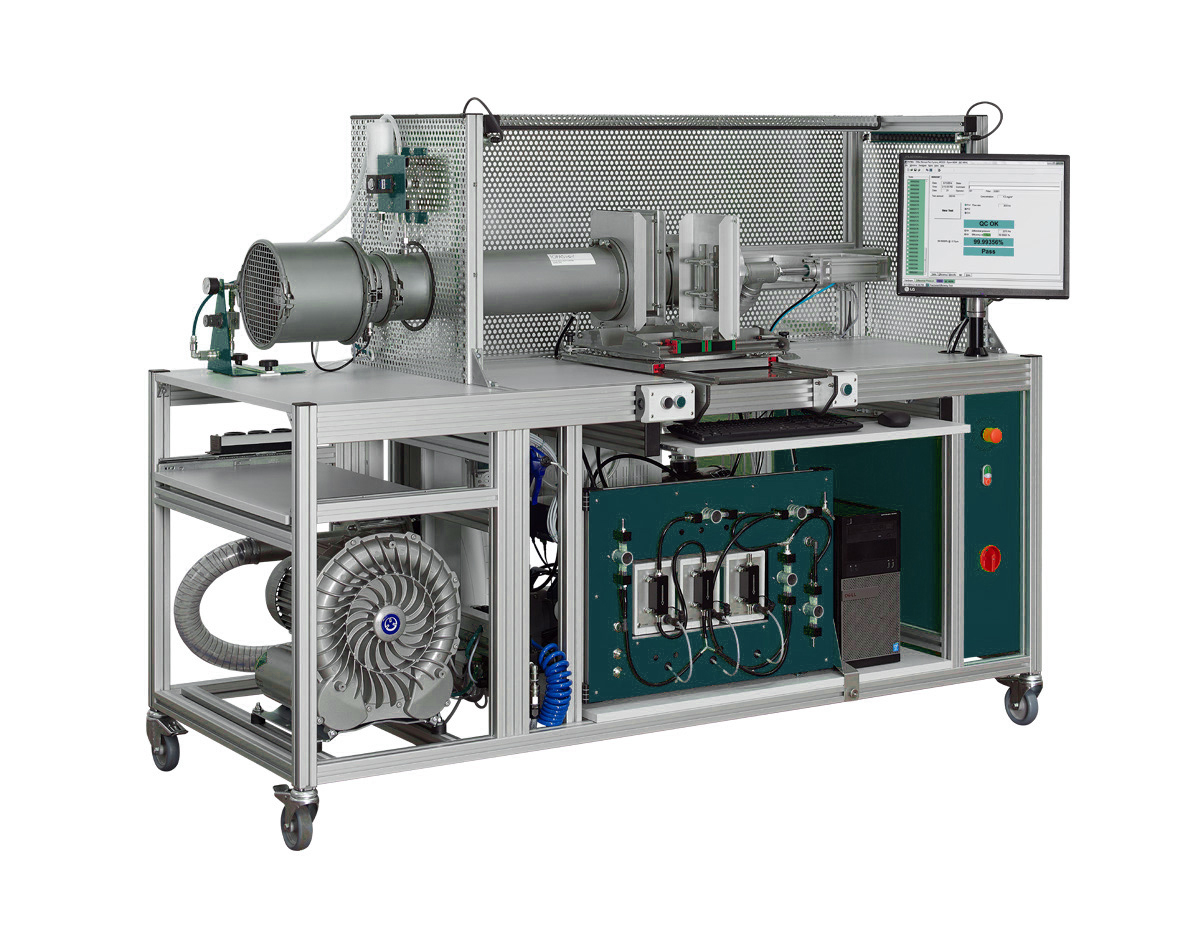 |
HEPA Filter Element Quality Control Test System supplier | Get a quote: Whats/App: +86 156 1874 6768 Web: standard-groups.com The HEPA Filter Element Quality Control Test System is designed for quality c... |
Same products
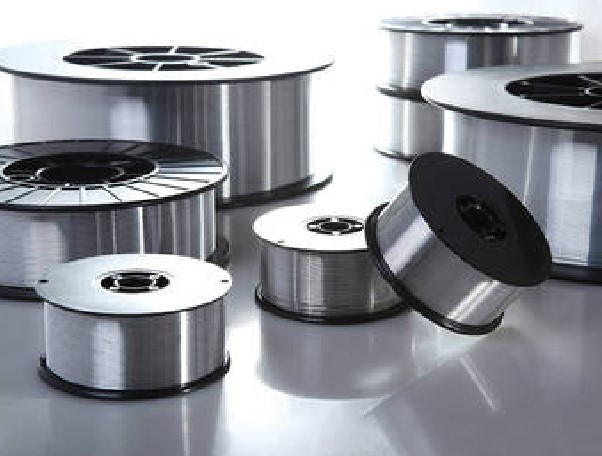 |
ER4043 Silicon Aluminum Welding Wire | Seller: 868776 | Hangzhou Kunli Welding Materials Co., Ltd. offers ER4043 Silicon Aluminum Welding Wire for alumin... |
 |
HDPE High Speed Water Cooled Double Wall Corrugated Pipe Extrusion Line | Seller: Shandong HUASU Plastic Technology Co.,Ltd. | The molds adopt the double flow channel structure and nitriding polishing processed die head. Thi... |
 |
PanEVAP & MVR system | Seller: Yangzhou Panstar Heat Exchanger Equipment Co., Ltd | A multiple-effect evaporator is a device that efficiently uses steam heat to evaporate water. Wat... |
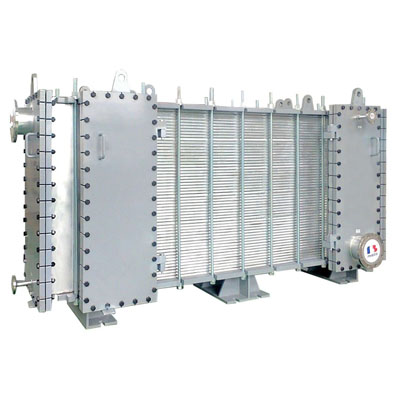 |
PanGAP wide gap welded plate heat exchanger | Seller: Yangzhou Panstar Heat Exchanger Equipment Co., Ltd | PanGAP wide gap welded plate heat exchangerconsists of a welded plate pack with different channel... |
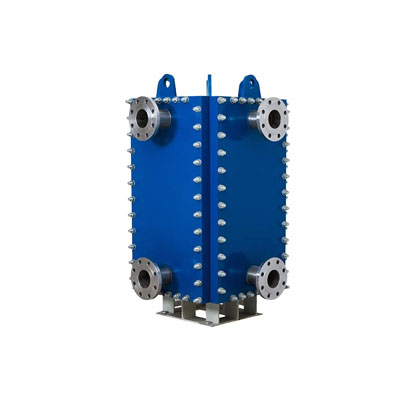 |
PanBloc welded plate heat exchanger | Seller: Yangzhou Panstar Heat Exchanger Equipment Co., Ltd | PanBloc welded plate heat exchangeris compact and efficient, although fully welded, is totally ac... |

