

Advanced glass bottle internal pressure resistance tester equipment


Whats/App: +86 156 1874 6768
Web: standard-groups.com
Standards
The design and manufacture of the internal pressure resistance tester for glass bottles comply with a series of national and international standards to ensure the accuracy and reliability of test results. Among the more common standards are GB/T 4546 - 2008 Test Method for Internal Pressure Resistance of Glass Containers and ISO 7458:2004 Test Method for Internal Pressure Resistance of Glass Containers. These standards specify in detail the test methods for the internal pressure resistance of glass bottles, specimen preparation, test conditions, etc., providing a unified standard for the use of the tester.
Features
• Large color LCD display showing test results, including each measurement and statistical value;
• Touchscreen control, clear and intuitive, easy to operate;
• High-speed processing chip, significantly improving operating speed;
• Adjustable test space, suitable for a wide range of products;
• Capable of constant pressure holding tests, pressurized but not held pressure tests, and burst tests;
• Equipped with a micro printer for quick printing of each measurement result, statistical values, and average values;
• The instrument can store multiple sets of data, with 10 measurements per set;
• Equipped with testing software for unlimited storage and printing;
• No complex hydraulic system, reducing leakage rate and facilitating maintenance;
• The system program has an ISP online upgrade function, providing personalized services.
Technical Parameters
| Technical Parameter | Specification |
|---|---|
| Testing Pressure Range | Usually it can reach 0 - 6MPa or higher (specific range depends on equipment model and testing requirements); covers internal pressure-resistance testing needs of most glass bottles. |
| Display Accuracy | Generally 0.001MPa or higher; enables precise display of pressure changes during the testing process. |
| Pressurizing Medium | Usually water (ensures no additional pressure impact on glass bottles; also convenient for controlling and monitoring pressure changes). |
| Testing Speed | Relatively fast; testing time per bottle ranges from a few seconds to a dozen seconds (depends on equipment model, testing pressure, and specimen specifications); helps improve testing efficiency and productivity. |
| Overall Error | Usually less than 0.5%FS (full-scale error); ensures the accuracy and reliability of test results. |
| Working Environment | Needs to be used in a certain environment: temperature range of 5 - 40℃ (varies by equipment model), relative humidity not exceeding a certain value; helps maintain equipment stability and extend its service life. |
| Safety Performance | Equipped with safety features (e.g., leak-protection control circuits) to ensure operator safety; also has automatic fault detection and common fault prompting functions, facilitating prompt problem identification and resolution. |
Accessoriess
Standard configuration: Glass bottle internal pressure testing machine main unit, micro printer, fixtures
Optional accessories: Testing software, communication cable
Test Procedures
Method A: Constant Internal Pressure Test
Method A tests the pressure resistance of a glass container by applying a constant internal pressure over a predetermined time. Its core requirements include:
Test Conditions: Tap water is used as the test medium. The sample must be filled with water at room temperature, within ±5°C of room temperature, to avoid additional pressure interference.
Equipment Requirements: The testing equipment must be capable of clamping the bottle mouth and suspending the sample, and equipped with an elastic sealing ring to ensure the sealing of the pressurized medium. The pressurization device must initially pressurize at a rate of 1.0 MPa/s ± 0.2 MPa/s and maintain a constant pressure.
Test Procedure:
Passability Test: Increase the internal pressure to the predetermined value, maintain it for 60 seconds ± 2 seconds, and observe whether the sample remains intact.
Incremental Pressure Test: Based on the passability test, gradually increase the pressure in increments of 0.1 MPa or 0.2 MPa until the sample breakage rate reaches 50% or 100%.
Method B: Incremental Internal Pressure Test
Method B determines the ultimate pressure resistance value by increasing the internal pressure at a constant rate until the sample ruptures. The standard specifies clear requirements for pressurization rate and test environment to ensure the accuracy and repeatability of test results.
Sampling and Precautions
The standard emphasizes that test samples must be glass containers that have not undergone other mechanical or thermal property tests to avoid affecting the internal pressure resistance test results. The sampling quantity should comply with regulations to ensure the representativeness and statistical significance of the test.
Send product request
Other supplier products
 |
Fiber Crimp Elasticity Tester | Whats/App: +86 156 1874 6768 Web: standard-groups.com The Fiber Crimp Elasticity Tester is a specialized instrument designed to measure the crimp... |
 |
Membrane Filter Integrity Testing Equipment | Whats/App: +86 156 1874 6768 Web: standard-groups.com Application (1) Hydrophobic filter integrity testing (water intrusion test). (2) Hydrophi... |
 |
Battery Nail Penetration Tester | Whats/App: +86 156 1874 6768 Web: standard-groups.com Battery Nail Penetration Tester is designed for evaluating the safety performance of lithiu... |
 |
IULTCS/Veslic Rub Fastness Tester | Whats/App: +86 156 1874 6768 Web: standard-groups.com In daily life, leather products, such as leather clothing, purses, leather shoes ,etc., pro... |
 |
Automated Fire Resistance Evaluation Machine | Whats/App: +86 156 1874 6768 Web: standard-groups.com Applications Based on practical applications of domestic and international fire-resistant ... |
Same products
 |
ER4043 Silicon Aluminum Welding Wire | Seller: 868776 | Hangzhou Kunli Welding Materials Co., Ltd. offers ER4043 Silicon Aluminum Welding Wire for alumin... |
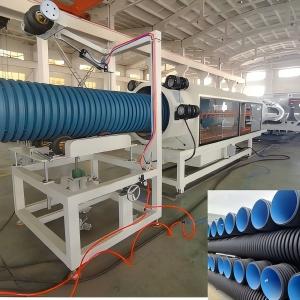 |
HDPE High Speed Water Cooled Double Wall Corrugated Pipe Extrusion Line | Seller: Shandong HUASU Plastic Technology Co.,Ltd. | The molds adopt the double flow channel structure and nitriding polishing processed die head. Thi... |
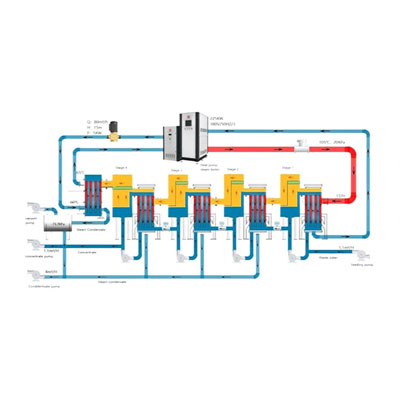 |
PanEVAP & MVR system | Seller: Yangzhou Panstar Heat Exchanger Equipment Co., Ltd | A multiple-effect evaporator is a device that efficiently uses steam heat to evaporate water. Wat... |
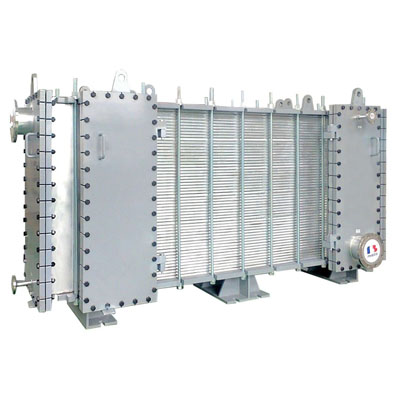 |
PanGAP wide gap welded plate heat exchanger | Seller: Yangzhou Panstar Heat Exchanger Equipment Co., Ltd | PanGAP wide gap welded plate heat exchangerconsists of a welded plate pack with different channel... |
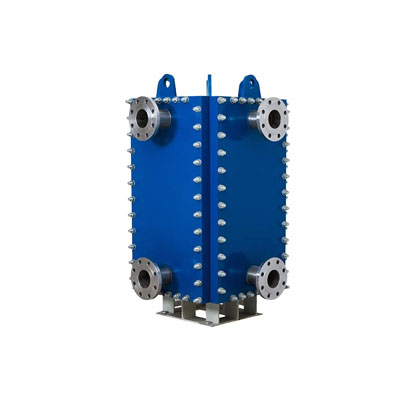 |
PanBloc welded plate heat exchanger | Seller: Yangzhou Panstar Heat Exchanger Equipment Co., Ltd | PanBloc welded plate heat exchangeris compact and efficient, although fully welded, is totally ac... |

