

Demesia Zigzag Tester

Whats/App: +86 156 1874 6768
Web: standard-groups.com
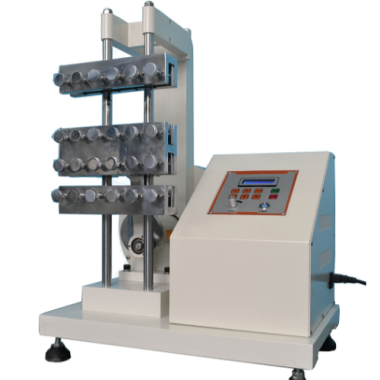
The Demesia Zigzag Tester is a professional device used to test the flexural resistance of materials such as rubber, leather, synthetic leather, and shoe soles.
Application
The Demesia Zigzag Tester is primarily used to simulate the repeated bending that materials experience during actual use. Through continuous bending fatigue testing, it observes the degree of cracking in the material to understand or compare its durability. This is crucial for evaluating the fatigue resistance of materials such as rubber and leather, helping manufacturers optimize product design and material selection.
Standards
ISO 132 :Rubber and elastomers — Determination of fatigue life and fatigue strength in flexure (flexometer method)
ISO 6943:Rubber and elastomers — Determination of tensile stress-strain properties
ASTM D430 :Standard Test Method for Hardness of Rubber by Means of a Durometer
ASTM D430-B :Standard Test Method for Hardness of Rubber (Durometer Type B)
DIN 53522-1 :Rubber and elastomers — Tensile testing — Part 1: General requirements
DIN 53522-2:Rubber and elastomers — Tensile testing — Part 2: Vulcanized rubbers
DIN 53522-3 :Rubber and elastomers — Tensile testing — Part 3: Thermoplastic elastomers
JIS K6301:Rubber and rubber products — Physical test methods
ASTM D813:Standard Test Method for Fatigue of Vulcanized Rubber and Thermoplastic Elastomers by Repeated Tension
BS 903:Methods of Test for Rubber and Elastomers
Features
Modular test head design (3 interchangeable jaw types)
Real-time waveform display of bending force
Self-diagnosis system with 20+ error codes
Emergency stop with electromagnetic braking
Multi-axis programmable control
Technical Parameters
| Parameter | Specifications |
|---|---|
| Sample size | Usually rectangular, e.g. (108±0.5)×(70±0.5)mm or (154×25±1)×(6.3±0.15)mm, etc. |
| Distance between upper and lower clamps | The larger distance and smaller distance may be 76±0.2mm and 19±0.2mm, etc. respectively |
| Clamp stroke | Generally 57±0.5mm, etc. |
| Reciprocating frequency | Usually 300±10 cycles/min or 60~300r/min±10r/min, etc. |
| Stretching stroke | 0~100mm (adjustable), etc. |
| Number of test groups | 6 groups, 12 groups, 24 groups, 48 groups or 16 groups, etc. It depends on the model and manufacturer |
| Counting method | Each group of samples is counted independently, and the machine stops automatically after reaching the set number of times |
| Volume and weight | The volume may be about 340×620×756mm or 350×600×700mm, etc.; the weight may be about 68kg or 78kg, etc. |
| Power supply | Usually AC220V, 50/60Hz, etc. |
Accessoriess
1. One set of standard laser cutting dies
2. One set of product instructions, one-year warranty certificate, and one "CNAS" internationally accredited calibration report
3. One set of repair tools
Test Procedures
1. Sample Pre-treatment
According to the standards corresponding to the test materials (rubber, leather, synthetic leather, shoe soles, etc.) (e.g., ISO 132. JIS K6545), cut the test specimens (usually rectangular, such as (108±0.5)×(70±0.5) mm); place the specimens in a standard environment (23±2℃, 50±5% RH) for at least 24 hours to ensure the specimens are in a stable state.
2. Equipment Pre-check
Connect to a 220V AC 50/60Hz power supply, and check that the equipment's clamps and transmission parts are in good condition; start the equipment for 1-2 minutes without load to confirm that there is no jamming, abnormal noise, or other abnormalities.
3. Sample Clamping
Clamp the pre-treated specimens into the multiple sets of clamps on the equipment (supporting 6/12/24 test groups, etc.), ensuring that the specimens are flat and evenly stressed; adjust the distance between the upper and lower clamps (e.g., larger distance 76±0.2mm, smaller distance 19±0.2mm), and fix the specimens to prevent loosening during testing.
4. Parameter Setting
Set the test parameters through the equipment control panel:
Reciprocating frequency (usually 300±10 cycles/minute, or 60~300 cycles/minute)
Target number of test cycles for each set of specimens (set separately, e.g., 10000 cycles)
Clamp stroke (generally 57±0.5mm)
Confirm the parameters and save the settings.
5. Start Testing
After re-checking that the sample clamping and parameters are correct, start the equipment; the equipment will perform reciprocating bending tests according to the set parameters, simulating the repeated bending scenarios in the actual use of the material.
6. Test Monitoring and Termination
Observe the state of the specimens in real time during the test: if the specimens show obvious cracking, breakage, or other failure, the test for the corresponding group can be manually terminated; if the set number of cycles is reached, the equipment will automatically stop.
7. Data Recording and Completion
Record the actual number of test cycles for each set of specimens, the degree of cracking of the specimens (e.g., cracking level), and other results; turn off the equipment power, remove the specimens, clean the clamps and workbench, and complete the test.
Send product request
Other supplier products
 |
Catheter Vacuum Leak Tester ISO & ASTM Standard | Get a quote: Whats/App: +86 156 1874 6768 Web: standard-groups.com The Catheter Vacuum Leak Tester is a professional device used to detect leaks... |
 |
Urinary Catheter Strength Tester | Whats/App: +86 156 1874 6768 Web: standard-groups.com The Urinary Catheter Strength Tester is designed to evaluate the physical strength and mech... |
 |
Intramedullary Nails Static Four-point Bending Tester | Whats/App: +86 156 1874 6768 Web: standard-groups.com Standard YY/T 0591 (China): Standard for static four-point bending tests of lockable intra... |
 |
Electrical Pencil Hardness Testing Device (for Electric pencil hardness tester) | Whats/App: +86 156 1874 6768 Web: standard-groups.com Product Introduction: This machine is suitable for all kinds of finished product spray har... |
 |
Heat Extension Tester | Whats/App: +86 156 1874 6768 Web: standard-groups.com The Heat Extension Tester is designed to measure the elongation and deformation of electric... |
Same products
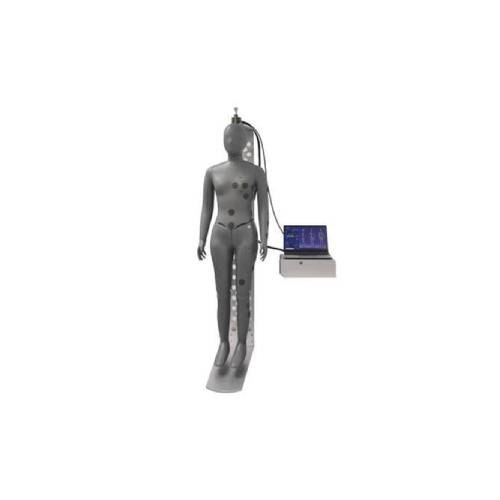 |
Full-Body Garment Stress Tester,FZ/T 70015 | Seller: Standard International Group (HK) Limited | Whats/App: +86 156 1874 6768 Web: standard-groups.com TheFull-Body Garment Stress Testeris a pr... |
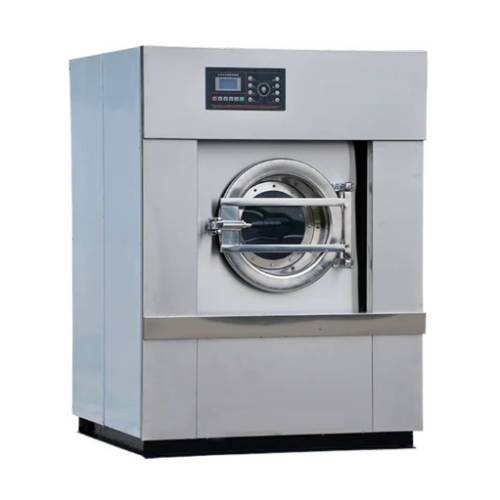 |
Industrial Dry Cleaning Machine,industrial garment steamer | Seller: Standard International Group (HK) Limited | Whats/App: +86 156 1874 6768 Web: standard-groups.com TheIndustrial Dry Cleaning and Energy-Sav... |
 |
MST Medical Compression Stocking Tester,compression sock tester | Seller: Standard International Group (HK) Limited | Whats/App: +86 156 1874 6768 Web: standard-groups.com The MST Medical Compression Stocking Test... |
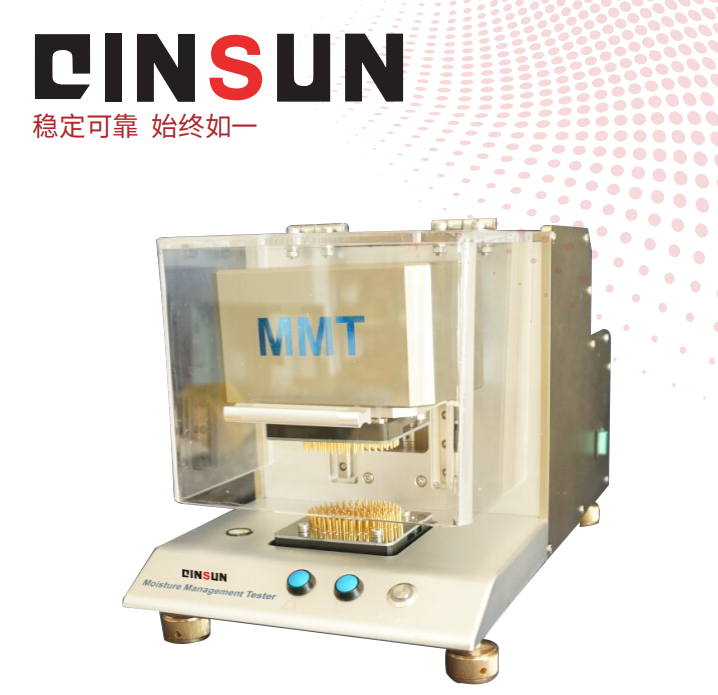 |
MMT Liquid Water Separation Tester,MMT Liquid Water Analysis Tool | Seller: Standard International Group (HK) Limited | Whats/App: +86 156 1874 6768 Web: standard-groups.com Applications Textile Manufacturing:Testi... |
 |
Dental material color stability tester | Seller: Standard International Group (HK) Limited | Whats/App: +86 156 1874 6768 Web: standard-groups.com Application The applications of color st... |

