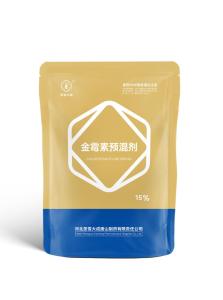
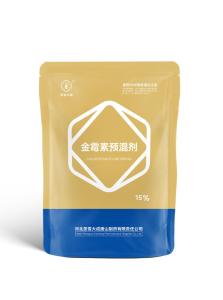
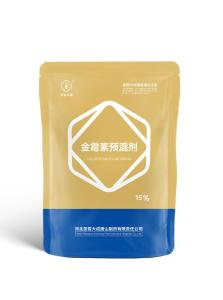
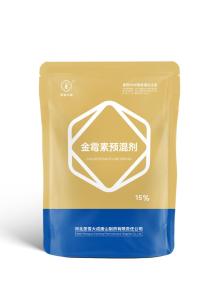
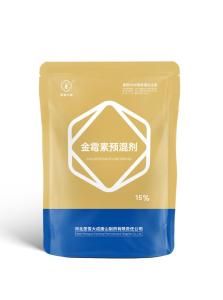
Chlortetracycline Premix Manufacturer

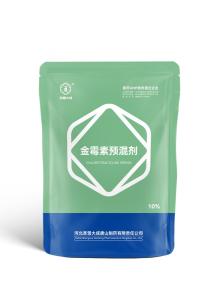
Chlortetracycline Premix is a veterinary medicine used to prevent and treat bacterial infections in poultry and livestock. It is a broad-spectrum antibiotic belonging to the tetracycline family and is highly effective against a range of Gram-positive and Gram-negative bacteria, as well as some intracellular organisms. The premix formulation makes it easy to administer and provides a uniform dose to the animals. This article provides a detailed overview of Chlortetracycline Premix, including its properties, mechanism of action, uses, dosage, and precautions.
Properties:
Chlortetracycline Premix is a yellow-brown to light-brown powder, with a characteristic odor. The active ingredient is chlortetracycline, which is present in the form of chlortetracycline hydrochloride. The premix is formulated to provide a concentration of 10% chlortetracycline hydrochloride. It is soluble in water and has a pH of 2.5-3.5.
Mechanism of Action:
Chlortetracycline acts by inhibiting protein synthesis in bacteria. It binds to the 30S subunit of the bacterial ribosome, preventing the attachment of aminoacyl-tRNA to the A site, thus blocking the elongation of the polypeptide chain. This leads to the inhibition of bacterial growth and replication, ultimately resulting in bacterial death. Chlortetracycline is effective against both Gram-positive and Gram-negative bacteria, including Mycoplasma spp. and Rickettsia spp.
Uses:
Chlortetracycline Premix is primarily used to treat and prevent bacterial infections in poultry and livestock, including swine, cattle, sheep, and goats. It is effective against a variety of bacterial infections, including respiratory infections, enteritis, and mastitis. It is also used to improve growth performance and feed efficiency in animals.
Dosage:
The recommended dosage of Chlortetracycline Premix depends on the animal species, weight, and the severity of the infection. The premix is usually added to the animal's feed at a concentration of 50-100 mg of chlortetracycline per kg of body weight per day, for a period of 5-7 days. For prevention purposes, a lower concentration of 20-50 mg/kg body weight/day may be used. The premix should be thoroughly mixed with the feed to ensure a uniform distribution.
Precautions:
Chlortetracycline should be used with caution in animals with liver or kidney disease, as it may exacerbate the condition. It should also be avoided in pregnant or lactating animals, as it can affect fetal development and milk production. Chlortetracycline should not be used in animals that are hypersensitive to tetracyclines. Care should be taken to avoid contamination of feed or water sources with the premix.
Conclusion:
Chlortetracycline Premix is a broad-spectrum antibiotic used to treat and prevent bacterial infections in poultry and livestock. Its mechanism of action involves the inhibition of bacterial protein synthesis, making it effective against a range of Gram-positive and Gram-negative bacteria. The premix formulation makes it easy to administer and provides a uniform dose to the animals. However, precautions should be taken when using Chlortetracycline to ensure the safety and efficacy of the treatment.
Other supplier products
|
|
Natamycin Bulk supply |
In addition to the advantages of broad antibacterial spectrum and strong stability mentioned earlier, natamycin also has the characteristics of hig... |
|
|
Nisin 500g 1kg 25kg |
Nisin is a natural antimicrobial peptide that is produced by certain strains of bacteria, particularly Lactococcus lactis. It is a member of the cl... |
|
|
Nisin 500g Partners, long-term cooperation |
The antibacterial mechanism of Nisin (Nisin) is the core for its function as a natural polypeptide preservative. It is mainly achieved through mult... |
|
|
High quality Natamycin Supplier |
New products coming soon!Welcome to inquire and book! 1. Animal Feed Industry Natamycin is added to animal feed to prevent mold contamination durin... |
|
|
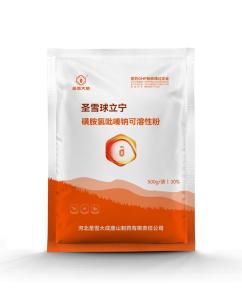
Sulfachloropyrazine Sodium Soluble Powder Supplier |
Trade Name: Shengxue Qiuling Common Name: Sulfachloropyrazine Sodium Soluble Powder Main Ingredients: Sulfachloropyrazine Sodium Description: This ... |
All supplier products
Same products