

Coolant pulsation testing machine,Coolant pressure pulse test system

Whats/App: +86 156 1874 6768
Web: standard-groups.com
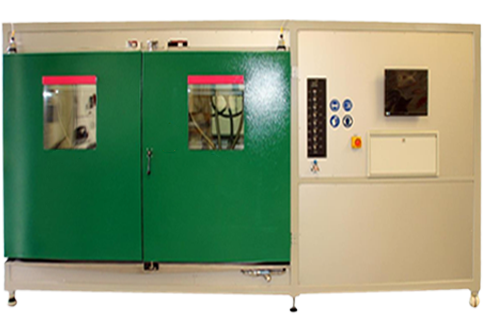
The Coolant Pulsation Testing Machine is a precision testing system designed to evaluate automotive cooling components under dynamic pressure conditions. You can use it to test radiators, rubber hoses, expansion tanks, and other cooling system parts for durability, leakage, and functional performance. The front-and-rear dual-door design allows easy installation and removal of samples, while the system automatically detects leaks and shuts down failed samples to ensure safe, reliable operation.
Application
The Coolant Pulsation Testing Machine is suitable for a wide range of automotive testing applications:
Radiator Testing: Evaluate structural integrity and leak resistance under pulsating pressure and thermal load.
Rubber Hose Testing: Test durability, pressure pulsation resistance, and functional lifespan of coolant hoses, including aramid-reinforced hoses.
Expansion Tank Testing: Verify thermal stability and mechanical durability under dynamic coolant flow.
Component Validation: Conduct system-level verification for cooling components before vehicle integration.
Automotive R&D: Support material selection, design optimization, and durability assessment of cooling systems.
Typical test products include radiators, coolant hoses, expansion tanks, thermoplastic and composite cooling system components.
Standards
The system supports compliance with major automotive industry standards:
TL 889 / TL 874 (4.4) – Volkswagen Group technical specification for cooling system materials and radiator functionality testing.
TL 52361 (6.1.1 / 6.1.2) – Volkswagen Group specification for coolant hoses (including aramid-reinforced) and functional performance (pressure pulsation and long-term static testing).
TL 52682 (6.11 / 6.12) – Volkswagen Group specification for glass-fiber reinforced PA66 used in cooling system components, including dynamic and static durability tests.
GMW15310 – General Motors global engineering standard for materials and component performance, including integrated vehicle/system testing.
GMW14322‑2016 (4.13) – GM global standard for environmental and durability testing with specific requirements.
GMW16288 – GM system-level durability and verification standard for cooling system components.
Parameters
| Parameter Category | Details |
|---|---|
| Equipment Dimensions | 4350 mm × 2520 mm × 2150 mm (W × H × D) |
| Environmental Chamber Dimensions | 1800 × 1000 × 1000 mm (W × H × D) |
| Rated Power | 60 kW |
| Test Medium | Glycol/Water |
| Pressure Range | 0…5 bar |
| Medium Flow Control | Up to approx. 100 l/min |
| Linear Motion Parameters | ±25 mm at 1 Hz ±12 mm at 5 Hz ±6 mm at 10 Hz ±2 mm at 20 Hz |
| Test Medium Temperature Range | -40°C … +150°C |
| Environmental Temperature Control | -40°C … +150°C |
| Test Channels | 8 |
Features
Pressure pulsation testing machine with linear and eccentric motion device.
Pressure range from 0.1 up to max. 5 bar.
Heating of the environmental chamber through monitoring and limiting maximum surface temperature.
Automatic leak detection and leak testing with automatic shutdown of failed samples.
Automatic return pump to prevent coolant leakage.
Windows/LabVIEW-based control unit with integrated data acquisition and recording.
Accessories
Linear and eccentric motion drive unit
Environmental chamber with dual doors
Automatic leak detection sensors and safety shut-off
Coolant circulation and return pump
Windows/LabVIEW control system with data logging
Heating and temperature control modules
Test Procedures
Ensure installation space allows safe operation and access to all test channels.
Connect the system to the 60 kW power supply and ensure environmental temperature control is set.
Fill the system with glycol/water test medium.
Install the radiator, hose, or expansion tank in the test chamber.
Close front and rear doors to seal the chamber.
Set the desired pressure range, linear motion parameters, and temperature profiles in the control unit.
Start the test program via Windows/LabVIEW interface.
Monitor pressure, motion, temperature, and leak sensors throughout the test.
Automatically shut down any failed or leaking samples.
After testing, safely drain the test medium and allow the chamber to cool before removing samples.
Maintenance Information
Regularly inspect the motion drive, pressure sensors, and leak detection units for wear or damage.
Check glycol/water circulation system for blockages or leaks before each test.
Calibrate sensors and temperature controllers periodically to maintain measurement accuracy.
Clean environmental chamber surfaces and doors to prevent corrosion.
Replace worn seals, gaskets, or insulation as necessary to ensure safe operation.
Отправить запрос, связаться с поставщиком
Другие товары поставщика
 |
Universal Abrasion Resistance Tester | Whats/App: +86 156 1874 6768 Web: standard-groups.com TheUniversal Abrasion Resistance Testercan be used to flat grinding, mill grinding, edge gr... |
 |
CE certified geosynthetic clogging tester | Get a quote: Whats/App: +86 156 1874 6768 Web: standard-groups.com Application The method of gradient ratio is used to measure the permeability... |
 |
scratch resistance testing system with integrated sensors | Whats/App: +86 156 1874 6768 Web: standard-groups.com Application Primary test objects Accessible solid insulating parts of household appliance... |
 |
Slip Test Equipment | Whats/App: +86 156 1874 6768 Web: standard-groups.com Applications (1)Measurement of slip resistance of safety, work, and casual footwear. (2)E... |
 |
Professional Footwear Thermal Insulation Tester Manufacturer | Get a quote: Whats/App: +86 156 1874 6768 Web: standard-groups.com The Footwear Cold Insulation Tester is designed to evaluate the low-temperatu... |
Похожие товары
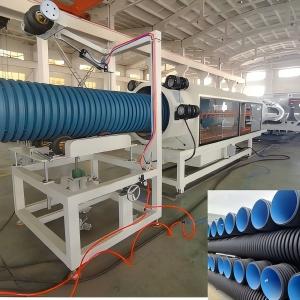 |
Высокоскоростная экструзионная линия для производства гофрированных труб с двойными стенками из ПЭВП с водяным охлаждением | Продавец: Shandong HUASU Plastic Technology Co.,Ltd. | Формы имеют структуру с двойным каналом потока и фильерную головку, обработанную азотированием и ... |
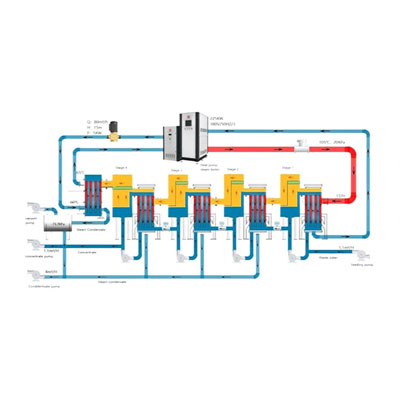 |
PanEVAP & MVR system | Продавец: Yangzhou Panstar Heat Exchanger Equipment Co., Ltd | A multiple-effect evaporator is a device that efficiently uses steam heat to evaporate water. Wat... |
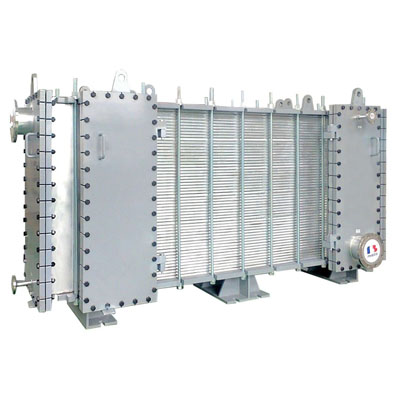 |
PanGAP wide gap welded plate heat exchanger | Продавец: Yangzhou Panstar Heat Exchanger Equipment Co., Ltd | PanGAP wide gap welded plate heat exchangerconsists of a welded plate pack with different channel... |
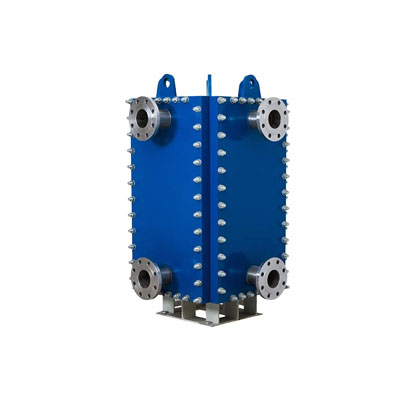 |
PanBloc welded plate heat exchanger | Продавец: Yangzhou Panstar Heat Exchanger Equipment Co., Ltd | PanBloc welded plate heat exchangeris compact and efficient, although fully welded, is totally ac... |
 |
PanBox welded plate heat exchanger | Продавец: Yangzhou Panstar Heat Exchanger Equipment Co., Ltd | PanBox welded plate heat exchangerconsists of a laser welded plate pack with optimized corrugated... |

