

UL 2596 Torch and Grit (TaG) Tester,Test Equipment for Battery Enclosure Materials

Whats/App: +86 156 1874 6768
Web: standard-groups.com
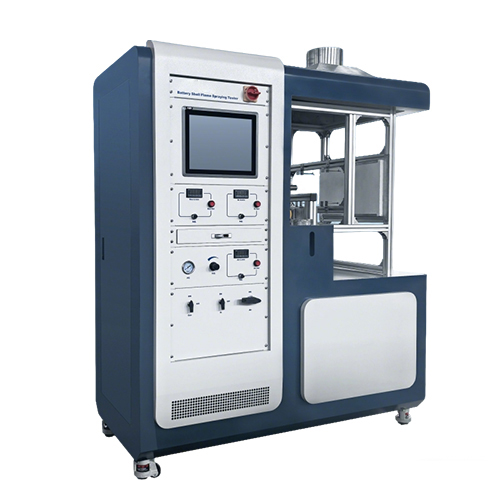
The Gravel Flame Jet Test Apparatus is designed to evaluate battery enclosure materials under simulated thermal runaway conditions. You can use this instrument to test sheet materials rather than entire battery assemblies, allowing you to efficiently assess material performance while reducing development costs and time. It provides precise control over flame and particle exposure, helping you determine the thermal and mechanical resilience of battery housing materials.
Application
You can use the apparatus in the following scenarios:
Battery housing material evaluation: Assess thermal and mechanical performance of sheet materials under simulated battery thermal runaway conditions.
Coating and surface protection testing: Determine material resistance to flame and particle impact.
Research and development: Optimize battery safety designs and reduce prototype testing costs.
Quality control laboratories: Routine evaluation of materials for compliance with flame and impact resistance standards.
Compatible test components: Flame jet burner, particle injection system, stainless steel sample racks, temperature measurement system.
Standards
This test apparatus conforms to a wide range of international standards:
UL 2596 Ed. 2 — Test methods for thermal and mechanical performance of battery enclosure materials
ASTM D3170 — Test method for coating and material gravel impact resistance
SAE J400 — Automotive surface coating gravel impact standard
ISO 20567‑1 — Paint and varnish coating gravel impact resistance, Part 1
DIN 55996‑1:2001 — Coating material gravel impact strength, Part 1
ISO 22899‑1 — Passive fire protection materials, flame jet performance test, Part 1
EN 60695‑11‑20 — Fire testing methods
ISO 3795 — Determination of burning behavior of materials used in road vehicle interiors
UL Torch and Grit (TaG) Test — Flame and particle medium test
Parameters
| Parameter | Specification |
|---|---|
| Dimensions | 1600 × 750 × 2100 mm |
| Weight | 250 kg |
| Flame Jet Diameter | 28.6 mm |
| Methane Supply Ports | 30 |
| Oxygen Supply Ports | 78 |
| Flame Output | 3 kW (flame), 1.5 g/s (particle flame) |
| Ignition | Electric spark ignition |
| Methane Flow Controller | 0–10 L/min, accuracy ±2% F.S |
| Oxygen Flow Controller | 0–50 L/min, accuracy ±2% F.S |
| Temperature Measurement | 4-channel K-type thermocouples (30 AWG) |
| Sample Rack | Stainless steel, calibration and test positions, automatic insertion |
| Control System | Integrated control box with manual/automatic operation and data acquisition |
| Software | Windows-based, supports temperature calibration, manual/automatic programs, data logging, and report export |
Features
Integrated steel structure: Open test platform reduces heat accumulation.
Smoke collection: Stainless steel hood with adjustable exhaust airflow for efficient fume removal.
Imported flame burner: Compatible with UL laboratory standards, provides both flame jet and particle flame.
Precise flow control: Mass flow controllers for methane, oxygen, and air with temperature and pressure compensation.
Automated operation: Flame application and particle flame control with electric spark ignition.
Advanced temperature monitoring: Four thermocouples measure flame and sample temperatures at multiple points.
Flexible sample positioning: Calibration and test positions with automatic sample insertion.
User-friendly software: Manual and automatic modes, temperature calibration, time-temperature and particle-time curve generation, and report output.
Accessories
Flame jet burner with particle injection system
Stainless steel sample racks (calibration and test positions)
Smoke collection hood with adjustable airflow
Temperature measurement thermocouples and mounting accessories
Control box with integrated software and data acquisition system
Test Procedures
Install the test sample on the stainless steel sample rack in the designated test position.
Connect the methane, oxygen, and compressed air supplies.
Activate the flame jet burner and particle injection system according to the software control.
Record flame exposure and particle impact parameters using the thermocouples and data acquisition system.
Analyze the material’s thermal and mechanical performance based on temperature, time, and particle exposure data.
Export and review test reports using the integrated software.
Maintenance Information
Clean the flame burner and particle supply ports regularly to ensure consistent flame quality.
Check and calibrate mass flow controllers for methane, oxygen, and air periodically to maintain accuracy.
Inspect sample racks and thermocouples before each test to prevent mechanical deformation or sensor errors.
Keep the control box and software updated and ensure proper ventilation around the exhaust system.
Отправить запрос, связаться с поставщиком
Другие товары поставщика
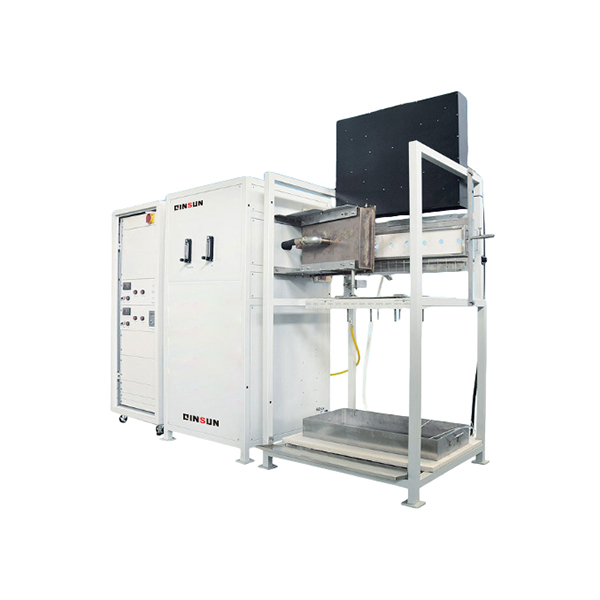 |
Flame Spread Measurement System for Naval Applications | Whats/App: +86 156 1874 6768 Web: standard-groups.com Application Building Industry Flame spread testing of construction materials such as wall... |
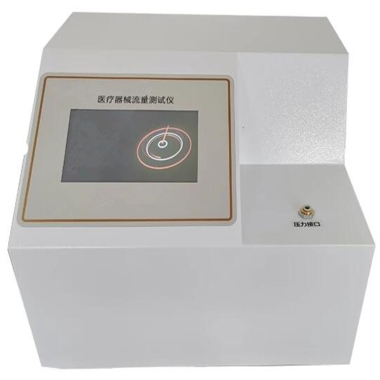 |
Syringe needle flow tester | Whats/App: +86 156 1874 6768 Web: standard-groups.com The Syringe Needle Flow Tester is designed to evaluate the flow characteristics of syringes... |
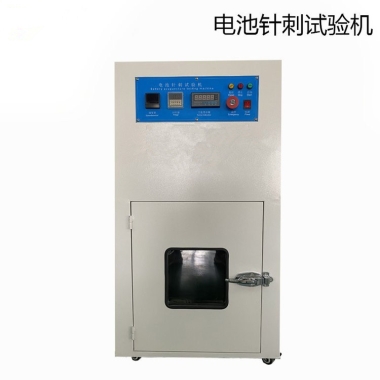 |
Battery Nail Penetration Tester | Whats/App: +86 156 1874 6768 Web: standard-groups.com Battery Nail Penetration Tester is designed for evaluating the safety performance of lithiu... |
 |
Automated conduit bending tester for PV modules | Whats/App: +86 156 1874 6768 Web: standard-groups.com The Photovoltaic Module Wire Tube Bending Testing Machine is designed to evaluate the mecha... |
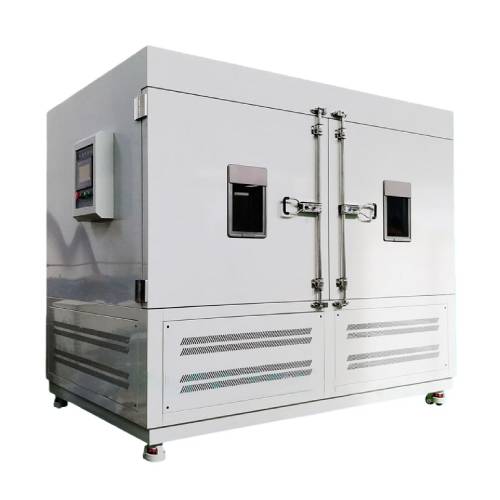 |
PV Degradation Testing Chamber | Whats/App: +86 156 1874 6768 Web: standard-groups.com Applications The Light Decay Test Chamber is designed as an indoor exposure system, primar... |
Похожие товары
 |
ER4043 Silicon Aluminum Welding Wire | Продавец: 868776 | Hangzhou Kunli Welding Materials Co., Ltd. specializes in manufacturing high-quality welding mate... |
 |
Choosing the Right Equipment for Heavy-Duty Cleaning | Продавец: Taizhou Feike Mechanical Technology Co., Ltd. | FEIKE’s High Pressure Washer is designed for industrial cleaning, equipment maintenance, ve... |
 |
ER4043 Silicon Aluminum Welding Wire | Продавец: 868776 | Hangzhou Kunli Welding Materials Co., Ltd. offers ER4043 Silicon Aluminum Welding Wire for alumin... |
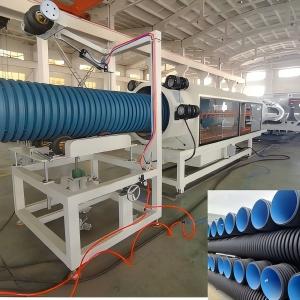 |
Высокоскоростная экструзионная линия для производства гофрированных труб с двойными стенками из ПЭВП с водяным охлаждением | Продавец: Shandong HUASU Plastic Technology Co.,Ltd. | Формы имеют структуру с двойным каналом потока и фильерную головку, обработанную азотированием и ... |
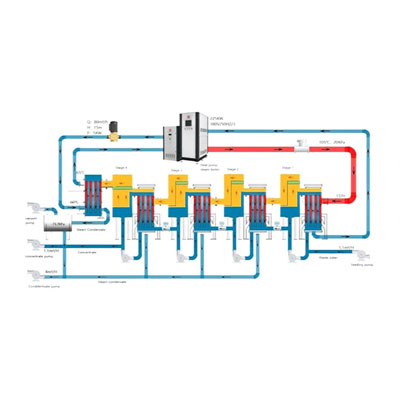 |
PanEVAP & MVR system | Продавец: Yangzhou Panstar Heat Exchanger Equipment Co., Ltd | A multiple-effect evaporator is a device that efficiently uses steam heat to evaporate water. Wat... |

