

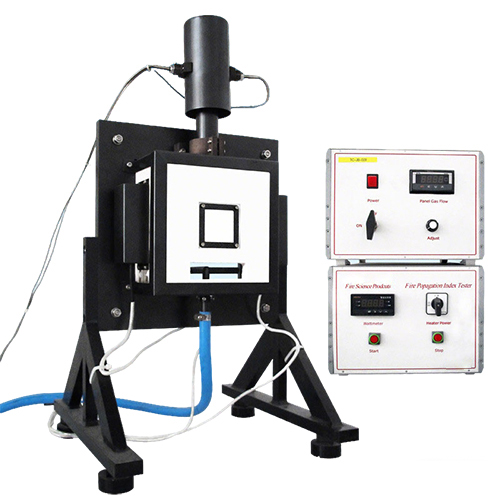
Flame Spread Index Tester,ASTM E648 Flame propagation of carpet materials

Whats/App: +86 156 1874 6768
Web: standard-groups.com
The Flame Spread Index Tester is designed to evaluate the flame propagation characteristics of wall and ceiling lining materials. You can measure the material’s flame spread index (FSI) by exposing samples to a controlled tubular burner with a heat output of 530 J/s and monitoring the flame development over time. This tester allows you to assess fire performance accurately according to international and national standards, providing critical data for building safety, material development, and regulatory compliance.
Application
You can apply this tester in the following scenarios:
Building materials evaluation: Assess the flame spread index of wall and ceiling lining materials.
Plastic material testing: Determine vertical and horizontal flame propagation for polymer materials.
Fire safety compliance: Evaluate materials for civil, railway, and aerospace interior standards.
Quality control: Monitor production materials to ensure consistent fire performance.
Compatible test components: Tubular burner, quartz heaters, T-shaped burner, sample holders, thermocouples, and integrated computer data acquisition system.
Standards
This tester conforms to the following international and national standards:
GB/T 8624‑2012 — Classification of burning behavior of building materials and products (Flame spread index basis)
GB/T 2406.2‑2009 — Plastics combustion test, vertical burning method
GB/T 2408‑2008 — Plastics combustion test, horizontal burning method
GB/T 27904‑2011 — Flame spread test for interior decoration materials
GB/T 16172‑2007 — Determination of heat release rate and total heat release (Cone calorimeter method)
ISO 5658‑2 — Determination of flame spread index, Part 2: Small flame spread test
ISO/TR 9705‑2 — Room corner flame spread test, Part 2: Material performance evaluation
ISO 5660‑2 — Heat release rate, smoke production, and mass loss, Part 2: Flame spread method
ISO 5660‑4 — Heat release and smoke testing for automotive interior materials
ASTM E162 — Surface flammability: smoke density and flame spread
ASTM E648 — Flame propagation of carpet materials
UL 94 — Plastic material flammability: vertical and horizontal burning tests
BS 6853:1999 — Railway vehicle material flame spread, smoke density, and toxicity evaluation
BS 476‑6:1989 + A1:2009 — Fire performance test of building materials, Part 6: Small flame spread method
Parameters
| Parameter | Specification |
|---|---|
| Dimensions | 950 × 600 × 870 mm |
| Weight | 105.5 kg |
| Heating Devices | 2 × 1000 W quartz heaters providing thermal radiation |
| Burner Type | T-shaped tubular burner |
| Sample Holders | 3 types, stainless steel wrapped |
| Thermocouples | Continuously measure temperature difference between chimney and room |
| Power Output Control | Automatic adjustment according to test timeline |
| Data Acquisition | Computer-based, report generation |
Features
Durable stainless steel frame: Ensures structural stability and long-term reliability.
Silicate combustion chamber: Provides uniform and controlled testing environment.
Multiple sample holders: Accommodate different test configurations securely.
Quartz heaters: Deliver consistent thermal radiation to samples.
T-shaped burner: Provides precise direct flame for small flame spread tests.
Continuous temperature monitoring: Thermocouples record chimney versus room temperature.
Automatic power control: Heater output adjusts automatically according to test timeline.
Integrated data acquisition: Computer automatically processes data and generates test reports.
Accessories
Quartz radiation heaters (2 × 1000 W)
T-shaped tubular burner
Stainless steel sample holders (3 types)
Silicate combustion chamber
Thermocouples and mounting accessories
Integrated computer and printer with data acquisition system
Test Procedures
Install the sample in the combustion chamber using the appropriate sample holder.
Connect the G112 test gas supply.
Start the quartz heaters and T-shaped burner, providing thermal radiation and flame exposure.
Adjust heater power automatically according to the test schedule:
First 2 min 45 s: initial burner exposure at 530 J/s
At 2:45 min: increase total heater power to 1800 W
At 5 min: reduce power to 1500 W and maintain until test end
Record flame propagation, temperature, and FSI using the thermocouple and data acquisition system.
Total test duration is 20 minutes. Upon completion, safely remove the sample and review results.
Maintenance Information
Regularly clean the combustion chamber and burners to ensure consistent heat flux.
Calibrate thermocouples and power output control systems periodically.
Inspect sample holders and chamber integrity before each test.
Ensure gas supply is stable and leak-free.
Maintain ambient temperature between 10–35°C for consistent testing conditions.
Отправить запрос, связаться с поставщиком
Другие товары поставщика
 |
Flooring Durability Abrasion Testing Machine ISO/ASTM Standard | Get a quote: Whats/App: +86 156 1874 6768 Web: standard-groups.com Features Customizable Testing Parameters: Adjustable test speed (10–1... |
 |
Absorbable Bone - connecting Plates Four - point Bending Tester | Whats/App: +86 156 1874 6768 Web: standard-groups.com The Absorbable Bone-connecting Plates Four-point Bending Tester is a specialized testing ma... |
 |
45-degree Dry Cleaning Tester | Whats/App: +86 156 1874 6768 Web: standard-groups.com The 45-degree Dry Cleaning Tester is composed of a bottom plate, a control panel and a drum... |
 |
Bone Screw Pull-out Tester | Whats/App: +86 156 1874 6768 Web: standard-groups.com Standard YY/T 1504. ASTM F543: standard specifies a test method for measuring the axial f... |
 |
Safety helmet impact and penetration tester for EN 397 compliance testing | Get a quote: Whats/App: +86 156 1874 6768 Web: standard-groups.com Application The Safety Helmet Acceleration Impact and Penetration Tester is ... |
Похожие товары
 |
ER4047 Aluminum Mig Welding Wire | Продавец: 868776 | Hangzhou Kunli Welding Materials Co., Ltd. specializes in manufacturing reliable welding material... |
 |
ER4043 Silicon Aluminum Welding Wire | Продавец: 868776 | Hangzhou Kunli Welding Materials Co., Ltd. specializes in manufacturing high-quality welding mate... |
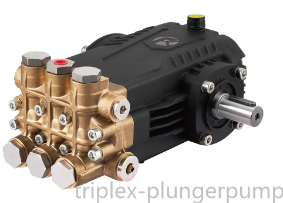 |
Choosing the Right Equipment for Heavy-Duty Cleaning | Продавец: Taizhou Feike Mechanical Technology Co., Ltd. | FEIKE’s High Pressure Washer is designed for industrial cleaning, equipment maintenance, ve... |
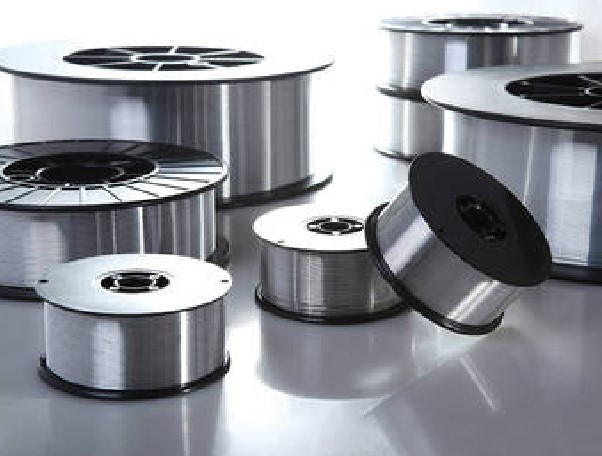 |
ER4043 Silicon Aluminum Welding Wire | Продавец: 868776 | Hangzhou Kunli Welding Materials Co., Ltd. offers ER4043 Silicon Aluminum Welding Wire for alumin... |
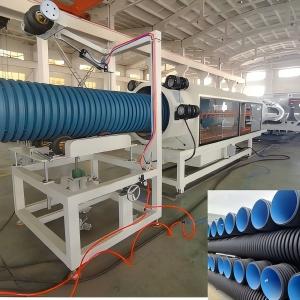 |
Высокоскоростная экструзионная линия для производства гофрированных труб с двойными стенками из ПЭВП с водяным охлаждением | Продавец: Shandong HUASU Plastic Technology Co.,Ltd. | Формы имеют структуру с двойным каналом потока и фильерную головку, обработанную азотированием и ... |

