

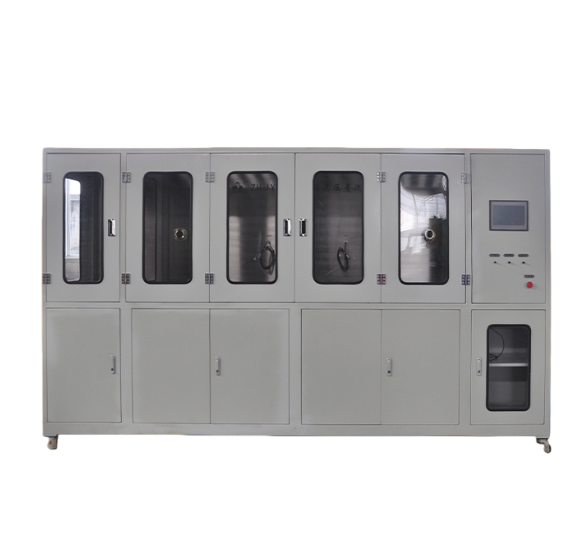
Pump and Valve Test Equipment

Whats/App: +86 156 1874 6768
Web: standard-groups.com
Standards
(1) ISO 4406:2021 — Hydraulic fluid power — Fluids — Method for coding the level of contamination by solid particles.
(2) ISO 18413:2017 — Hydraulic fluid power — Filters — Vocabulary and commercial specifications.
(3) ISO 10707:2019 — Petroleum products and lubricants — Determination of demulsibility characteristics.
(4) ISO 6403:2018 — Hydraulic fluid power — Filter elements — Verification of collapse/burst pressure.
(5) ISO 10372:2016 — Hydraulic fluid power — Filter elements — Method for measuring filtration performance.
(6) NFPA T2.6.1 — Standard for Hydraulic Power Units.
(7) GB/T 16907-1997 — Hydraulic systems — General technical specifications.
(8) GB/T 14039-2002 — Hydraulic transmission — Solid particle contamination code for oil.
(9) JB/T 7857-2006 — Evaluation method for contamination sensitivity of hydraulic valves.
(10) ISO 12103-A3 — Test dust standard for simulating solid particle contamination.
Features
Provides a comprehensive evaluation of both hydraulic pump and valve performance and wear resistance in a single test setup under contaminated conditions.
Simulates the interaction of contaminated fluid with key components in a hydraulic circuit.
Essential for selecting pumps and valves that can reliably operate in hydraulic systems with expected levels of fluid contamination.
Helps validate component designs and materials specifically for resistance to wear and degradation caused by particles.
Provides objective, quantitative data on the long-term effects of contamination on pump and valve performance.
Supports research and development efforts aimed at improving the robustness and lifespan of hydraulic components.
Technical Parameters
| No. | Technical Parameters | Specifications |
|---|---|---|
| 1 | Test medium | Hydraulic oil |
| 2 | Temperature of medium | 10 ~ 80℃ |
| 3 | Test dust | ISO 12103-A3 |
| 4 | Test pressure range | 0.5 ~ 6MPa |
| 5 | Test flow | 1 ~ 20L/min |
| 6 | Purification cleanliness | -/12/10 (GB/T |
| 7 | Test tank volume | 40L |
| 8 | Execution standard | JB/T 7857-2006 |
| 9 | Equipment power supply | AC380V / 50Hz |
| 10 | Power of the whole machine | 5.5kW |
Accessoriess
1. Core Functional Components:
Hydraulic test circuit assembly (including piping and connectors)
Reservoir (for holding contaminated hydraulic oil)
Mounting and fixing device for the pump/valve under test
Solid particulate contamination additive assembly (matching standard dust such as ISO 12103-A3)
Loading mechanism (e.g., throttle, actuator, simulating actual working conditions)
2. Monitoring and Control Components:
Pressure gauge (monitoring system pressure)
Flow monitoring device
Temperature control module (adjusting medium temperature)
Control panel (setting test parameters)
3. Auxiliary Components:
Seals (e.g., O-rings, gaskets)
Pipeline cleaning tools
Instruction manual, certificate of conformity
Test Procedures
1. Preliminary Preparation
Check the sealing of all components of the test bench to ensure there are no leaks in the pipelines and storage tanks; Add hydraulic oil to the storage tank, and add the specified type/concentration of solid particulate contaminants (such as ISO 12103-A3 dust) according to the test requirements, stirring to ensure uniform dispersion of the contaminants.
2. Equipment Installation and Parameter Setting
Install the hydraulic pump and valve to be tested onto the corresponding mounting device in the test circuit; Connect the AC 380V/50Hz power supply and set the test parameters (such as medium temperature, pressure, flow rate, etc.) through the control panel.
3. Test Operation
Start the pump to circulate the contaminated hydraulic oil in the circuit; Activate the loading mechanism to simulate the pressure and flow load under actual working conditions, allowing the pump/valve to operate continuously in the contaminated medium; Monitor and record the pump/valve performance data (such as pressure stability, flow rate changes, leakage, etc.) in real time.
4. Post-Test Processing
After the test, first stop the loading mechanism, then turn off the pump;
Remove the pump/valve under test and check its wear, jamming, etc.;
Drain the contaminated oil from the storage tank and clean the pipelines, storage tank, and other components.
5. Data Processing and Equipment Cleanup
Analyze the performance data recorded during the test to assess the pump/valve's contamination tolerance;
Turn off the equipment power, organize the test records, and complete the equipment cleaning.
Отправить запрос, связаться с поставщиком
Другие товары поставщика
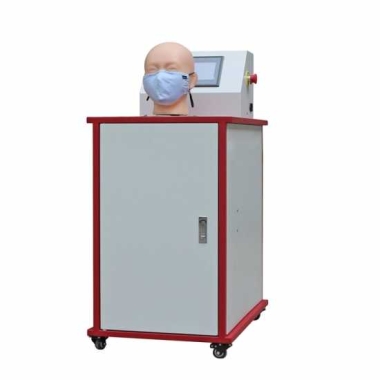 |
Mask respiratory resistance tester | Whats/App: +86 156 1874 6768 Web: standard-groups.com The Mask Respiratory Resistance Tester is designed to measure the inhalation and exhalation... |
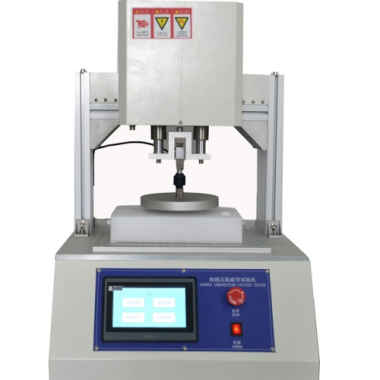 |
Sponge foam collapsible hardness tester | Whats/App: +86 156 1874 6768 Web: standard-groups.com Purpose: This machine is used to measure the indentation hardness of porous elastic materi... |
 |
Automotive Sun Visor End Cap Manufacturing Production Line | Get a quote: Whats/App: +86 156 1874 6768 Web: standard-groups.com The Automotive Sunshade End Cap Assembly Line is an automated production syst... |
 |
High Precision Differential Scanning Calorimetry (DSC) Specific Heat Capacity Tester Manufacturer | Get a quote: Whats/App: +86 156 1874 6768 Web: standard-groups.com Standards GJB 330A-2000 – Test Methods for Specific Heat Capacity of S... |
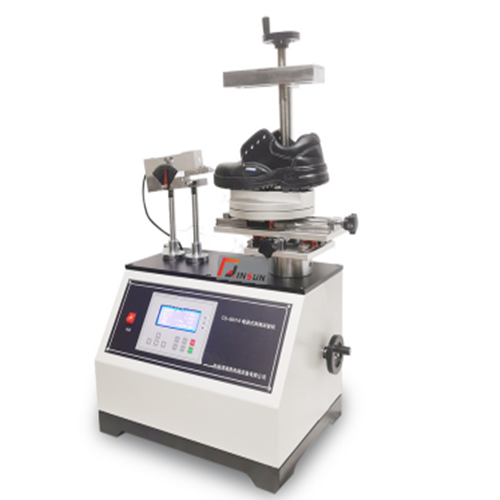 |
OEM Footwear Testing Equipment Manufacturer | Get a quote: Whats/App: +86 156 1874 6768 Web: standard-groups.com Applications (1)Testing the peeling strength of athletic shoes, safety shoes... |
Похожие товары
 |
ER4047 Aluminum Mig Welding Wire | Продавец: 868776 | Hangzhou Kunli Welding Materials Co., Ltd. specializes in manufacturing reliable welding material... |
 |
ER4043 Silicon Aluminum Welding Wire | Продавец: 868776 | Hangzhou Kunli Welding Materials Co., Ltd. specializes in manufacturing high-quality welding mate... |
 |
Choosing the Right Equipment for Heavy-Duty Cleaning | Продавец: Taizhou Feike Mechanical Technology Co., Ltd. | FEIKE’s High Pressure Washer is designed for industrial cleaning, equipment maintenance, ve... |
 |
ER4043 Silicon Aluminum Welding Wire | Продавец: 868776 | Hangzhou Kunli Welding Materials Co., Ltd. offers ER4043 Silicon Aluminum Welding Wire for alumin... |
 |
Высокоскоростная экструзионная линия для производства гофрированных труб с двойными стенками из ПЭВП с водяным охлаждением | Продавец: Shandong HUASU Plastic Technology Co.,Ltd. | Формы имеют структуру с двойным каналом потока и фильерную головку, обработанную азотированием и ... |

