

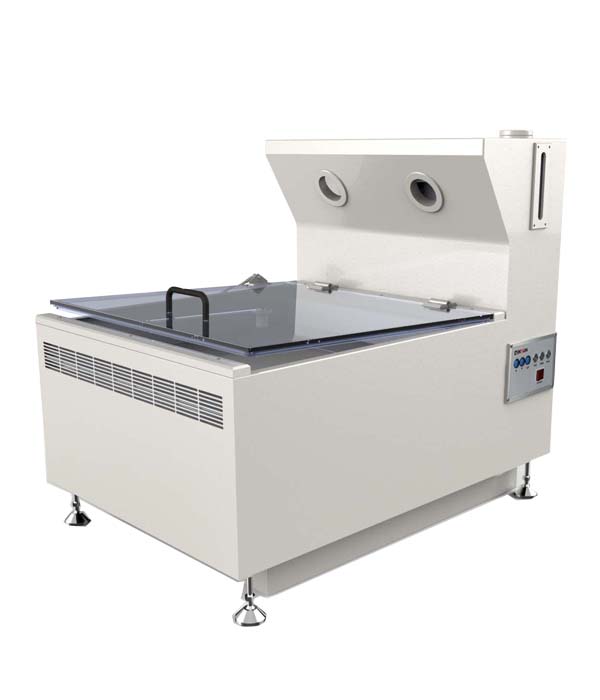
EN 31092 thermal resistance equipment

Whats/App: +86 156 1874 6768
Web: standard-groups.com
Applications
Measurement of the thermal resistance and the evaporative resistance, under steady-state conditions, of fabrics, films, coatings, foams, and The quilt,including multi-layer assemblies, for use in Clothing production.
Standards
ISO 11092: International standard for "Textiles — Physiological effects — Measurement of thermal and water-vapour resistance under steady-state conditions" (directly governs its core function of testing thermal/evaporative resistance; product’s separated climate chamber and stable wind speed meet its strict environmental control requirements).
JIS L1096-2010: Japanese Industrial Standard "Textiles — Test methods for colour fastness" (extends to Breathability/Moisture permeability testing; product’s precise water supply and stable air flow support its moisture permeability assessment).
ASTM D6701-16Standard Test Method for Determining Water Vapor Transmission Rates Through Nonwoven and Plastic Barriers.
ASTM D1518-2014: American Society for Testing and Materials standard "Textiles — Thermal and evaporative resistance" (specifies test methods for thermal properties; product’s automatic water system and stabilized wind speed ensure compliance with its precision criteria).
ASTM F1868-09/02: ASTM standards for "Thermal and Evaporative Resistance of Clothing Materials" (focuses on protective garment testing; product’s skin-simulating design and separated test/climate chamber meet its demand for realistic human body contact conditions).
BS8515: British Standard "Code of practice for the design of buildings and their approaches to meet the needs of disabled people" (indirectly relevant for material performance in humid environments; product’s stable moisture control supports material assessment in such applications).
GB/T 11048: Chinese National Standard "Textiles — Determination of thermal resistance" (defines domestic textile thermal resistance test parameters; product’s design aligns with its requirement for accurate, repeatable measurements).
Features
Technical Parameters
|
(RCT)Thermal resistance range : 0.002-2.0 m2K/ W |
The sample platform lift range:0~50mm automatic lift |
|
Repeatability: ≤ ± 2% |
Sample thickness: 0~50mm |
|
Resolution: 0.001m2K/W |
Test plate area: 254mm X 254mm |
|
(Ret)evaporative Resistance range : 0-1000m2Pa/ W |
Guard ring size: 512mm X 512mm |
|
Repeatability: ≤ ± 2% |
Guard ring width: 127mm |
|
Resolution: 1m2. Pa/W |
Sample size:500mm*500mm |
|
Test plate temperature range: 30C ~40C adjustable |
Dimensions: 73X61×35cm (LxWxH) (not including Climate Chamber) |
|
Temperature control accuracy: ± 0.03 C |
Weight: 45Kg (not including Climate Chamber) |
|
Temperature measurement: ± 0.01 C |
Host power: AC220V ± 10%, 100W or AC110V ± 10%, 100W |
|
Air velocity: 0~ 1.2 m/ s continuously adjustable |
Warranty: 24 Months |
|
Air velocity accuracy: ± 1% |
Test Procedures
Sample Preconditioning: Place specimens under standard atmospheric conditions for humidity conditioning to ensure material stability.
Sample Cutting: Use the dedicated template to cut “L”-shaped or square specimens of specified dimensions (as prompted by the software).
Sample Placement: Lay the specimen flat on the test platform, ensuring no wrinkles and that the grain direction complies with standard requirements.
Test Initiation: Enter sample information in the software interface and click “Start.” The instrument will sequentially perform compression, bending, surface friction, and heat exchange tests.
Data Generation: Upon test completion, the system automatically calculates various tactile metrics (e.g., Smoothness, Softness, Warmth).
Result Export: Generate objective tactile radar chart reports for convenient data storage or cross-team sharing.
Maintenance Information
Sensor Protection: Pressure and heat flux sensors are highly precise. Never press directly with fingers or touch sensing surfaces with sharp objects.
Cleaning and Maintenance: After each test, use an air pump or soft, lint-free cloth to remove fiber debris and dust from the test platform surface.
Regular Calibration: It is recommended to calibrate pressure and heat flow every six months using the included standard blocks to ensure data accuracy.
Software Updates: Regularly check for driver and algorithm updates to obtain the latest tactile rating models.
Send product request
Other supplier products
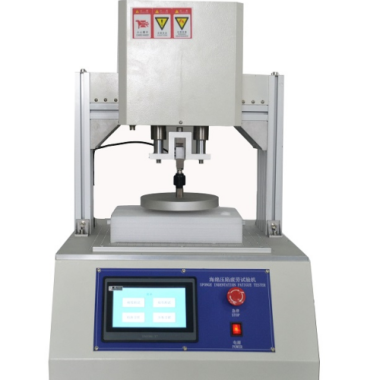 |
Sponge foam collapsible hardness tester | Whats/App: +86 156 1874 6768 Web: standard-groups.com This machine is used to measure the indentation hardness of porous elastic materials. The p... |
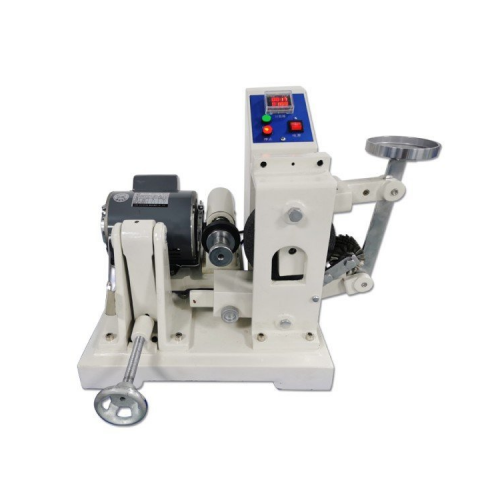 |
AKRON abrasion testing machine | Whats/App: +86 156 1874 6768 Web: standard-groups.com AKRON wear testing machine is used with the balance, specially testing the wear resistance ... |
 |
Falling Sand Abrasion Tester | Whats/App: +86 156 1874 6768 Web: standard-groups.com The falling sand abrasion tester is used to test the abrasion resistance of coatings under ... |
 |
Building Materials Monomer Combustion test Dust Removal Equipment | Whats/App: +86 156 1874 6768 Web: standard-groups.com In a monomer combustion test, the material combustion can produce large amounts of smoke an... |
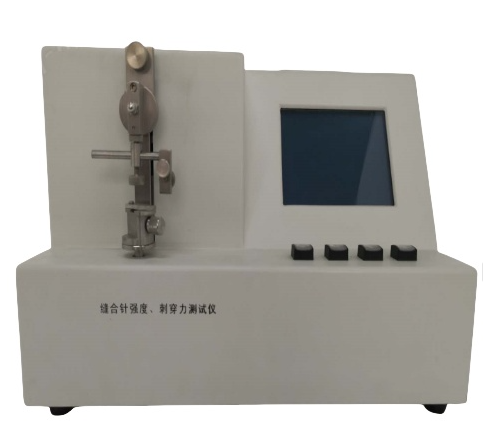 |
Suture Needle Penetration and Bending Strength Tester | Whats/App: +86 156 1874 6768 Web: standard-groups.com Applications Quality Control for Manufacturing Enterprises: During the production of sutur... |
Same products
 |
Nylon High Strength Sewing Thread | Seller: Hangzhou Fantex Textile Co., Ltd | Nylon high strength sewing thread(nylon thread) selects high toughness nylon filament as raw mate... |
 |
HMPE Yarn | Seller: Hangzhou Fantex Textile Co., Ltd | Fantex high strength polyethylene yarn is a premium HMPE Yarn(High Modulus Polyethylene Yarn), re... |
 |
Nylon Fishing Twine | Seller: Hangzhou Fantex Textile Co., Ltd | Our nylon fishing twineis made from high tenacity nylon twine , ensuring a long-lasting and relia... |
 |
High Tenacity Polyester Bonded Thread | Seller: Hangzhou Fantex Textile Co., Ltd | High Tenacity Polyester Bonded Threadis a kind of industrial filament sewing thread made of high ... |
 |
Nylon Multifilament Yarn 6 | Seller: Hangzhou Fantex Textile Co., Ltd | PA6 Multifilament Yarnis a high-strength, continuous syntheticnylon yarncomposed of multiple fine... |

