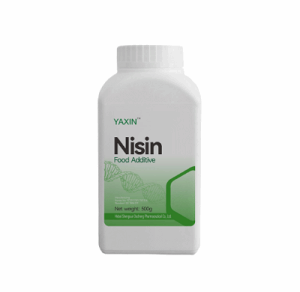
Safety Considerations in Practical Applications of Nisin
Dosage Control: Excessive addition (>0.5 g/kg) not only increases production costs but may also cause slight bitterness in foods (e.g., dairy products, beverages) due to high peptide concentration, though it does not pose health risks. Strict adherence to national dosage limits is required to balance efficacy and sensory quality.
Special Populations: While Nisin is generally safe for infants and pregnant women, its use in infant foods (<36 months) requires compliance with specific standards (e.g., China’s GB 2760 stipulates a maximum of 0.1 g/kg in infant formula accessories).
Cross-Contamination: Nisin production facilities should be separated from those producing allergens (e.g., milk, soy) to avoid cross-contamination, though the risk is inherently low due to its non-allergenic nature.
Other supplier products
|
|
Nisin 1414-45-5 25kg |
Nisin, as a natural antimicrobial peptide, finds applications in various industries due to its ability to inhibit the growth of bacteria, especiall... |
|
|
Nisin Raw Material Powder |
Nisin in Beverages Alcoholic Beverages: In beer and wine, nisin targets Gram-positive spoilage bacteria (e.g., Lactobacillus and Pediococcus) that ... |
|
|
Nisin in Meat and Poultry Products |
Application in Meat and Poultry Products: Inhibiting Pathogens and Reducing SpoilageMeat and poultry products (e.g., fresh meat, cooked ham, sausag... |
|
|
High quality Nisin Powder |
Key Recommendations for pH - Related StorageDry Storage: Keep nisin powder in a dry, sealed container to prevent moisture - induced pH changes.Solu... |
|
|
Carbasalate Calcium Soluble Powder Supplier |
Product Name: Carbasalate Calcium Soluble Powder
Brand name: Shengxue Resuning
Main Ingredients: Carbasalate Calcium
Description: This product is a... |
All supplier products
Same products