

Laboratory Air Jet Erosion Tester

Whats/App: +86 156 1874 6768
Web: standard-groups.com
Standards
The Air Jet Erosion Tester complies with internationally recognized erosion testing standards, including:
(1) ASTM G76 – Standard Test Method for Conducting Erosion Tests by Solid Particle Impingement Using Gas Jets
(2) ASTM G211 – Standard Test Method for Conducting Elevated Temperature Erosion Tests by Solid Particle Impingement Using Gas Jets
Parameters
| Parameter | Specification |
|---|---|
| Maximum temperature | Up to 900 °C |
| Temperature control | Closed-loop PID temperature control |
| Particle velocity | 30–200 m/s (optional ranges available) |
| Erodent feed rate | 1–10 g/min (optional ranges available) |
| Particle hopper capacity | Up to 3 L (optional ranges available) |
| Impact angles | 15°, 30°, 45°, 60°, 90° |
| Velocity measurement | Closed-loop high-speed dual-disc system |
| Positioning system | Automated positioning stage |
| Erodent types | Multiple particle sizes available |
Features
Repeated particle impact testing using gas-driven abrasive flow
Closed-loop PID temperature control up to 900 °C
Real-time particle velocity measurement using dual-disc timing method
Adjustable impact angles for comprehensive erosion characterization
Automated positioning platform for accurate and repeatable testing
Stainless steel particle feeding system with programmable delivery
Suitable for both ambient and high-temperature erosion testing
Accessories
(1) Automated positioning stage
(2) Stainless steel particle hopper and vibratory feeder
(3) Programmable screw-type particle feeding system
(4) Dual-disc high-speed velocity measurement module
(5) Gas pressure controller and pressure gauges
Test Procedures
Load the test specimen onto the automated positioning stage.
Select the desired abrasive particle type, size, and feed rate.
Set the required test temperature and allow the system to reach thermal stability.
Adjust the impact angle according to the test requirement.
Initiate gas flow to accelerate abrasive particles toward the specimen surface.
Monitor particle velocity, temperature, and erosion conditions during testing.
Complete the test cycle and analyze erosion results based on material loss or surface damage.
Maintenance Information
Regularly inspect and clean the particle feeding and gas flow components.
Verify calibration of the velocity measurement system to ensure accuracy.
Check temperature sensors and PID control performance periodically.
Ensure the pressure control system and gauges operate correctly.
Perform routine inspections of seals and high-temperature components to maintain safe operation.
Send product request
Other supplier products
 |
CE Certified Heat Flow Method Thermal Conductivity Testing Machine for R&D | Get a quote: Whats/App: +86 156 1874 6768 Web: standard-groups.com Standards The instrument complies with: MIL-I-49456A – Insulating She... |
 |
Cookware Handle Tensile Tester | Whats/App: +86 156 1874 6768 Web: standard-groups.com TheHandle Strength and Durability Testing Deviceis designed to evaluate the service life an... |
 |
Catheter Power Injection Flow and Pressure Tester | Whats/App: +86 156 1874 6768 Web: standard-groups.com Main Uses The catheter flow and pressure tester for power injection is an important medica... |
 |
Sliding Bearing Fatigue Testing Machine | Whats/App: +86 156 1874 6768 Web: standard-groups.com Standards ASTM D2596 / ASTM D2783 / IP 239 EP, DIN 51350 / 1-5. ISO / CD 11008. VW 1444. V... |
 |
Environmental stress crack resistance test per ASTM D1693 | Get a quote: Whats/App: +86 156 1874 6768 Web: standard-groups.com Application The stress cracking strength of polyolefin geomembrane was measu... |
Same products
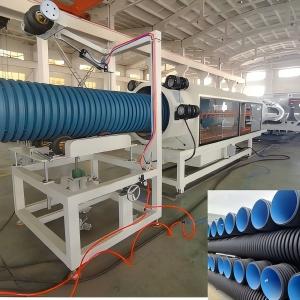 |
HDPE High Speed Water Cooled Double Wall Corrugated Pipe Extrusion Line | Seller: Shandong HUASU Plastic Technology Co.,Ltd. | The molds adopt the double flow channel structure and nitriding polishing processed die head. Thi... |
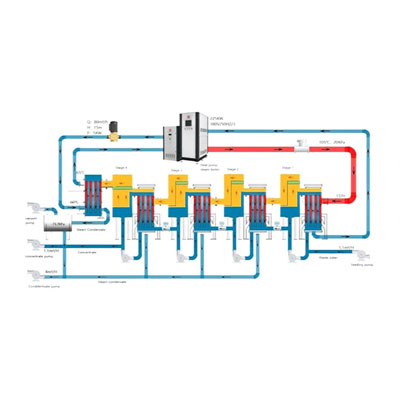 |
PanEVAP & MVR system | Seller: Yangzhou Panstar Heat Exchanger Equipment Co., Ltd | A multiple-effect evaporator is a device that efficiently uses steam heat to evaporate water. Wat... |
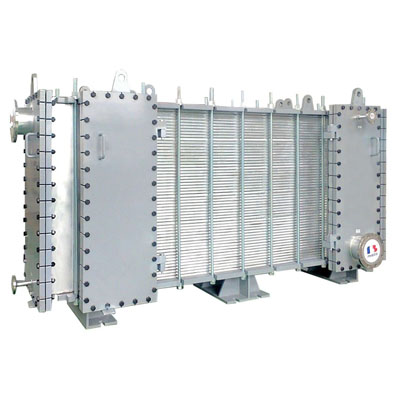 |
PanGAP wide gap welded plate heat exchanger | Seller: Yangzhou Panstar Heat Exchanger Equipment Co., Ltd | PanGAP wide gap welded plate heat exchangerconsists of a welded plate pack with different channel... |
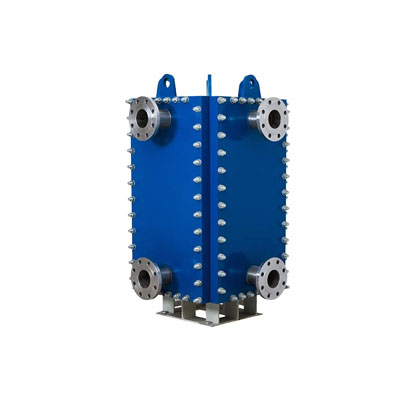 |
PanBloc welded plate heat exchanger | Seller: Yangzhou Panstar Heat Exchanger Equipment Co., Ltd | PanBloc welded plate heat exchangeris compact and efficient, although fully welded, is totally ac... |
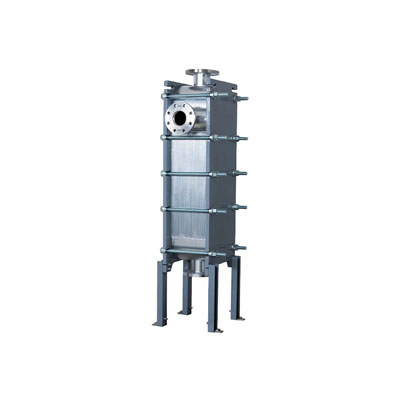 |
PanBox welded plate heat exchanger | Seller: Yangzhou Panstar Heat Exchanger Equipment Co., Ltd | PanBox welded plate heat exchangerconsists of a laser welded plate pack with optimized corrugated... |

