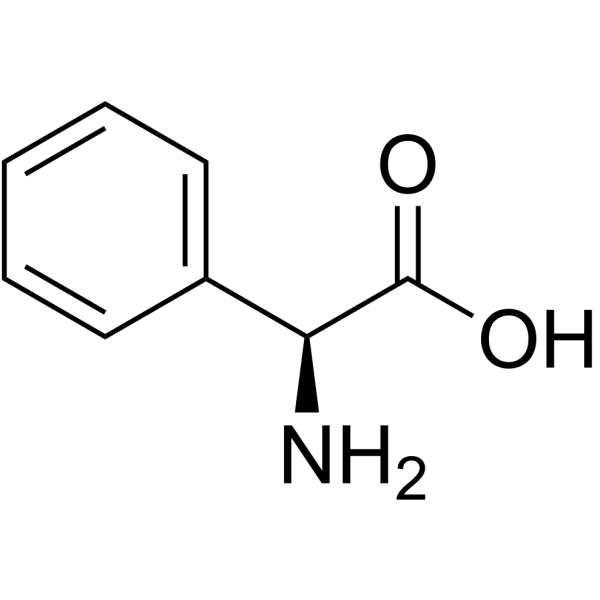
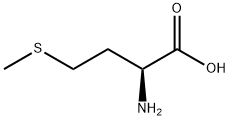
L-proline
The biological functions of L-proline
Protein structure maintenance: L-proline is one of the 20 common amino acids that make up proteins. Its cyclic structure can affect the secondary structure of proteins, causing a turn in the direction of polypeptide chains and playing a key role in the structural formation and stability of proteins such as collagen. Collagen contains a large amount of proline and hydroxyproline, which are crucial for maintaining the triple helix structure and stability of collagen.
Participation in biological metabolism: In organisms, proline is involved in multiple metabolic pathways. It can serve as an energy source and provide energy for cells through a series of metabolic reactions. In addition, proline is also involved in processes such as nitrogen metabolism and osmotic pressure regulation.
Другие товары поставщика
|
|
L-leucine |
Basic InformationChemical Formula: C6H13NO2Molecular Weight: 131.17 g/molStructure: It has a branched - chain structure with a carboxyl group (-COO... |
|
|
L-Methionine |
Industrial Biotechnology: Used as a precursor in the synthesis of bioactive molecules (e.g., S-adenosylmethionine, glutathione) for biopharmaceutic... |
|
|
L-Methionine in Animal Feed Additive |
L-Methionine in Animal Feed Additive Applications L-Methionine is one of the most critical nutritional additives in animal husbandry, as monogastri... |
|
|
DL-Methionine |
Spectral Characteristics of DL-MethionineInfrared (IR) spectrum: Characteristic absorption peaks of DL-methionine include: 3300–3500 cm⁻¹... |
|
|
L-Threonine |
While not a primary preservative, L-threonine can: Improve the stability of proteins and enzymes in processed foods, reducing degradation. Act as a... |
Все товары поставщика
Похожие товары