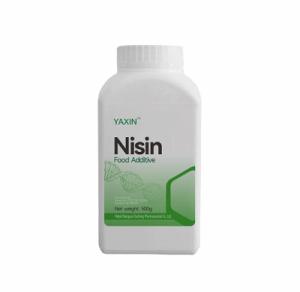
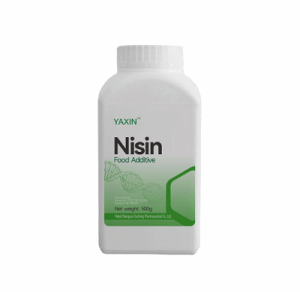
Nisin Raw Material
Nisin is widely approved for use in food globally, with strict safety standards:
- GRAS designation: The FDA (U.S.) and EFSA (EU) have classified nisin as GRAS, with no established acceptable daily intake (ADI) limit—meaning it is safe for consumption at the recommended doses.
- International standards: The Codex Alimentarius Commission (CAC) has set maximum residue limits (MRLs) for nisin in foods, ranging from 0.02–0.1 mg/kg (equivalent to 80–400 IU/kg) depending on the product.
- Safety profile: Nisin is degraded by digestive enzymes (e.g., peptidases) in the human gut, so it is not absorbed into the bloodstream and has no toxic effects. It does not alter the gut microbiota (as it targets only Gram-positive pathogens) and has no known allergenicity.
Другие товары поставщика
|
|
pH Dependence of Nisin |
Nisin exhibits optimal stability under acidic conditions (pH 2.0–6.0). In this range, its phosphate ester bond and peptide chain structure re... |
|
|
Natamycin 7681-93-8 |
New products coming soon! Welcome to inquire and book! Medical Applications Natamycin is used as an antifungal medication, particularly for treatin... |
|
|
Nisin Raw Material |
The gut microbiota plays a critical role in nutrient absorption, immune regulation, and GI barrier function. Dysbiosis (imbalance of gut microbes, ... |
|
|
ε-Polylysine hydrochloride |
Despite its many potential benefits, however, there are some concerns about the safety of ε-Polylysine hydrochloride, particularly with reg... |
|
|
Nisin Powder |
Stability and pH SensitivityAcid Stability:Most stable at pH 3–5, retaining activity in acidic environments (e.g., yogurt, pickles, fruit jui... |
Все товары поставщика
Похожие товары