

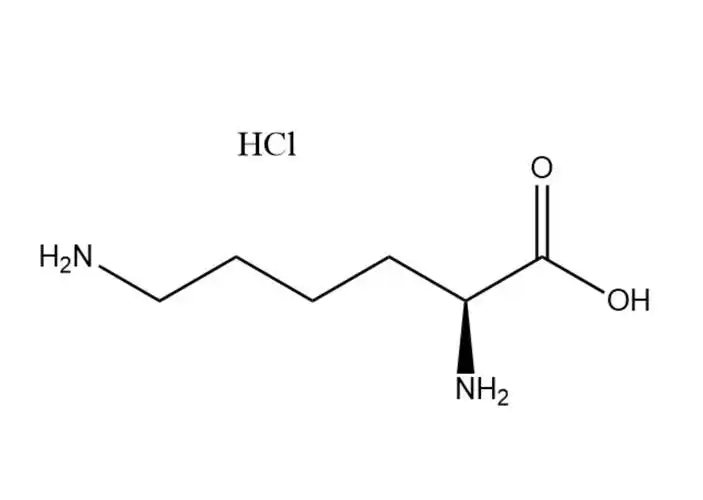
L-lysine monohydrochloride

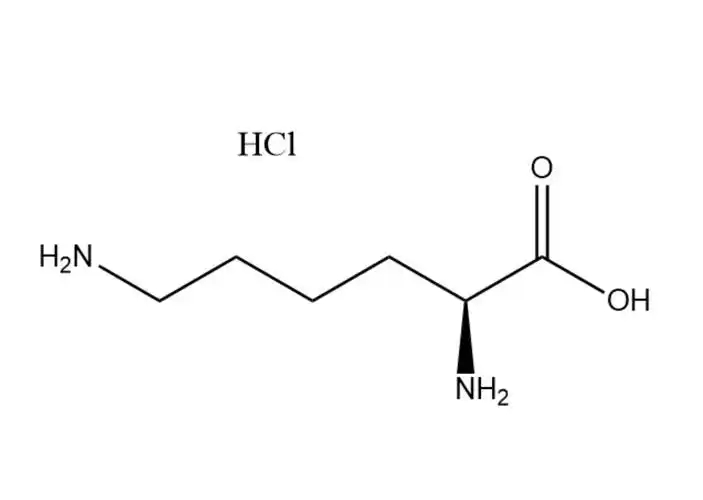
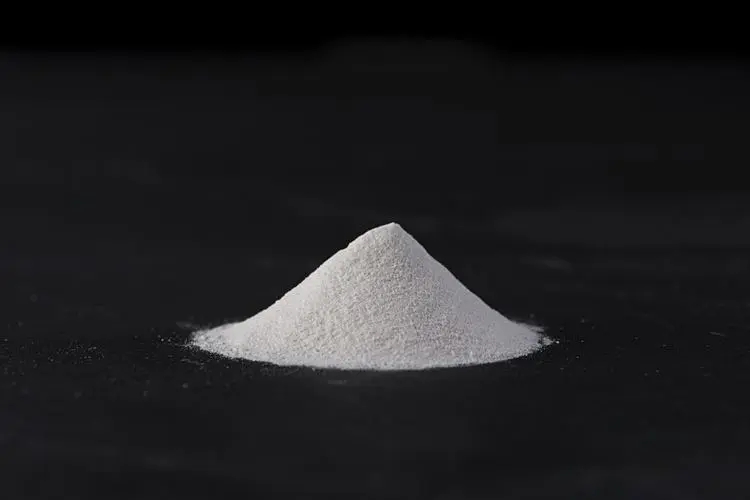
L-lysine monohydrochloride is one of the most stable amino acid salts in industrial applications, with excellent stability in solid form and good stability in aqueous solution (under appropriate conditions). Its stability is a key advantage for long-term storage and diverse processing applications (food, feed, pharmaceuticals).
1. Solid Form Stability
- Ambient conditions (25 °C, 60% RH): Stable for ≥36 months in sealed, dry packaging (e.g., aluminum foil bags, HDPE drums). No hygroscopy, caking, oxidation, or decomposition occurs; physical and chemical properties remain unchanged.
- High humidity (>80% RH): Slightly absorbs moisture (mild hygroscopy) but no chemical change; caking may occur after prolonged exposure, but bioactivity and chemical purity are retained after drying (80 °C, vacuum).
- Thermal processing: Stable at temperatures < 180 °C (e.g., feed pelleting at 70–90 °C, food extrusion at 120–160 °C, pharmaceutical dry granulation at 60–80 °C); no decomposition or loss of bioactivity. Decomposition only occurs at >260 °C (far above conventional processing temperatures).
2. Aqueous Solution Stability
- pH range: Stable in aqueous solution over a pH range of 2.0–10.0 (25 °C) for ≥6 months (sealed, dark storage). No hydrolysis, racemization, or decomposition occurs in this pH range.
- Extreme pH: Decomposition occurs at pH < 1.0 (strong acid, prolonged heating) or pH > 12.0 (strong base), with deamination of the ε-amino group and formation of byproducts.
- Temperature: Aqueous solutions are stable at 0–40 °C; slow oxidation may occur at >60 °C (prolonged heating) with the formation of minor amine byproducts.
- Light: Stable to natural and artificial light (no photodegradation); no need for dark storage for aqueous solutions (sealed storage to prevent evaporation is sufficient).
3. Compatibility with Other Substances
L-lysine monohydrochloride is highly compatible with most common food, feed, and pharmaceutical ingredients— no chemical reactions or incompatibility occur with the following substances:
- Food/feed ingredients: sugars, starches, proteins, vitamins (A, B, C, E), minerals (Ca²⁺, Fe²⁺, Zn²⁺, K⁺), antioxidants, preservatives, and flavorings.
- Pharmaceutical excipients: lactose, microcrystalline cellulose, starch, magnesium stearate, povidone (PVP), and cellulose ethers.
- Biological reagents: buffers, enzymes, antibodies, and cell culture media components (critical for its use in cell culture and biochemistry).
Minor incompatibility: Reacts with strong oxidizing agents (e.g., KMnO4, H2O2) and heavy metal ions (e.g., Pb²⁺, Hg²⁺, Cd²⁺) to form insoluble complexes— these substances should be avoided in formulation and storage.
4. Recommended Storage and Handling Conditions
- Solid form: Store in a cool, dry, well-ventilated area (temperature: 0–30 °C, relative humidity: <75%); seal in airtight, moisture-proof packaging (aluminum foil, HDPE with inner plastic liner); avoid contact with strong oxidants and heavy metals.
- Aqueous solution: Prepare fresh or store in sealed glass/HDPE containers (0–4 °C for long-term storage); avoid strong acid/alkali and high temperatures (>60 °C).
- Transport: Non-hazardous chemical (no UN number); transport under normal conditions (avoid prolonged exposure to high humidity and direct sunlight).
Отправить запрос, связаться с поставщиком
Другие товары поставщика
 |
DL-Alanine | While DL-Alanine is not a direct preservative like Nisin or sodium benzoate, it can indirectly extend food shelf life byregulating the microbial gr... |
 |
High quality | The storage methods for L-Cysteine hydrochloride monohydrate are crucial to maintain its stability and functionality, primarily due to its hygrosco... |
 |
L-Glutamine | Some key points about L-Glutamine:Biological Role: L-Glutamine is one of the 20 standard amino acids encoded by the genetic code and is classified ... |
 |
L-lysine monohydrochloride | The free Cl⁻ ion in the hydrochloride salt form undergoes typical halide ion reactions, which are used for qualitative identification of L-lysine m... |
 |
L-leucine | Functions in the Human BodyProtein Synthesis: It is a crucial component for building proteins. It combines with other amino acids through peptide b... |
Похожие товары
 |
Deboom Energetic Graphene Oil Additive | Продавец: Shanghai Aikebao New Material Technology Co., Ltd | Asgraphene oil additive manufacturerspecializing in automotive solutions, we understand the criti... |
 |
High quality N‑Acetyl‑L‑Tryptophan Powder | Продавец: 846340 | Basic Information of N‑Acetyl‑L‑Tryptophan 1. Core Identity Chemical Name: N‑α‑Acetyl‑L‑try... |
 |
N-Acetyl-L-Tryptophan | Продавец: 846340 | Key Points for Storing N‑Acetyl‑L‑Tryptophan (NAT) Short, practical storage rules focusing on moi... |
 |
N-Acetyl-L-Tryptophan Powder Marke quotation | Продавец: 846340 | Precautions for the Use of N‑Acetyl‑L‑Tryptophan (NAT) Below is a clear, practical summary of pre... |
 |
Wholesale N-Acetyl-L-Tryptophan Powder | Продавец: 846340 | N‑Acetyl‑L‑Tryptophan as Key Advantages for Food Applications High stability: Withstands processi... |

