Glass furnace structure and various parts of refractory materials

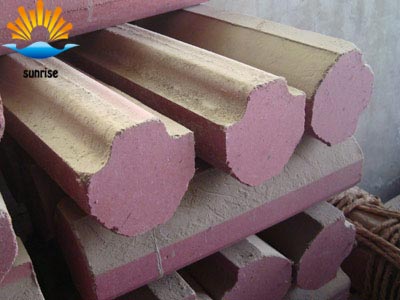
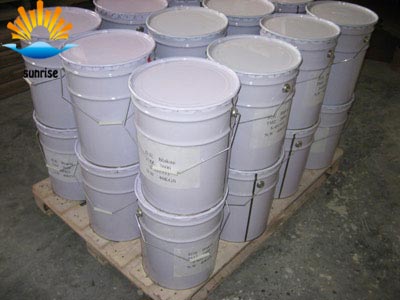
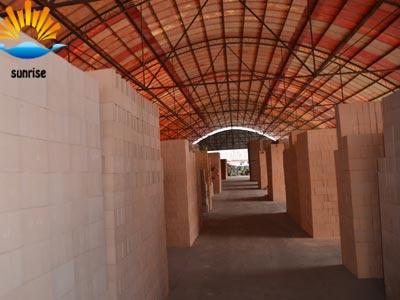
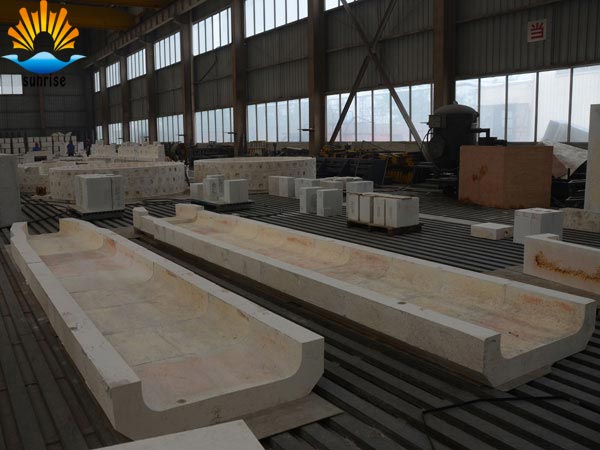
Refractory materials are the main building blocks of glass melting furnaces and have a decisive influence on the quality of glass, energy consumption and even the cost of the product. The development of glass melting technology depends largely on the progress of refractories manufacturing technology and quality improvement. Glass Furnace Furnace Structure For large float lines, the glass kiln is usually constructed of L-shaped hanging wall (usually using silica bricks), melting section (fused glass in direct contact with glass, upper used (Usually using silica bricks), the cooling section including the ototoxic tank (where the corundum material is used in direct contact with the liquid glass, and silica brick or corundum is used where it is not in contact with the liquid glass), annealing Kiln, regenerator (made of clay, high aluminum, direct combination of magnesia-chrome brick) and other parts. Glass furnace main parts of the conditions of use and refractory choice
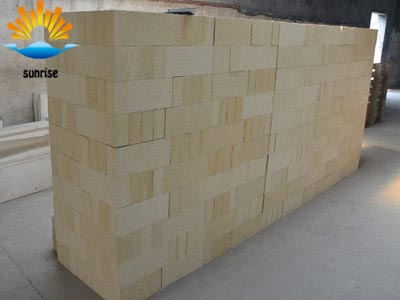
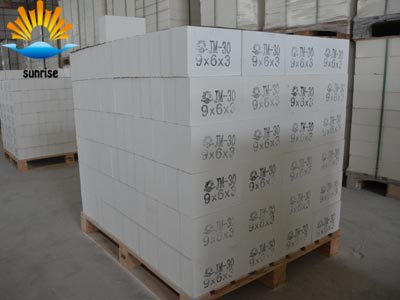
Glass melting furnace and cooling Department of the top (including the arch angle), the site is often at 1600 ℃ operating temperature, the use of refractory material in this area is subject to high temperature, load but also by the alkali steam and compound Therefore, the material used for the top must have high refractoriness, high load softening temperature and good creep resistance, and the thermal conductivity is small, the erosion of high temperature does not pollute the glass liquid, the bulk density is small, High temperature strength and other characteristics. The high-quality high-purity silica brick with just the above characteristics: 1, the load temperature close to the refractory; 2, high temperature stability, high strength; 3, due to the main component of SiO2, content> 96%, the same as the main components of glass , So erosion under high temperature basically does not pollute the glass liquid; 4, the price is cheap. Therefore, at present, in the top of large-scale glass, pure high-quality high-purity silica bricks become the glass of choice for manufacturers. The chemical attack caused by high temperature chemical reaction between fly ash, alkali vapor and refractory materials, as well as the change of the crystal form and the change of the structure due to temperature and phase migration are the main reasons for the damage of the top tile. The results show that the high-quality glass kiln silica brick is used in the top of 碹 roof, and the alteration process at high temperature is basically phase transformation and impurity migration. The chemical attack and melting effect are extremely slight. As a result of phase change and self-purification, the working belt gradually changes its performance and its high temperature performance is improved.
Other supplier products
All supplier products
Same products
|
|
Microcrystalline wax used for packaging and paper processing |
Seller: Syntop chemical Co.,Ltd. |
Microcrystalline wax has a wide range of industrial applications. Its core value lies in th... |
|
|
Microcrystalline wax used for rubber and tires |
Seller: Syntop chemical Co.,Ltd. |
In industrial applications, microcrystalline wax is primarily used for rubber protection, thicken... |
|
|
Microcrystalline wax used for shoe polish processing |
Seller: Syntop chemical Co.,Ltd. |
Microcrystalline wax is commonly used in shoe polish, primarily to harden the formula, adju... |
|
|
Microcrystalline wax used for rubber plastic processing and modification |
Seller: Syntop chemical Co.,Ltd. |
Microcrystalline wax has a wide range of industrial applications, primarily in the areas of rubbe... |
|
|
Microcrystalline wax 80A used for lubrication and demolding |
Seller: Syntop chemical Co.,Ltd. |
The core industrial applications of microcrystalline wax 80A are primarily focused on rubber prot... |