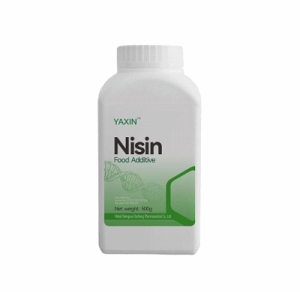
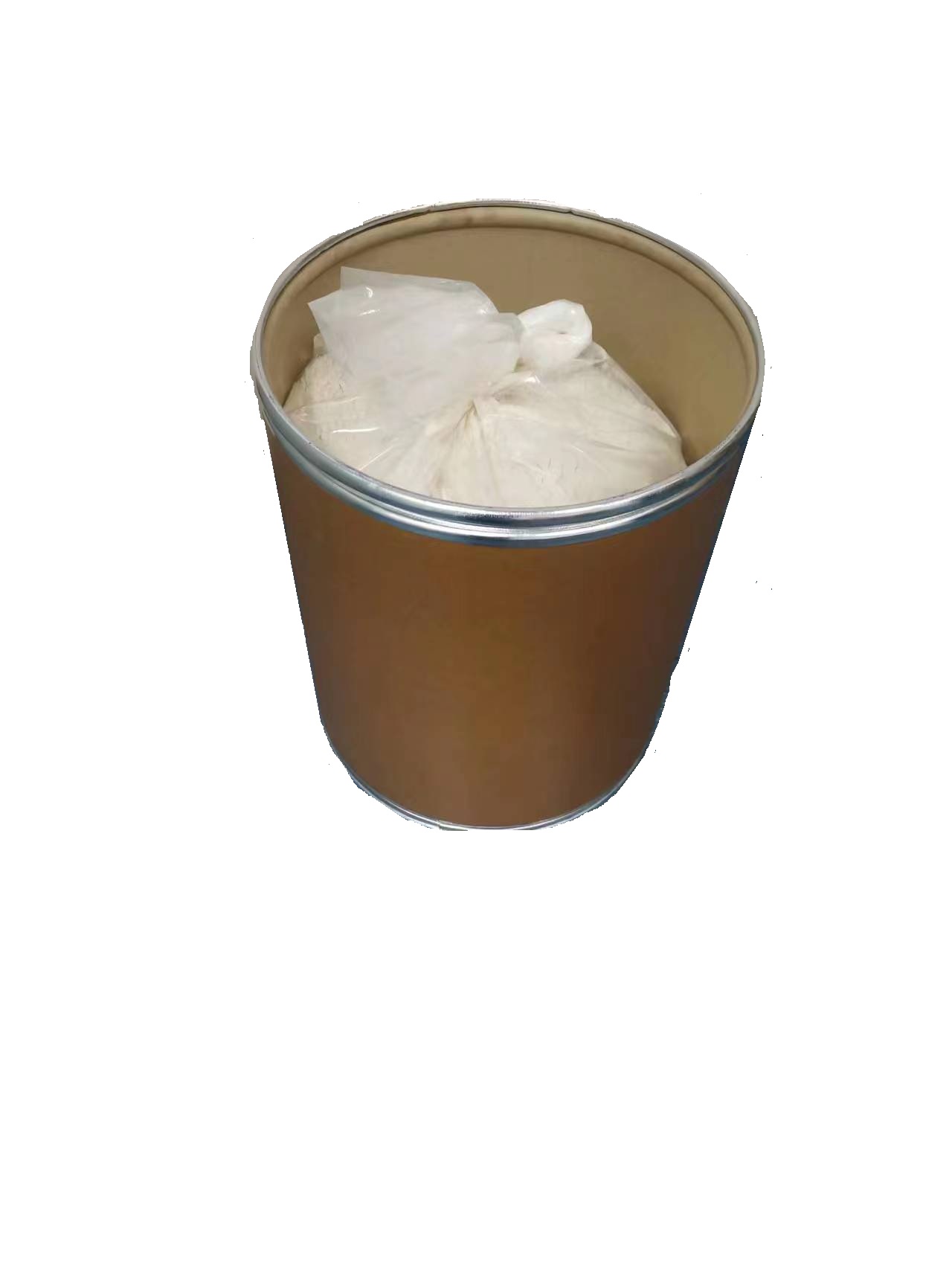
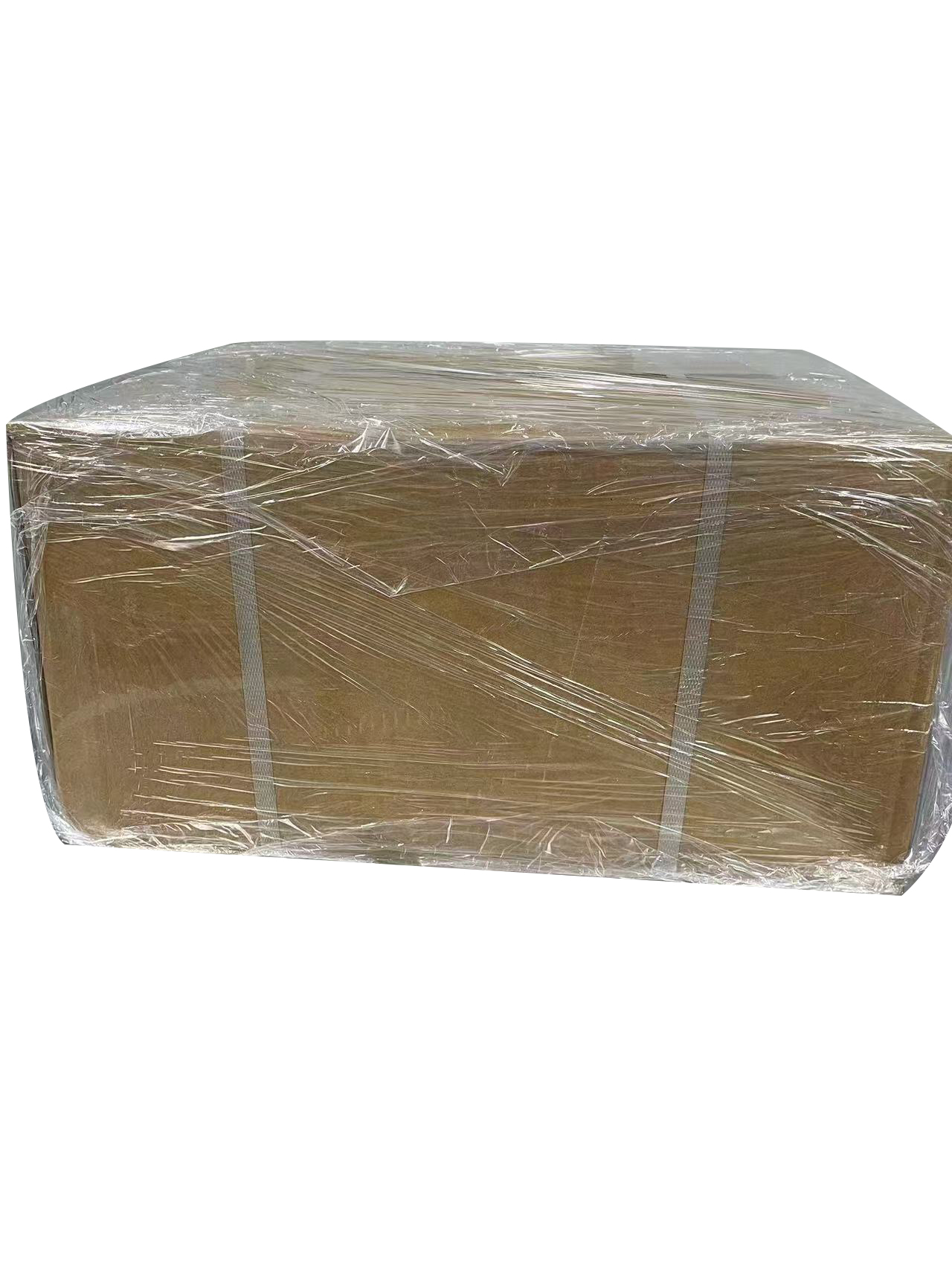
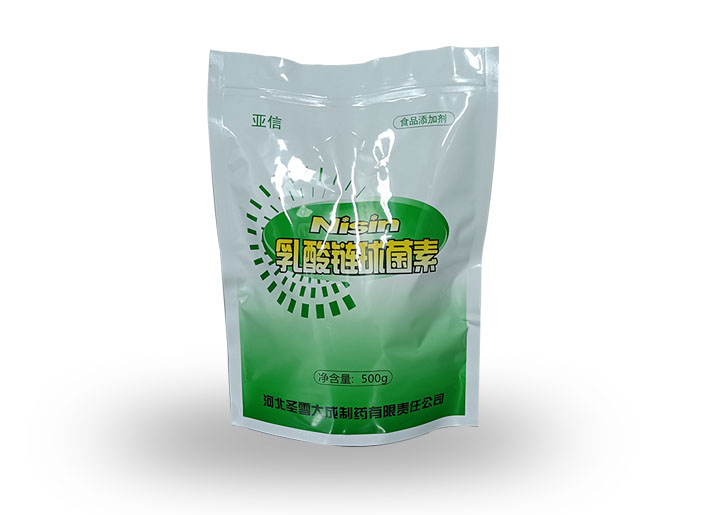
Nisin 500g Price

Key Factors Influencing the Antibacterial Mechanism
pH value: An acidic environment (pH 3-5) can enhance the antibacterial activity of Nisin because it is more likely to combine with cell membranes and form pores under acidic conditions. The activity significantly decreases under neutral or alkaline conditions (for example, when pH > 7, the solubility and stability of Nisin decrease).
Temperature: High temperatures (such as sterilization at 121℃) can damage the structure of Nisin, but its antibacterial mechanism remains unaffected at low temperatures (< 60℃), making it suitable for pasteurization or refrigerated food.
Metal ions: cations such as Ca²⁺ and Mg²⁺ can compete with Nisin for cell membrane binding sites, weakening its activity; Chelating agents such as EDTA can remove metal ions and enhance the effect on Gram-negative bacteria.
Summary
The antibacterial mechanism of Nisin is characterized by "multiple targets and high specificity" : it efficiently kills Gram-positive bacteria through three pathways: destroying cell membranes, inhibiting cell wall synthesis and inducing autolysis, without affecting human cells. This mechanism not only endows it with a powerful antibacterial effect, but also lays the scientific foundation for it to be used as a safe food preservative. In food processing, by taking advantage of the mechanism characteristics of Nisin (such as its combination with acidic environments or chelating agents), its application scope can be further expanded and the preservative efficiency can be enhanced.
Other supplier products
|
|
Nisin Price |
Nisin is a natural antimicrobial peptide produced by the bacterium Lactococcus lactis.It has potent antimicrobial properties, particularly against ... |
|
|
Nisin In cartons |
Safety ·Non-toxic and Safe: Nisin is a safe, non-toxic, and highly effective natural preservative. Once ingested, it is easily broken down b... |
|
|
Nisin Manufacturer 500g |
The antibacterial mechanism of Nisin does not affect human cellsNisin exerts its antibacterial effect by destroying the cell membranes of bacteria,... |
|
|
Nisin Powder 1414-45-5 |
Nisin in Dairy Products Cheeses: Nisin is commonly added to processed cheeses, cheese spreads, and soft cheeses to prevent the growth of spoilage b... |
|
|
Nisin’s value in seafood products |
Nisin’s value in seafood products lies in its ability to "naturally inhibit bacteria, preserve freshness, and maintain flavor"—it effec... |
All supplier products
Same products