

Silicone and modified silane

Introduction
Silicone and modified silane are adhesives with moderate adhesive strength, high flexibility, and low hardness, mainly used for bonding and sealing.
Silicone and modified silane are both important materials in the field of adhesives, sealants, coatings, and construction materials.
1. Silicone:Silicones are polymers that include any inert compound with a structure consisting of repeating units of silicon atoms bonded to oxygen atoms (-Si-O-Si- backbone). They can be linear, cyclic, or crosslinked structures. Silicones are valued for their thermal stability, water repellency, flexibility, and chemical inertness. Common silicone products include silicone rubber, silicone oil, silicone resin, and silicone grease. These materials are widely used in sealing, bonding, lubrication, electrical insulation, and protective coatings.
2. Modified Silane:Modified silanes refer to a category of materials that combine the advantages of both organic and inorganic substances by introducing functional groups onto the silane molecules. The most typical ones are amino-, epoxy-, methacryloxy-, vinyl-, and isocyanate-functional silanes. These modifiers improve the compatibility between inorganic fillers (like glass fibers, silica, or clay) and organic polymer matrices (such as polyethylene, polyester, or epoxy). As a result, they enhance mechanical properties, moisture resistance, electrical properties, and durability of composite materials. In construction, modified silanes are often used as primers or additives to strengthen adhesion between different substrates.
In summary,while silicones offer excellent environmental endurance and elasticity, modified silanes serve as coupling agents or reactive modifiers which bridge the gap between organic polymers and inorganic materials, thus expanding the application scope and performance levels of various composites and formulations.
Send product request
Other supplier products
 |
Coating for Busbar by Electrostatic Spray Application | Product Description MT-EL-HLF59R is a one part, 100 % solids, epoxy powder coating for insulation of wire and busbars. Designed for electrostatic ... |
 |
Polyurethane Foam Materials Coloring | Introduction Specialized in the field of polyurethane foaming The series coloring agents are our company’s main macromolecular coloring age... |
 |
Diethylene Glycol Monobutyl Ether Acetate CAS 124-17-4 | Introduction Ethylene glycol butyl ether acetate is a high boiling point, multifunctional binary alcohol ether ester solvent, which can be used as... |
 |
UV Light Curing Adhesive | Introduction UV curable adhesive is a structural bonding adhesive that solidifies by irradiating UV light. The characteristic of UV curable adhes... |
 |
High boiling aromatic hydrocarbon solvent | Introduction High boiling point aromatic hydrocarbon solvent than the traditional toluene, xylene little toxicity, Flash point is high, use and tr... |
Same products
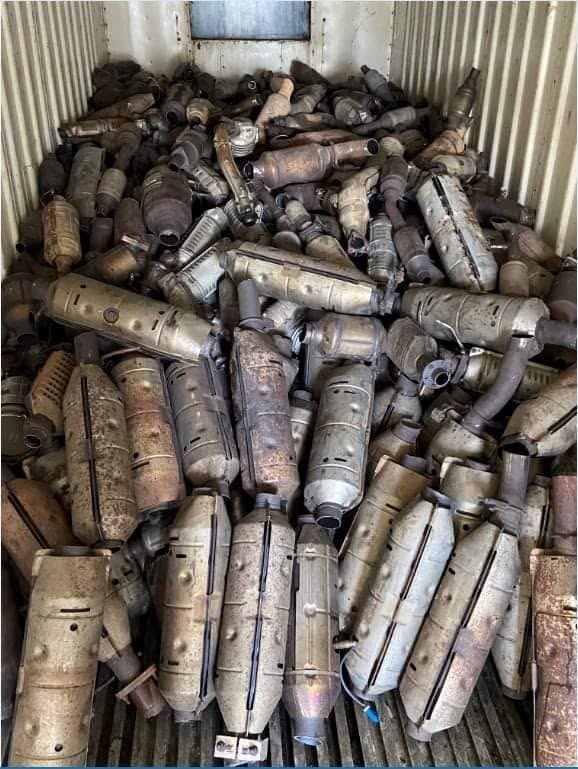 |
Catalytic Converter Scrap Supplier, Catalytic Converter Scrap for Sale, , Catalytic Converter Scrap, Catalytic Scrap for Sale, Catalytic Scrap Supplier, Scrap Catalytic Supplier | Seller: Trucont LLC | At Trucont LLC, we have ongoing Catalytic converter scrap available for immediate loading and shi... |
 |
Natural cypress cat litter | Seller: DALIAN ZZ INT'L TRADE CO.,LTD. | Natural cypress cat litter Eco-friendlyLightweightFlushableLow tracking and low dustWill not gro... |
 |
DTG ink for Brother Printhead | Seller: Guangzhou SAVEN Technology Co., Ltd | DTG inkhas a strong fluency on the kinds of print head, it can be satisfied with the production d... |
 |
Direct to Garment (DTG) Pigment Ink DTG-100W | Seller: Guangzhou SAVEN Technology Co., Ltd | DTG inks are a range of digital textile pigment inks. Direct to Garment pigment inks offer an eas... |
 |
Premium CMYK color DTF for Epson Printheads | Seller: Guangzhou SAVEN Technology Co., Ltd | Unlock unmatched vibrancy with Premium CMYK DTF Ink. Engineered for professional Direct-to-Film p... |

