Phospholipid Raw Material
Phospholipids are ubiquitous in all living organisms (plants, animals, microbes) and support life-sustaining processes:
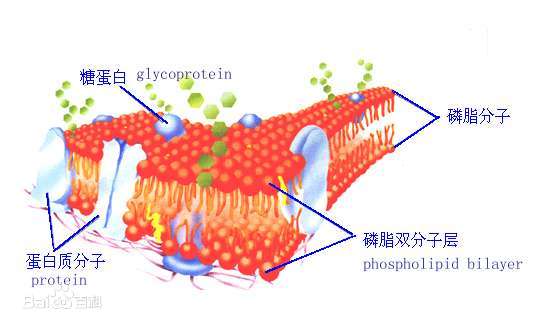
The amphiphilic nature of phospholipids drives them to self-assemble into alipid bilayerin water—a structure that forms the core of all cell membranes:
- Hydrophilic heads face outward (toward the aqueous environment inside/outside the cell).
- Hydrophobic tails face inward (forming a nonpolar "barrier" between the two aqueous regions).
This bilayer acts as a selective permeable membrane: it allows small, nonpolar molecules (e.g., oxygen, carbon dioxide) to pass through but blocks large or polar molecules (e.g., sugars, ions)—controlling the flow of substances in and out of the cell.
The ratio of saturated to unsaturated fatty acid tails in phospholipids determines membrane fluidity, which is critical for cell function:
- In cold environments: Organisms (e.g., fish, plants) increase unsaturated phospholipids (kinked tails prevent tight packing, keeping membranes fluid).
- In warm environments: More saturated phospholipids (straight tails pack tightly, preventing excessive fluidity).
Some phospholipids (e.g., phosphatidylinositol, PI) are cleaved by enzymes (e.g., phospholipase C) to producesignaling moleculesthat regulate cellular processes:
- Example: PI-derived IP3 (inositol triphosphate) triggers calcium release from cell organelles, which controls muscle contraction, hormone secretion, and cell growth.
Phospholipids act as "carriers" for lipids (e.g., cholesterol, triglycerides) in the bloodstream:
- They formlipoproteins(e.g., LDL, HDL) by surrounding hydrophobic lipids with their hydrophilic heads, enabling safe transport through the aqueous blood.
- In the liver, phospholipids (e.g., phosphatidylcholine) aid in fat metabolism, preventing fat buildup (steatosis).
Other supplier products
|
|
Phospholipid supplier |
Phospholipids are a class of lipids that are essential components of cell membranes and have various applications in food, pharmaceuticals, and oth... |
|
|
important phospholipid |
Phosphatidylserine is present in the biofilms of all animals, higher plants, and microorganisms. It is a very important component of phospholipids ... |
|
|
Phosphatidylserine Powder |
Phosphatidylserine powder, also known as serine phosphatidylserine or diacylglycerol phosphate serine, belongs to the phospholipid class. It is the... |
|
|
Phospholipids Raw Material |
Bakery products (bread, cakes, pastries) often face issues like poor dough elasticity, uneven texture, and rapid staling. Phospholipids solve these... |
|
|
Phospholipid powder |
Beyond biology, phospholipids (especiallylecithin, a natural mixture of phospholipids like PC) are widely used in food, cosmetics, and pharmaceutic... |
供应产品
Same products