Lost foam castings

Introduction
The lost foam process molding equipment originated in 1958 when H.F. Shroyer was granted a patent for a cavity-less casting method, using a polystyrene foam pattern embedded in traditional green sand. The polystyrene foam pattern left in the sand is decomposed by the poured molten metal. The metal replaces the foam pattern, exactly duplicating all of the features of the original pattern. Like other investment casting methods, this requires that a pattern be produced for every casting poured because it is evaporated ("lost") in the process.
Process Steps
1.Mold foam pattern sections.
2.Age pattern to allow dimensional shrinkage.
3.Assemble pattern if it is a multiple piece pattern.
4.Build cluster (multiple patterns per cluster).
5.Coat cluster.
6.Dry coating.
7.Compact cluster in flask.
8.Pour metal.
9.Extract cluster from flask.
Black area------sand preparation and molding system
1. manipulator
2. winnowing Magnetic separators
3. sanded-up equipment
4. vibrating conveying screen classifier
5. chain elevator
6. water-cooled sand cooling equipment
7. tri-dimensional vibrating table
8. vacuum system
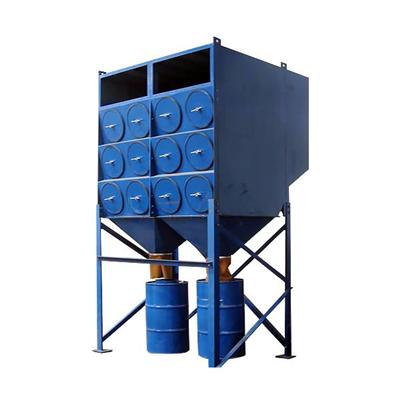
9. dust collector
White area------make the foam mould
1. batch-type pre-foaming machine
2. vertical type mould forming machine
3. bonder machine
4. coating stirring mill
5. hot gas far infra red drying oven
Advantage and disadvantage
This casting process is advantageous for very complex castings that would regularly require cores. It is also dimensionally accurate, maintains an excellent surface finish, requires no draft, and has no parting lines so no flash is formed. The un-bonded sand of lost foam casting can be much simpler to maintain than green sand and resin bonded sand systems. Lost foam is generally more economical than investment casting because it involves fewer steps. Risers are not usually required due to the nature of the process; because the molten metal vaporizes the foam the first metal into the mold cools more quickly than the rest, which results in natural directional solidification. Foam is easy to manipulate, carve and glue, due to its unique properties. The flexibility of LFC often allows for consolidating the parts into one integral component; other forming processes would require the production of one or more parts to be assembled.
The two main disadvantages are that pattern costs can be high for low volume applications and the patterns are easily damaged or distorted due to their low strength. If a die is used to create the patterns there is a large initial cost.
Other supplier products
供应产品
Same products
|
|
天冬氨酸酶 |
卖方: BIT生物港公司 |
天冬酰胺酶(ASN)是一种酰胺水解酶,特异性催化天冬酰胺的水解反应。该产品通过基因工程技术从大肠杆菌中表达并纯化,具有高纯度和强活性。本品为微生物发酵生产、经先进工艺精制而成的高纯度天冬酰胺酶,... |
|
|
乙酰酯酶 |
卖方: BIT生物港公司 |
乙酰酯酶是一类专门用于水解底物中乙酰酯键的酶。这类酶广泛存在于自然界中,能够高效催化特定化学键的水解反应。其具有毒性低、生物降解性好以及良好的生物相容性等优点。适用场景:多种生化分析、酶联免疫吸... |
|
|
β-N-乙酰葡萄糖胺酶 |
卖方: BIT生物港公司 |
β-N-乙酰葡萄糖胺酶是一种溶酶体酶,用于水解N-乙酰-β-D-葡萄糖胺和N-乙酰-β-D-半乳糖胺。基于β-GlcNAc与β-GalNAcc的... |
|
|
几丁酶 |
卖方: BIT生物港公司 |
壳聚糖酶是一种高效的细胞外酶复合物,可降解壳聚糖,来源于Serratia marcescens(在大肠杆菌中高表达)。该酶可催化壳聚糖水解为壳聚糖寡糖和N-乙酰-D-葡萄糖胺。产物具有多种生物活... |
|
|
TEV蛋白酶 |
卖方: BIT生物港公司 |
TEV蛋白酶(烟草蚀病毒蛋白酶)是一种广泛应用于生物研究的常用蛋白质纯化工具酶。它能够特异性识别并切割含有ENLYFQ↓S/G序列的融合蛋白,从而去除标签蛋白,获得纯净的目标蛋白。该酶... |