

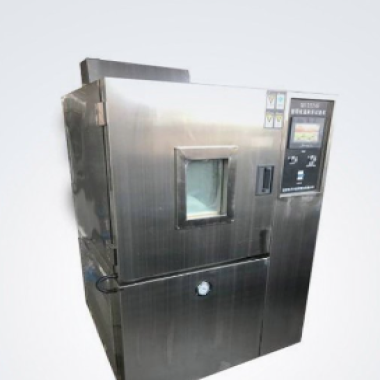
Low-Temperature Bending Resistance Tester

Applicable Standards
The tester adheres to international standards for material testing at low temperatures, including:
ISO 4674-2(Rubber- or plastics-coated fabrics – Determination of low-temperature bend test)
ASTM D1790(Standard test method for resistance of organic coatings to the effects of rapid deformation (impact))
GB/T 2423(China’s national standard for environmental testing – Cold tests)
EN 60068-2-1(Environmental testing – Cold tests for electronic components)
SAE J2339(Cold temperature impact resistance for automotive coatings)
These standards ensure consistent evaluation of material behavior under thermal and mechanical stress.
Working Principle
The tester operates bycombined thermal and mechanical stress:
Temperature Conditioning: Samples are cooled to -70°C in a climate chamber.
Bending Cycle: A motorized arm repeatedly bends the sample at a preset angle (e.g., 90° or 180°) and frequency (e.g., 100 cycles/min).
Cycle Execution: The test runs until surface cracks appear, or a predefined cycle count (e.g., 20.000 cycles) is reached.
Damage Assessment: Post-test, samples are evaluated for cracking, delamination, or coating failure using microscopy or visual grading.
Test Principle & Applications
Cold Flexibility Testing (ISO 4674-2/ASTM D1790):
Samples are bent 10.000–50.000 times at -40°C to simulate polar or alpine conditions.
Results are graded based on crack appearance:
Pass: No visible cracks or coating separation.
Fail: Cracks exceeding 0.5 mm in width.
Key Industries:
Aerospace: Validating aircraft fuel lines and sealants.
Automotive: Testing battery packs and exterior trim for electric vehicles.
Construction: Assessing pipe insulation and roofing membranes.
The Low-Temperature Bending Resistance Tester is indispensable for manufacturers developing products for extreme climates, ensuring reliability and compliance with regulatory standards. Its precision and adaptability make it a cornerstone of materials testing in harsh environments.
Main Parameters
| Parameter | Specification |
|---|---|
| Temperature Range | -70°C to +200°C (adjustable via cryogenic cooling) |
| Bending Angle | 0–180° (adjustable for different material flex requirements) |
| Stroke Frequency | 50–300 cycles/min (programmable) |
| Sample Dimensions | 100 × 20 mm (standard for coatings/films); up to 300 × 50 mm (customizable) |
| Cooling System | Liquid nitrogen or mechanical refrigeration (LC-120 model) |
| Control System | PLC-based with 7-inch touchscreen (multilingual interface) |
| Power Supply | 220V/50Hz, 800W |
| Dimensions | 800 × 600 × 1500 mm (L × W × H) |
Qinsun Instruments Co., LTD is a professional laboratory testing instrument manufacturer in China,Have been focusing on laboratory instrument R&D more than 30 years and have rich industry experience,Based on international testing standards,We are also the instrument supplier for BV SGS laboratory,We provide one-stop solutions for lab instruments,Free Training and Turn-Key Service,Products exported all over the world,Offer 36 month warranty and are a trustworthy partner.
在线联系供应商
Other supplier products
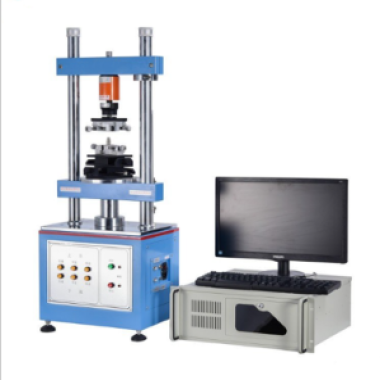 |
Automotive connector insertion and withdrawal force testing machine | Standards Designed to meet rigorous automotive industry standards, including ISO 5023. IEC 60512. and USB-IF specifications, our testing machine e... |
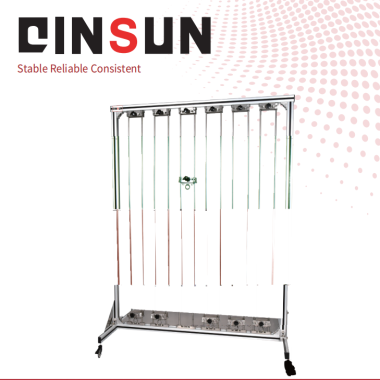 |
Static Tensile Tester | Standard ASTM D3107Ensurereliable measurement of fabric elongation and tensile properties under controlled force applications. Product Advantages... |
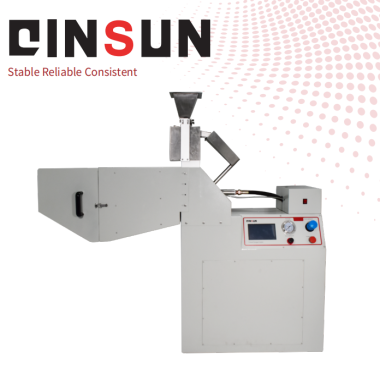 |
Gravel Resistant Impact Tester/Stone chip tester | Standards ASTM D3170: Coating resistance to gravel impingement. ISO 20567: Paints and varnishes – Resistance to stone chipping. SAE J400... |
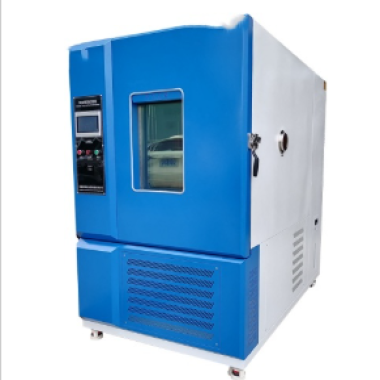 |
Textile moisture absorption and heat generation performance tester | Application ScopeThe textile moisture absorption and heat generation performance tester is a dedicated instrument for testing the moisture absorpti... |
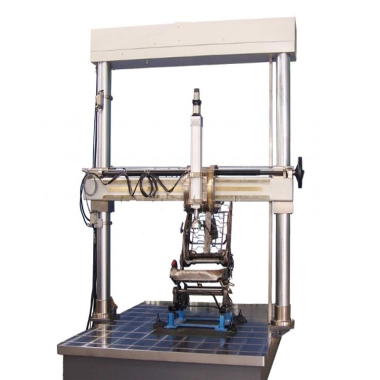 |
Automobile Seat Frame Strength Test Bench-QINSUN | Applicable standards: The National Standard of the People's Republic of China (GB) : such asGB 15083. this standard specifies the strength requi... |
Same products
 |
Common Rail Injector Valve F00R J02 012 | 卖方: 868983 | Common Rail Injector Valve F00R J02 012 David Chen |
 |
Common Rail Injector Valve F00R J02 005 | 卖方: 868983 | Common Rail Injector Valve F00R J02 005 David Chen |
 |
Common Rail Injector Valve F00R J01 945 | 卖方: 868983 | Common Rail Injector Valve F00R J01 945 David Chen |
 |
Common Rail Injector Valve F00R J01 941 | 卖方: 868983 | Common Rail Injector Valve F00R J01 941 David Chen |
 |
Common Rail Injector Valve F00R J01 924 | 卖方: 868983 | Common Rail Injector Valve F00R J01 924 David Chen |

