

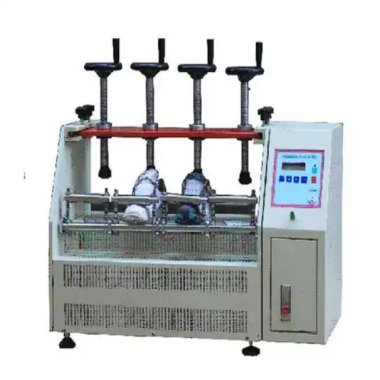
Leather Bending Resistance Tester

Get a quote:
Whats/App: +86 185 0176 3615
Web: qinsun-lab.com
Email: serving@qinsun-lab。com
Applicable Standards
The tester adheres to global standards for leather physical testing, including:
ISO 5402-1(Leather – Physical and mechanical tests – Determination of flex resistance)
ASTM D6193(Standard Practice for Loops in Leather)
SATRA TM54(Standard method for leather flex resistance testing)
GB/T 3903.41(China’s national standard for leather flexing durability)
EN 13521(Flexometer testing for coated fabrics and leather)
These standards ensure consistent evaluation of leather’s ability to withstand repeated bending without cracking or surface damage.
Working Principle
The tester operates bycyclic mechanical flexing:
Sample Preparation: Leather strips are cut into standardized dimensions and clamped between two jaws.
Bending Cycle: A motorized arm repeatedly bends the sample at a preset angle (e.g., 90° or 180°) and frequency (e.g., 200 cycles/min).
Cycle Execution: The test runs until surface cracks appear, or a predefined cycle count (e.g., 50.000 cycles) is reached.
Damage Assessment: Post-test, samples are evaluated for cracking, creasing, or coating delamination using microscopy or visual grading.
Test Principle & Applications
Flex Resistance Testing (ISO 5402-1/SATRA TM54):
Samples are bent 50.000–100.000 times to simulate years of use.
Results are graded based on crack appearance:
Grade 5: No visible cracks.
Grade 1: Severe cracking or delamination.
Key Industries:
Footwear: Validating shoe vamp and lining leather durability.
Automotive: Testing steering wheel covers and gearshift knobs.
Fashion: Assessing handbag and belt leather flexibility.
The Leather Bending Resistance Tester is essential for manufacturers aiming to enhance product lifespan, reduce returns, and meet stringent quality benchmarks. Its precision and adherence to global standards make it a cornerstone of leather testing laboratories.
Main Parameters
| Parameter | Specification |
|---|---|
| Test Stations | 1–6 (simultaneous testing of multiple samples) |
| Bending Angle | 0–180° (adjustable for different material flex requirements) |
| Stroke Frequency | 100–300 cycles/min (programmable) |
| Sample Dimensions | 70 × 45 mm (standard for leather strips) |
| Clamping Force | 0–50 N (adjustable to prevent slippage) |
| Control System | PLC-based with 7-inch touchscreen (multilingual interface) |
| Power Supply | 220V/50Hz, 150W |
| Dimensions | 600 × 400 × 500 mm (L × W × H) |
在线联系供应商
Other supplier products
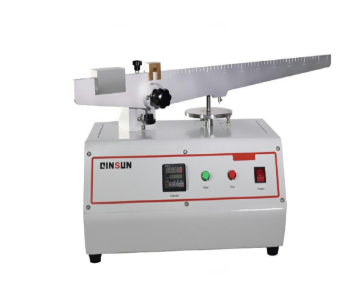 |
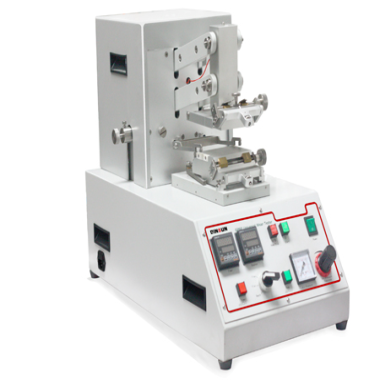
Scratch Resistance Tester | Get a quote: Whats/App: +86 185 0176 3615 Web: qinsun-lab.com 1. Product Function and Application The Scratch Resistance Tester is designed to ... |
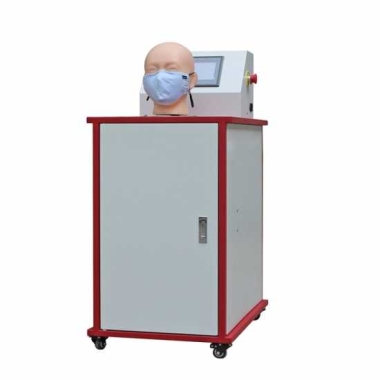 |
Mask respiratory resistance tester | Get a quote: Whats/App: +86 185 0176 3615 Web: qinsun-lab.com Application The Mask Respiratory Resistance Tester is applicable to respiratory r... |
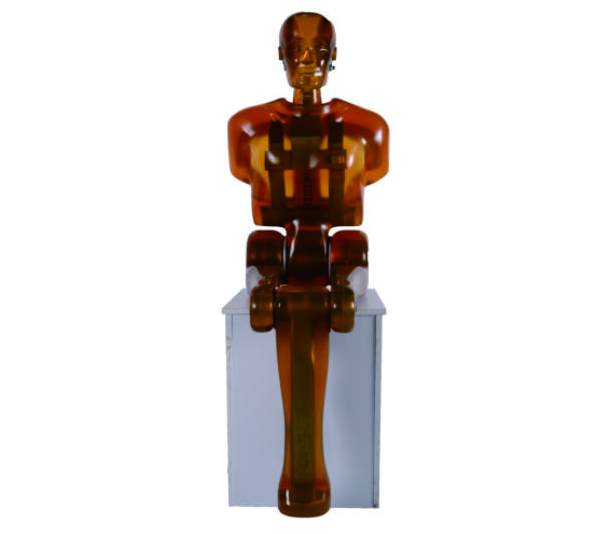 |
Seatbelt Test Dummy ECE R16 | Get a quote: Web: qinsun-lab.com Email:serving@qinsun-lab。com The ECE R16 crash test dummy is a professional anthropomorphic test device represe... |
 |
Stoll Quartermaster | Get a quote: Whats/App: +86 185 0176 3615 Web: qinsun-lab.com Email: serving@qinsun-lab。com Standards: ASTM D3514/D3885/D3886, AATCC 119/120, ... |
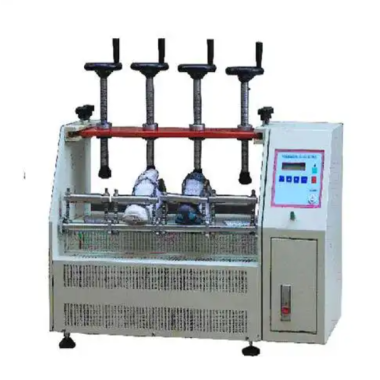 |
Leather Bending Resistance Tester | Get a quote: Whats/App: +86 185 0176 3615 Web: qinsun-lab.com Email:serving@qinsun-lab。com Applicable Standards The tester adheres to global s... |
Same products
 |
Choosing the Right Equipment for Heavy-Duty Cleaning | 卖方: 868255 | FEIKE’s High Pressure Washer is designed for industrial cleaning, equipment maintenance, ve... |
 |
ER4043 Silicon Aluminum Welding Wire | 卖方: 868776 | Hangzhou Kunli Welding Materials Co., Ltd. offers ER4043 Silicon Aluminum Welding Wire for alumin... |
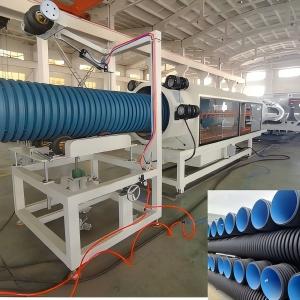 |
HDPE高速水冷双壁波纹管生产线 | 卖方: Shandong HUASU Plastic Technology Co.,Ltd. | 机头模具采用双流道结构、氮化磨光处理机头,偏壁调整方便快捷,保证内外层壁厚均匀和稳定成型。 最新设计密闭压力水冷冷却结构,冷却充分,多点分布真空系统,效率更高,生产速度更快。 双层在线扩口功... |
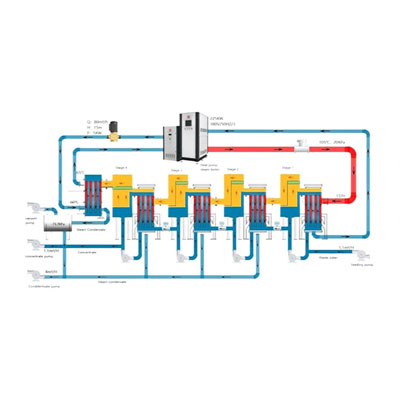 |
PanEVAP & MVR system | 卖方: Yangzhou Panstar Heat Exchanger Equipment Co., Ltd | A multiple-effect evaporator is a device that efficiently uses steam heat to evaporate water. Wat... |
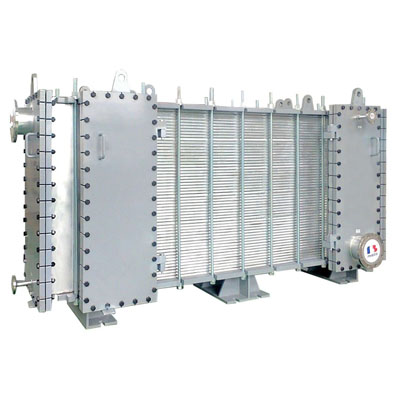 |
PanGAP wide gap welded plate heat exchanger | 卖方: Yangzhou Panstar Heat Exchanger Equipment Co., Ltd | PanGAP wide gap welded plate heat exchangerconsists of a welded plate pack with different channel... |

