

Vertical Fire Resistance Test Furnace for Building Elements,ISO 834 wall fire resistance testing furnace system

Whats/App: +86 156 1874 6768
Web: standard-groups.com
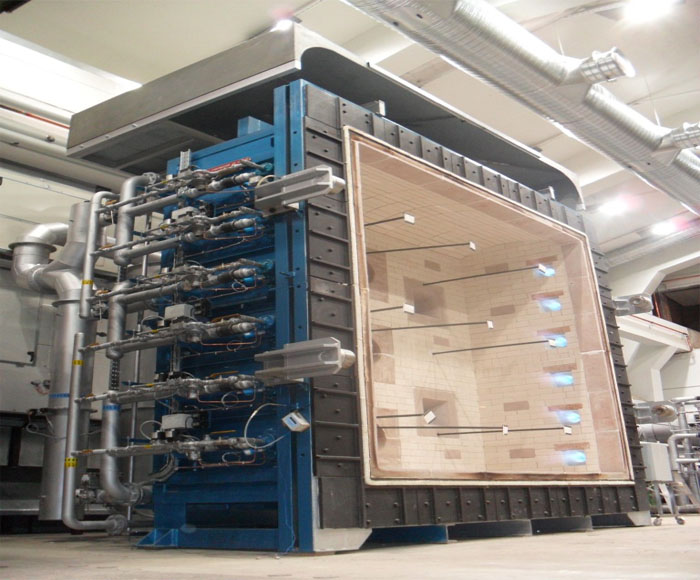
The Vertical Fire Resistance Test Furnace for Building Elements is designed for fire resistance testing of vertical building components, including non-loadbearing vertical partitions, fire doors, and fire shutters. The furnace is manufactured in accordance with the technical requirements of GB/T 9978. integrating the furnace body, furnace roof, steel test platform, exhaust and air supply system, combustion and gas supply system, and a comprehensive test control system.
With built-in calibration capability, the system ensures that furnace temperature, pressure values, and distribution meet standard requirements, making it suitable for standardized fire resistance testing and performance evaluation of vertical building elements.
Application
Vertical Building Elements
Fire resistance testing of non-loadbearing vertical partitions, walls, and separation elements.
Fire Doors and Fire Shutters
Performance evaluation of doors, rolling shutters, and related assemblies under standard fire exposure.
Building Fire Safety Evaluation
Verification of fire resistance performance for construction materials and assemblies used in buildings.
Fire Testing Laboratories and Certification Bodies
Standardized testing for product certification, compliance verification, and research applications.
Standards
The equipment complies with the following standards:
(1) GB/T 9978.4-2008 – Fire Resistance Tests — Elements of Building Construction — Part 4: Specific Requirements for Loadbearing Vertical Separating Elements
(2) GB/T 9978.8-2008 – Fire Resistance Tests — Elements of Building Construction — Part 8: Specific Requirements for Non-loadbearing Vertical Separating Elements
(3) GB/T 7633-2008 – Fire Resistance Test Methods for Doors and Shutters
(4) ISO 834 – Fire Resistance Tests — Elements of Building Construction
(5) EN 1363 – Fire Resistance Tests for Building Elements
Parameters
| Item | Specification |
|---|---|
| Number of Burners | 12 proportional flat-flame burners (6 on each side, 5 m furnace length) |
| Operating Temperature | Maximum test temperature 1250 °C |
| Design Temperature | 1350 °C |
| Combustion Mode | Low-speed proportional flat-flame diffusion combustion |
| Gas & Air Pressure | ≤ 4000 Pa |
| Flame Length | ≤ 500 mm |
| Furnace Temperature Measurement Points | 9 points |
| Thermocouple Sleeve Extension | ≥ 25 mm |
| Temperature Accuracy | < ±15 °C |
| Fuel Gas | Liquefied petroleum gas |
| Equipment Dimensions | 3 m (W) × 3 m (L) × 1.25 m (H) |
| Power Supply | AC 380 V, 70 kW |
| Equipment Weight | Approx. 5 t |
Features
Stable Furnace Structure
Frame-type furnace body with refractory bricks and high-temperature insulation fiber ensures thermal stability while minimizing heat loss to the surrounding environment.
Safe and Practical Platform Design
Steel platforms are installed around the furnace to facilitate operator movement and on-site inspection.
Automatic Flame-Out Protection
If a burner extinguishes unexpectedly, the control system immediately triggers visual and audible alarms and automatically cuts off the LPG supply to the affected burner while allowing other burners to operate normally.
Comprehensive Gas Supply Control
Equipped with gas solenoid valves, proportional valves, ball valves, and gas transmitters to ensure accurate gas flow control and operational safety.
Optimized Combustion Air Control
Combustion air is supplied by a dedicated blower with frequency control to maintain an appropriate air–fuel ratio.
Independent Control System
Dedicated control components are used to manage combustion processes and accurately simulate standard fire curves.
Automatic Temperature Curve Correction
The actual furnace temperature curve is continuously compared with the preset curve, and deviations are automatically corrected through burner output adjustment.
Complete Data Storage
All automatic control and test data are stored in the computer system for traceability and accuracy verification.
Accessories
(1) Proportional flat-flame burners
(2) Gas solenoid valves and proportional valves
(3) Combustion air blower with frequency inverter
(4) Gas pressure regulators and filters
(5) Exhaust duct with refractory brick structure
(6) High-temperature exhaust fan with inverter
(7) PLC-based control system
(8) Computerized data acquisition and monitoring system
Test Procedures
Install the vertical test specimen securely on the steel test platform according to the relevant standard.
Set test parameters through the control system, including fire curve and test duration.
Start the combustion and air supply systems and initiate the fire resistance test.
Monitor furnace temperature, pressure, and combustion status in real time.
The control system automatically adjusts burner output to maintain the specified fire curve.
After completion of the test, shut down the gas supply and allow the furnace to cool before specimen removal.
Maintenance Information
Regularly inspect burners, gas pipelines, valves, and sensors to ensure safe operation.
Verify calibration of temperature and pressure measurement systems periodically.
Clean exhaust ducts and combustion components to prevent residue accumulation.
Ensure proper operation of the exhaust fan and combustion air blower.
Back up test data to maintain long-term traceability and compliance records.
Conclusion
The Vertical Fire Resistance Test Furnace for Building Elements provides a reliable and standardized solution for evaluating the fire resistance performance of vertical building components, doors, and shutters. With accurate temperature control, comprehensive safety protection, and automated data acquisition, the system supports compliance testing, fire safety research, and product certification in accordance with national and international standards.
在线联系供应商
Other supplier products
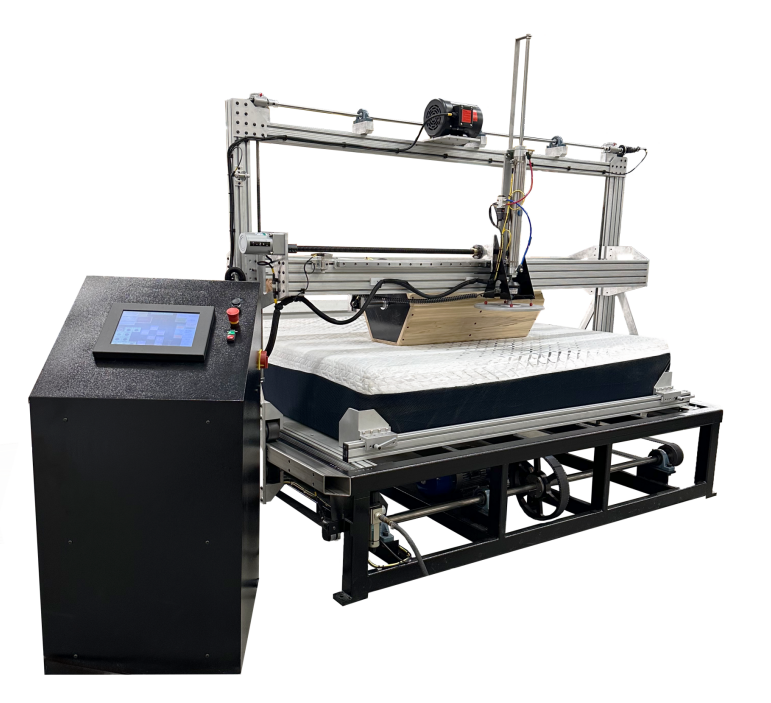 |
Mattress rollator machine for foam and spring mattresses | Whats/App: +86 156 1874 6768 Web: standard-groups.com Standards The Mattress Rollator complies with or references the following standards: ASTM... |
 |
Electronic Wrap Reel Testing Machine | Get a quote: Whats/App: +86 156 1874 6768 Web: standard-groups.com The Yarn Twist Tester is a precision instrument designed to measure the twist... |
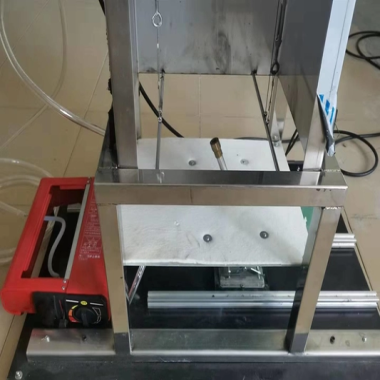 |
Furniture flammability tester | Whats/App: +86 156 1874 6768 Web: standard-groups.com Furniture flammability tester is mainly used to test the combustion performance of mattress... |
 |
Shoe heat insulation testing machine -- sand bath | Whats/App: +86 156 1874 6768 Web: standard-groups.com The sand bath component of the shoe heat insulation testing machine is primarily used to te... |
 |
Electrode Electrolyte Wetting Testing System | Whats/App: +86 156 1874 6768 Web: standard-groups.com The Electrode Electrolyte Wetting Testing System is a high-precision instrument designed to... |
Same products
 |
ER4047 Aluminum Mig Welding Wire | 卖方: 868776 | Hangzhou Kunli Welding Materials Co., Ltd. specializes in manufacturing reliable welding material... |
 |
ER4043 Silicon Aluminum Welding Wire | 卖方: 868776 | Hangzhou Kunli Welding Materials Co., Ltd. specializes in manufacturing high-quality welding mate... |
 |
Choosing the Right Equipment for Heavy-Duty Cleaning | 卖方: Taizhou Feike Mechanical Technology Co., Ltd. | FEIKE’s High Pressure Washer is designed for industrial cleaning, equipment maintenance, ve... |
 |
ER4043 Silicon Aluminum Welding Wire | 卖方: 868776 | Hangzhou Kunli Welding Materials Co., Ltd. offers ER4043 Silicon Aluminum Welding Wire for alumin... |
 |
HDPE高速水冷双壁波纹管生产线 | 卖方: Shandong HUASU Plastic Technology Co.,Ltd. | 机头模具采用双流道结构、氮化磨光处理机头,偏壁调整方便快捷,保证内外层壁厚均匀和稳定成型。 最新设计密闭压力水冷冷却结构,冷却充分,多点分布真空系统,效率更高,生产速度更快。 双层在线扩口功... |

