

Thermal Protective Performance Tester

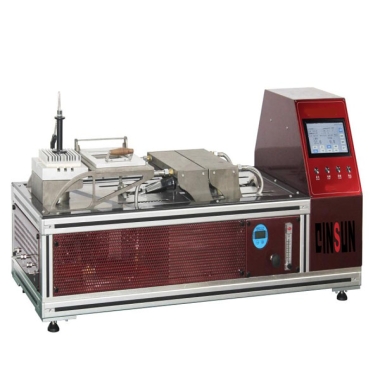
Get a quote:
Whats/App: +86 185 0176 3615
Web: qinsun-lab.com
The thermal protection performance (TPP) tester is mainly used to test the thermal insulation properties of horizontally placed flame retardant protective clothing fabrics exposed to radiant and convective heat sources.measuring the resulting damage to human skin.
Highlights:
Automatic test operation provides repeatable and precise results
Independently controlled radiant heat source and convective heat source
Water-cooled shutter is pneumatically actuated for precise exposure control
Standards
(1) BS EN ISO 6942 – Protective clothing – Protection against heat and flame – Method of test for the determination of heat transfer on exposure to a heat source
(2) EN 366 – Protective clothing against heat and flame – Resistance of materials to contact heat
(3) EN 407 – Protective gloves against thermal risks (heat and/or fire)
(4) ISO 11612 – Protective clothing – Clothing to protect against heat and flame
(5) ASTM F1939 – Standard Test Method for Evaluation of Thermal Protective Performance of Materials for Clothing
(6) ASTM F2702 – Standard Test Method for Heat Transfer and Thermal Protective Performance of Flame Resistant Clothing Materials Using a Thermal Protective Performance Tester
(7) NFPA 1971 – Standard on Protective Ensembles for Structural Fire Fighting and Proximity Fire Fighting
(8) NFPA 2112 – Standard on Flame-Resistant Garments for Protection of Industrial Personnel Against Flash Fire
(9) GB 38543 – Technical Specification for Fire Protection of Workwear for Industrial Personnel
(10) GB/T 38306 – Test Method for Thermal Protective Performance of Flame Retardant Protective Clothing
Principle:
Under exposure to a specified heat flux, the time to second-degree burns is derived from the intersection point of the response curve (temperature rise curve of the calorimetric sensor) and the human tissue tolerance curve (Stoll curve). The higher the product of the heat flux level and the time to second-degree burns, the stronger the thermal protective performance of the fabric.
Feature:
Standard calorimeter mounting block.
PLC control system provides stable and fast testing performance.
Analysis software with user friendly interface is easy to use and installed Stoll curve model internally.
Compact structure design reduces the requirements of fume hood.
Evaluates the potential for skin burns associated with a fabric’s ability to block convective and
radiant heat penetration
Automatic test operation provides repeatable and precise results
Independently controlled radiant heat source and convective heat source
Supports up to three copper disk calorimeter sensor assemblies
Integrated air-cooled sensor stand quickly prepares calorimeter sensor for next test
Water-cooled shutter is pneumatically actuated for precise exposure control
Automatically predicts time to second degree burn, with results shown as a real-time numerical and graphical display of sample performance compared to the Empirical Performance Curve
Small and portable, the TPP test device fits in most standard fume hood
Technical Parameters
| Heat Flux Measurement Range | 0–167 kW/m² |
| Heat Flux Measurement Accuracy | ±2 kW/m² |
| Specimen Irradiated Size | ≥200mm*200mm,for testing flame-retardant protective clothing, fire-fighting suits and protective gloves |
| ConvectionHeatSource | 2Merkel lamps (Heat flux: up to 60 kW/m²; Radiant heat flux: up to 40 kW/m²) |
| Rotor Propane Gas Flowmeter | Provides precise, stable propane flow for the burner |
| Radiant Heat Source | 9pcs of500W infrared quartz lamps (proportional power controlfor0–30 kW/m²radiant heat flux) |
| ASTM F2703Copper Calorimeter | Accuracy±3% F.S.;Weight 1000±10 g |
| Copper Calorimeter Copper Plate | Imported Oxygen-Freesuperconductingcopper |
| Data Acquisition System Sampling Rate | ≥20samples/second |
| Environment | 15–35℃ |
| Fume Hood | Recommended internal dimensions ≥150×75×90 cm, including door height |
| Gas Source | Propane (Purity≥95%, equipped with pressure reducing valve - cylinder & outlet pressure controlled) |
| Compressed Air | Customer-supplied |
| Cooling Water Source | Tap water (inlet & outlet) or optional chiller |
| Power supply | Single phaseAC220V 50Hz |
| Dimension | 130×65×53cm (LXWXH) |
| Weight | Around 60kg |
Send product request
Other supplier products
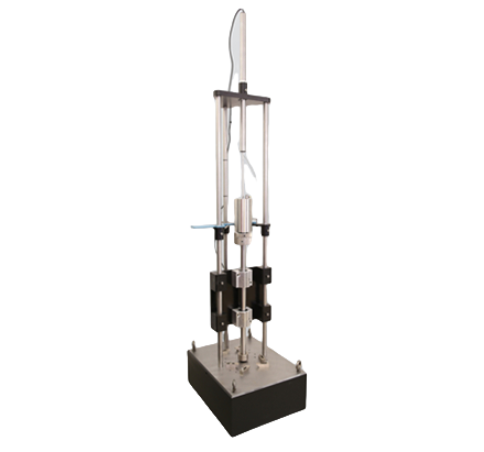 |
Athletic Footwear Shock Attenuating Tester | Get a quote: Whats/App: +86 185 0176 3615 Web: qinsun-lab.com The Athletic Footwear Shock Attenuating Tester is primarily used to test the shock... |
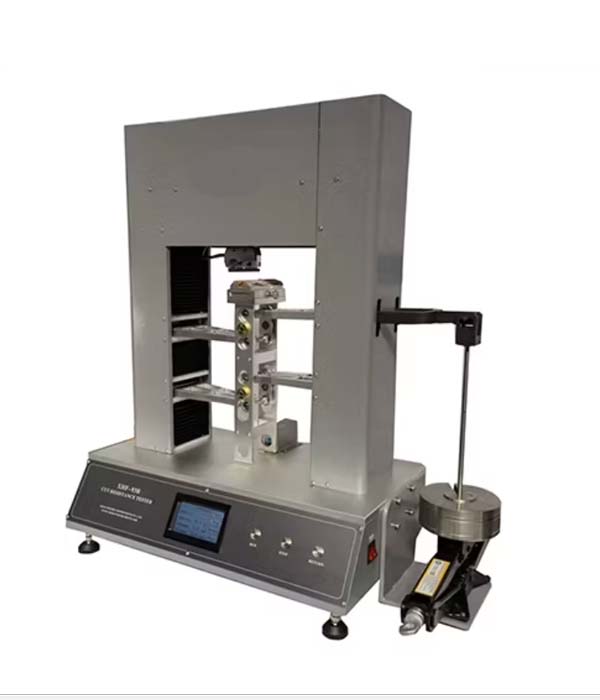 |
TDM Cutting Resistance Tester | Get a quote: Web: qinsun-lab.com Email:serving@qinsun-lab。com The TDM straight blade travels once across the test material and is only used once... |
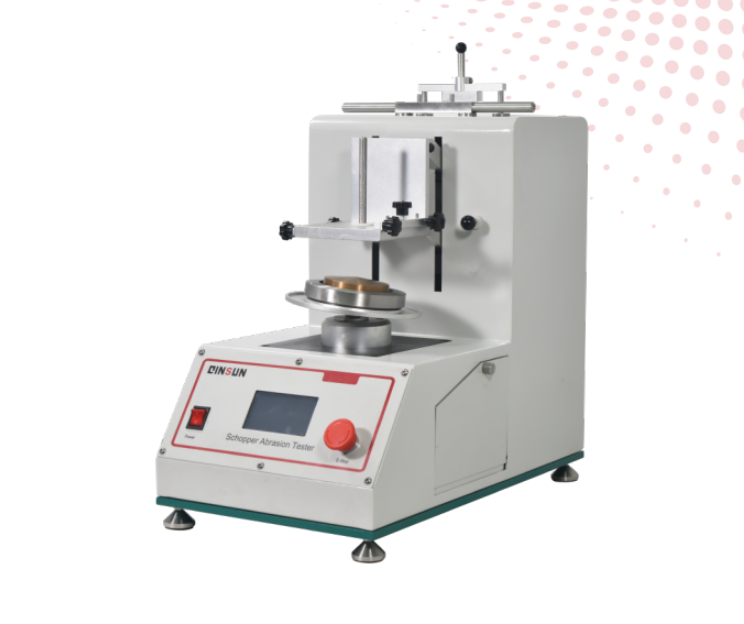 |
Schopper Abrasion Tester | Get a quote: Whats/App: +86 185 0176 3615 Web: qinsun-lab.com Email: serving@qinsun-lab。com Standards DIN 53863. Part 2: Abrasion test methods... |
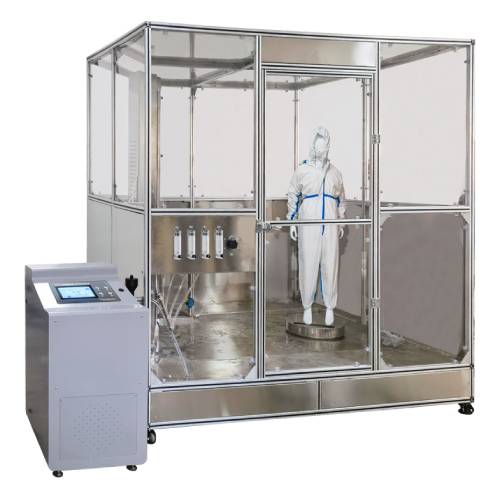 |
Acid and Alkali Protective Clothing Splash and Spray Liquid Tightness Tester | Get a quote: Web: qinsun-lab.com Email:info@qinsun-lab。com The Acid and Alkali Protective Clothing Splash and Spray Liquid Tightness Tester is d... |
 |
Electric Toothbrush Air Tightness Testing Equipment | Get a quote: Whats/App: +86 185 0176 3615 Web: qinsun-lab.com The Electric Toothbrush Air Tightness Testing Equipment is a dedicated instrument ... |
Same products
 |
Choosing the Right Equipment for Heavy-Duty Cleaning | Seller: Taizhou Feike Mechanical Technology Co., Ltd. | FEIKE’s High Pressure Washer is designed for industrial cleaning, equipment maintenance, ve... |
 |
ER4043 Silicon Aluminum Welding Wire | Seller: 868776 | Hangzhou Kunli Welding Materials Co., Ltd. offers ER4043 Silicon Aluminum Welding Wire for alumin... |
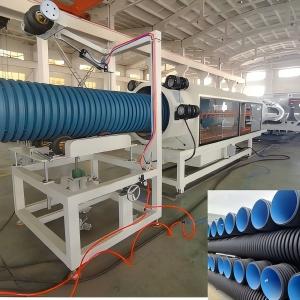 |
HDPE High Speed Water Cooled Double Wall Corrugated Pipe Extrusion Line | Seller: Shandong HUASU Plastic Technology Co.,Ltd. | The molds adopt the double flow channel structure and nitriding polishing processed die head. Thi... |
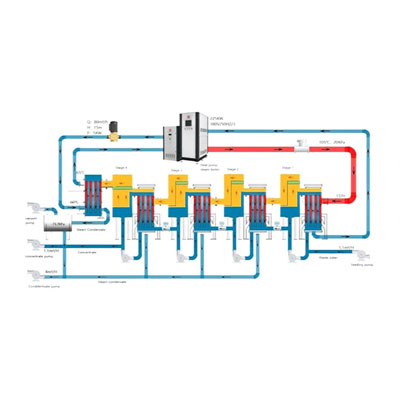 |
PanEVAP & MVR system | Seller: Yangzhou Panstar Heat Exchanger Equipment Co., Ltd | A multiple-effect evaporator is a device that efficiently uses steam heat to evaporate water. Wat... |
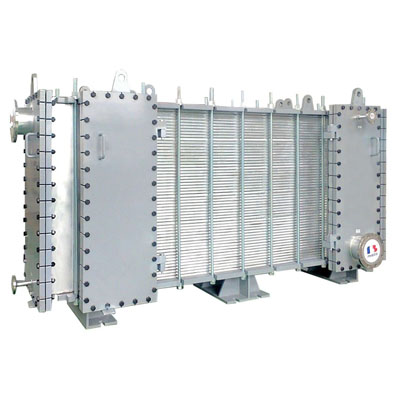 |
PanGAP wide gap welded plate heat exchanger | Seller: Yangzhou Panstar Heat Exchanger Equipment Co., Ltd | PanGAP wide gap welded plate heat exchangerconsists of a welded plate pack with different channel... |

