

NEXGEN Aviation Fuel Burner,Jet fuel combustion test equipment

Whats/App: +86 156 1874 6768
Web: standard-groups.com
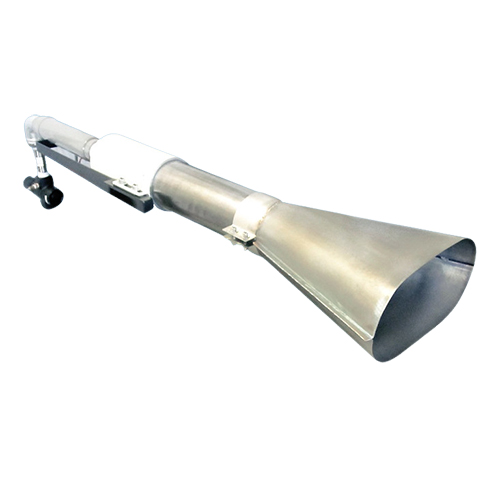
The NEXGEN Aviation Fuel Burner is an FAA-approved, next-generation aircraft fuel combustion testing instrument. It builds upon the operational principles of previous FAA-recognized burners, including Park DPL 3400. Lennox Model OB-32. and Carlin Model 200 CRD, which are now discontinued. You can use the NexGen Burner to precisely control fuel and airflow parameters during tests while maintaining compatibility with future FAA upgrades. This burner supports a wide range of aviation fuel combustion tests, ensuring accurate, reproducible evaluation of flame spread, heat release, and fire resistance for aircraft materials.
Application
The NexGen Aviation Fuel Burner is suitable for a variety of aerospace testing applications:
Aircraft Cabin Materials: Evaluate seat cushions, insulation, and cabin panels for flame spread and smoke toxicity in compliance with FAR 25.853. FAR 25.855. and FAR 25.867.
Cargo Compartment Materials: Conduct burn-through resistance testing on cargo liners and panels.
Soft and Hard Tubing Assemblies: Test fuel, hydraulic, and electrical conduit assemblies under controlled flame conditions.
Electrical Components and Engine Assemblies: Assess fire resistance of electric motor housings, connectors, and wiring.
Material R&D and Certification: Support aerospace material certification for FAA and international standards.
Typical test materials include seat foams, insulation panels, composite laminates, electrical housings, tubing, and other interior aircraft components.
Standards
The NexGen Burner supports compliance with multiple international aviation and safety standards:
BSS 7303 – Aerospace composite material combustion and heat release testing.
BSS 7323 – Aerospace material smoke generation and toxicity evaluation.
BSS 7387 – Aerospace material flame spread and combustion behavior testing.
AITM 2.0056 – Cone calorimeter heat release rate measurement.
AITM 2.0010 – Smoke generation measurement for aerospace materials.
AITM 2.0009 – Flame spread performance measurement for aerospace materials.
FAR Part 25 Appendix F Part II – Cabin material combustion, flame spread, and smoke toxicity testing.
FAR Part 25 Appendix F Part III – Cabin material flame spread and smoke performance measurement.
FAR Part 25 Appendix F Part VII – Cabin material heat release and combustion performance testing.
ISO 2685:1998 – Fire resistance testing methods for aerospace materials.
Domestic Standards: MH/T 6086. HB 7263. MH/T 6041. GB/T 25352. HB 7044 – Various fuel combustion and burn-through testing methods.
Parameters
| Parameter Category | Details |
|---|---|
| Dimensions | 20 mm (W) × 1150 mm (L) × 250 mm (D) |
| Weight | 10 kg |
| Flame Temperature | ≥ 2000 ± 50 ℉ |
| Flame Heat Flux | ≥ 10.6 W/cm² |
| Power Supply | 220 V, 5 A |
| Fuel Requirement | Aviation Grade 2 Fuel |
| Gas Requirement | Compressed air ≥ 120 psi |
Features
Burner cone made from corrosion-resistant, high-temperature alloy.
Complete assembly includes diffuser, fuel nozzle, igniter, fuel rail, mounting bracket, ventilation duct, housing, silencer, and acoustic barrier.
Equipped with fuel pressure gauge, fuel solenoid valve, fuel temperature sensor, air regulator, and air temperature sensor.
Temperature-controlled fuel and air baths (≥ 2 × 0.14 m³) maintain stable testing conditions.
Adjustable fuel nozzle and air pressure allow compliance with various test standards.
Insulation blankets cover fuel lines and burner body for safety and heat containment.
Capable of providing flame temperatures of at least 2000 ± 50 ℉.
Capable of providing flame heat flux of at least 10.6 W/cm².
Accessories
Fuel and air temperature control bath
Fuel solenoid valve and pressure gauge
Igniter assembly
Adjustable fuel nozzle
Insulation blankets and acoustic silencer
Mounting brackets and ventilation duct
Air regulator and temperature sensors
Test Procedures
Ensure installation space allows safe operation and access.
Connect the burner to 220 V, 5 A power supply.
Connect aviation-grade fuel and confirm compressed air supply ≥ 120 psi.
Mount the burner securely with insulation blankets applied to fuel lines and housing.
Adjust fuel nozzle and air pressure according to the selected test standard.
Activate the igniter to start the flame.
Monitor fuel flow, air pressure, flame temperature, and heat flux using gauges and sensors.
Conduct burn-through or flame spread tests on the sample material.
Record all test data for compliance reporting.
Shut off fuel and air supply, and allow the burner to cool before disassembly.
Maintenance Information
Regularly inspect burner cone, fuel nozzle, and igniter for corrosion or wear.
Verify fuel and air lines for leaks or blockages before each test.
Calibrate temperature and pressure sensors periodically.
Clean insulation blankets and acoustic components as required.
Replace worn or damaged safety devices immediately to maintain operational integrity.
Send product request
Other supplier products
 |
Medical Face Mask Differential Pressure Tester | Whats/App: +86 156 1874 6768 Web: standard-groups.com Medical face mask differential pressure tester also called mask breathility tester is to de... |
 |
Electrical Pencil Hardness Testing Device (for Electric pencil hardness tester) | Whats/App: +86 156 1874 6768 Web: standard-groups.com Product Introduction: This machine is suitable for all kinds of finished product spray har... |
 |
ASTM E662 Fire Smoke Analysis Equipment Manufacturer | Get a quote: Whats/App: +86 156 1874 6768 Web: standard-groups.com E-mail:info@standard-groups。com Parameters ItemSpecification Tub... |
 |
Laboratory expansion tank pressure tester | Whats/App: +86 156 1874 6768 Web: standard-groups.com The Expansion Tank Static Pressure Test Machine is a specialized system designed to evaluat... |
 |
Metal Corrosion Resistance Testing Machine Manufacturer | Get a quote: Whats/App: +86 156 1874 6768 Web: standard-groups.com Standards It conforms to the United Nations Recommendations on the Transport... |
Same products
 |
ER4047 Aluminum Mig Welding Wire | Seller: 868776 | Hangzhou Kunli Welding Materials Co., Ltd. specializes in manufacturing reliable welding material... |
 |
ER4043 Silicon Aluminum Welding Wire | Seller: 868776 | Hangzhou Kunli Welding Materials Co., Ltd. specializes in manufacturing high-quality welding mate... |
 |
Choosing the Right Equipment for Heavy-Duty Cleaning | Seller: Taizhou Feike Mechanical Technology Co., Ltd. | FEIKE’s High Pressure Washer is designed for industrial cleaning, equipment maintenance, ve... |
 |
ER4043 Silicon Aluminum Welding Wire | Seller: 868776 | Hangzhou Kunli Welding Materials Co., Ltd. offers ER4043 Silicon Aluminum Welding Wire for alumin... |
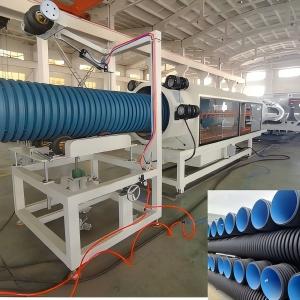 |
HDPE High Speed Water Cooled Double Wall Corrugated Pipe Extrusion Line | Seller: Shandong HUASU Plastic Technology Co.,Ltd. | The molds adopt the double flow channel structure and nitriding polishing processed die head. Thi... |

