

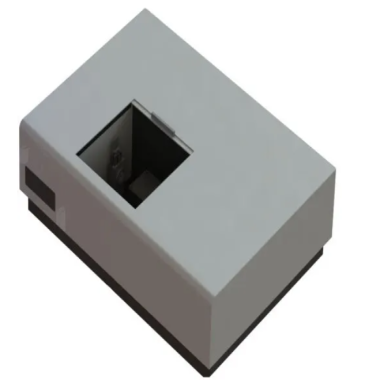
Contact Lens Luminous Transmittance Analyzer

Whats/App: +86 156 1874 6768
Web: standard-groups.com
The Contact Lens Luminous Transmittance Analyzer is a precision instrument designed to measure the spectral transmittance of soft and hard contact lenses, including hydrogel, silicone hydrogel, artificial cornea, RGP, and Ortho-K lenses. The instrument integrates a built-in integrating sphere to ensure highly accurate measurements that comply with international standards. It features a specially designed lens clamp that prevents deformation, enabling reliable and repeatable results. This analyzer is ideal for manufacturers, laboratories, and research institutions focusing on optical performance evaluation and quality control of contact lenses.
Application
(1) Measurement of spectral transmittance for soft contact lenses (hydrogel/silicone hydrogel/artificial cornea).
(2) Measurement of spectral transmittance for hard contact lenses (RGP, Ortho-K).
(3) Quality control in contact lens manufacturing.
(4) Research and development of new lens materials with specific optical properties.
(5) Verification of compliance with national and international standards for ophthalmic optics.
(6) Optical characterization for product certification and regulatory submission.
Standards
(1) GB/T 11417.5 – Ophthalmic optics – Contact lenses – Spectral transmittance test method.
(2) ISO 18369 – Ophthalmic optics – Contact lenses – Requirements and test methods.
(3) ANSI Z80.20 – American National Standard for Contact Lens Optical Properties.
(4) ISO 8980-4 – Ophthalmic optics – Lenses for correction of vision – Part 4: Transmittance specifications.
(5) IEC 61010 – Safety requirements for laboratory and measuring equipment.
Features
(1) Built-in integrating sphere ensures uniform illumination and accurate lens transmittance measurement.
(2) Specially designed lens clamp prevents deformation for both soft and hard lenses.
(3) Wide spectral range (280–780 nm) for comprehensive optical evaluation.
(4) Adjustable wavelength interval (1–10 nm) for high-resolution measurement.
(5) High measurement accuracy with transmittance repeatability <1% and absolute error <1%.
(6) Supports measurement in air or solution (pure water or standard saline).
(7) User-friendly software interface compatible with Windows 7/8/10/11.
(8) Data output via USB for easy integration with laboratory information systems.
Technical Parameters
| Parameter | Specification |
|---|---|
| Measurement Medium | Air, solution (pure water or standard salt solution) |
| Measuring Aperture | 6 mm |
| Maximum Lens Diameter | 18 mm |
| Wavelength Range | 280–780 nm |
| Wavelength Interval | 1–10 nm adjustable (default 5 nm) |
| Transmittance Repeatability | <1.0% |
| Absolute Transmittance Error | <1.0% |
| Instrument Size (W×D×H) | 600 × 440 × 190 mm |
| Weight | ~26.5 kg |
| Power Supply | AC 100–220 V, 50 Hz, 150 W |
| Operating System | Windows 7/8/10/11 |
| Data Interface | USB |
Accessories
(1) Lens clamp for soft and hard lenses.
(2) Integrating sphere (built-in).
(3) Calibration standards for spectral transmittance.
(4) Software suite for data acquisition and analysis.
(5) USB data cable.
(6) User manual and compliance certificates.
Test Procedures
Place the contact lens into the special clamp to ensure zero deformation.
Select the measurement medium (air or solution).
Set the desired wavelength range and interval in the software.
Initiate the spectral transmittance measurement.
Record the transmittance data and verify against specifications.
Repeat measurements for additional lenses or multiple trials as required.
Export results via USB for documentation or further analysis.
Maintenance Information
(1) Clean the lens clamp and integrating sphere regularly to prevent contamination.
(2) Calibrate the instrument periodically using standard reference filters or lenses.
(3) Ensure the measurement medium is free of bubbles or impurities.
(4) Avoid direct sunlight and dust accumulation on optical components.
(5) Store the instrument in a dry, temperature-controlled environment.
(6) Update software and firmware as recommended by the manufacturer.
Send product request
Other supplier products
 |
Incline Impact Tester | Whats/App: +86 156 1874 6768 Web: standard-groups.com Standard ASTM D7748: Impact resistance testing of packaging and transport systems. ISO ... |
 |
Aerosol Foams Flammability Tester | Whats/App: +86 156 1874 6768 Web: standard-groups.com Product Introduction This product complies with "Recommendations on the Transport of Dange... |
 |
Sliding Bearing Fatigue Testing Machine | Whats/App: +86 156 1874 6768 Web: standard-groups.com The sliding bearing fatigue testing machine is an important testing device, mainly used to ... |
 |
Automatic catheter strength instrument | Whats/App: +86 156 1874 6768 Web: standard-groups.com Standards The instrument is compliant with the following standard: (1) YY 0325-2016 &ndas... |
 |
Safety Helmet Impact Energy and Penetration Test System for R&D Use | Get a quote: Whats/App: +86 156 1874 6768 Web: standard-groups.com Standards (1) GB/T 2811-2019 – Helmet safety and impact resistance (2... |
Same products
 |
KL‑016A Benchtop High‑precision pH Meter | Seller: Kelilong Electron Co.Ltd | Product Description: Large‑screen display with high resolution and precision for con... |
 |
Large Naïve VHH Library | Seller: AlpVHHs | Large Naïve VHH Library VHHare single-domain antibodies derived from the variable regions o... |
 |
pH-2398 pH/EC/ORP/Temperature multi-parameter Water Quality Tester | Seller: Kelilong Electron Co.,Ltd | Feature Large display screen, capable of simultaneously measuring water quality pH, redox potent... |
 |
ORP-2026S Waterproof Soil ORP and Temperature Meter | Seller: Kelilong Electron Co.,Ltd | 范围 ORP -999~999mV Temp 0~50℃ 分辨率 ORP 1mV... |
 |
TDS-2616 Waterproof EC/TDS/Temperature Meter | Seller: Kelilong Electron Co.,Ltd | Range EC ~19.9mS TDS Temp 0~50℃ R... |

