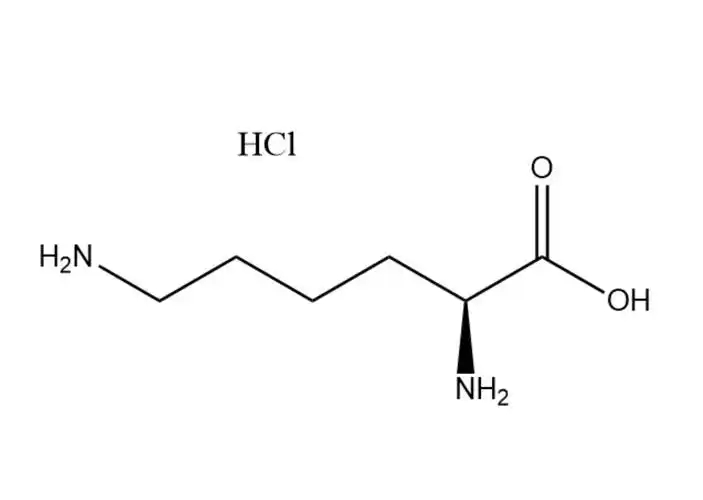
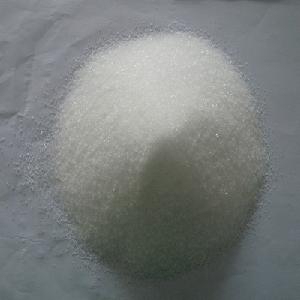
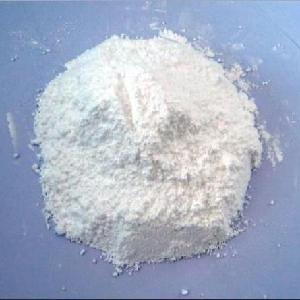
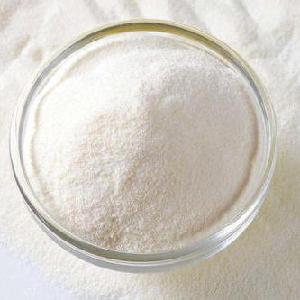
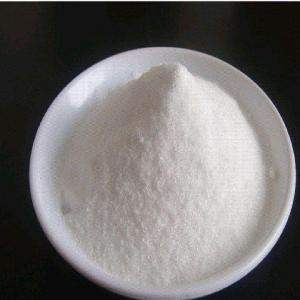
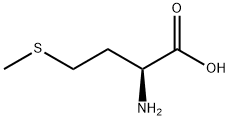
L-Lysine monohydrochloride

Density and Refractive Index of L-Lysine monohydrochloride
Bulk density: 0.6–0.8 g/cm³ (crystalline powder); tap density: 0.8–1.0 g/cm³— favorable for industrial packaging, transportation, and formulation (low caking tendency).
True density: 1.24 g/cm³ (crystalline solid, 25 °C).
Refractive index: nD20 = 1.485 (for a 10% w/v aqueous solution)— a reference value for qualitative and quantitative analysis (e.g., refractometry).
Optical Activity of L-Lysine monohydrochloride
As a chiral L-amino acid salt, it exhibits optical rotation— a key property for identifying its chirality and purity (distinguishing from D-lysine or racemic DL-lysine):
Specific rotation ([α]D25): +20.3° to +21.5° (for a 10% w/v aqueous solution, measured with sodium D line (589 nm), 25 °C, 1 dm polarimeter tube).
The specific rotation is constant for pure L-lysine monohydrochloride; a deviation from this range indicates the presence of D-lysine, racemates, or other impurities— a critical quality control index in industrial production.
Другие товары поставщика
|
|
DL-Alanine Powder |
Ultraviolet (UV) light and intense visible light can accelerate the oxidation of DL-Alanine’s amino group (-NH₂), leading to the formation of... |
|
|
High quality |
The storage methods for L-Cysteine hydrochloride monohydrate are crucial to maintain its stability and functionality, primarily due to its hygrosco... |
|
|
L-Threonine |
Nutritional Fortification and Amino Acid Supplementation Essential Amino Acid Addition: L-Threonine is an essential amino acid for humans (cannot b... |
|
|
Sucralose powder Food additive |
Sucralose, as a new generation of high-sweetness sweetener, has demonstrated comprehensive and outstanding application advantages in the fields of ... |
|
|
DL-Methionine |
Spectral Characteristics of DL-MethionineInfrared (IR) spectrum: Characteristic absorption peaks of DL-methionine include: 3300–3500 cm⁻¹... |
Все товары поставщика
Похожие товары