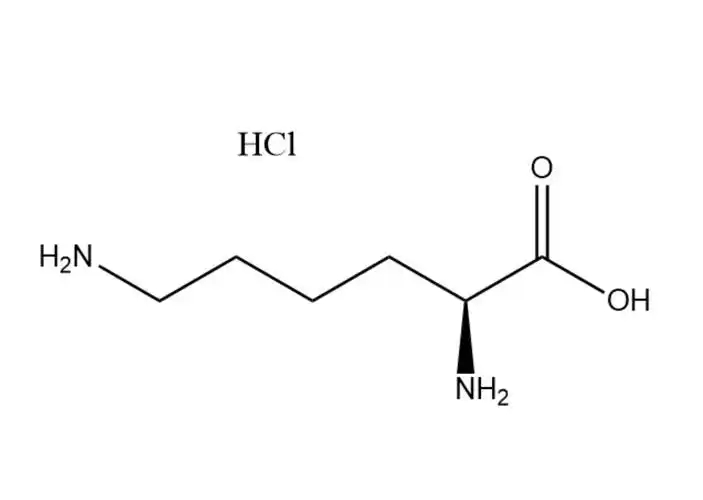
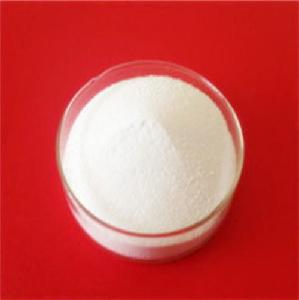
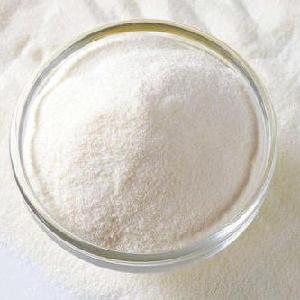
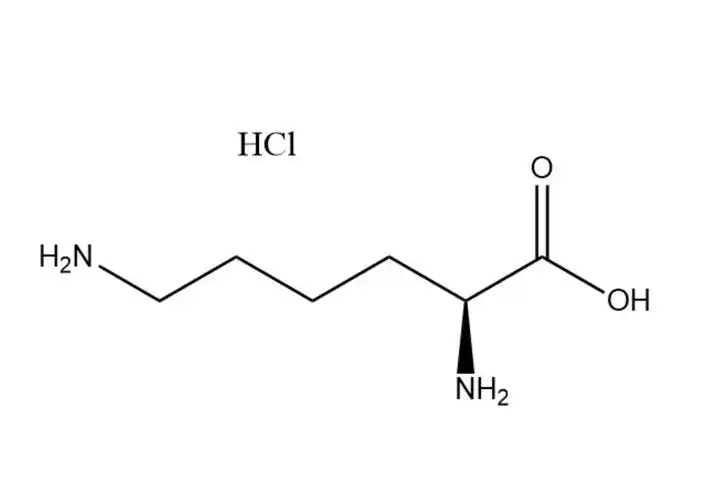
Wholesale L-Lysine monohydrochloride

Density and Refractive Index of L-Lysine monohydrochloride
Bulk density: 0.6–0.8 g/cm³ (crystalline powder); tap density: 0.8–1.0 g/cm³— favorable for industrial packaging, transportation, and formulation (low caking tendency).
True density: 1.24 g/cm³ (crystalline solid, 25 °C).
Refractive index: nD20 = 1.485 (for a 10% w/v aqueous solution)— a reference value for qualitative and quantitative analysis (e.g., refractometry).
Optical Activity of L-Lysine monohydrochloride
As a chiral L-amino acid salt, it exhibits optical rotation— a key property for identifying its chirality and purity (distinguishing from D-lysine or racemic DL-lysine):
Specific rotation ([α]D25): +20.3° to +21.5° (for a 10% w/v aqueous solution, measured with sodium D line (589 nm), 25 °C, 1 dm polarimeter tube).
The specific rotation is constant for pure L-lysine monohydrochloride; a deviation from this range indicates the presence of D-lysine, racemates, or other impurities— a critical quality control index in industrial production.
Other supplier products
|
|
L-Methionine powder Marke quotation |
L-Methionine, as an essential sulfur-containing amino acid with diverse biological functions, has widespread applications across food nutrition, an... |
|
|
L-Threonine 72-19-5 |
Thermal and Chemical Stability of L-ThreonineHeat Resistance: Stable under normal storage conditions but decomposes near its melting point. Prolong... |
|
|
L-Lysine monohydrochloride Manufacturer |
Melting Point and Thermal Properties of L-Lysine monohydrochloride
Melting point (decomposition point): 263–264 °C (dec.). L-lysine mono... |
|
|
L-proline |
The basic information of L-proline1. Chemical structureMolecular formula: C₅H₉NO₂Molecular weight: 115.13 g/molStructural features: The α -am... |
|
|
High quality L-proline |
Metabolism and Safety of L-prolineMetabolic pathway: Mainly metabolized in the liver and kidneys, it is converted into glutamate hemialdehyde throu... |
All supplier products
Same products