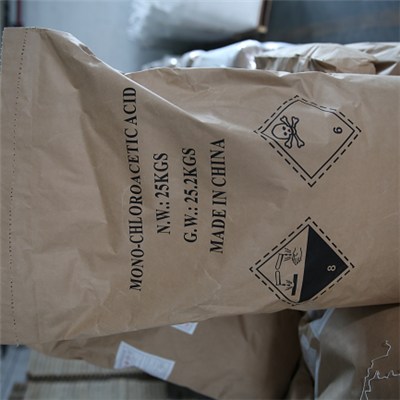
98.5% Chloroacetic Acid Flakes C2H3ClO2


SafetyLike other chloroacetic acids and related halocarbons,Website:, chloroacetic acid is a hazardous alkylating agent. The LD50 for rats is 76 mg/kg.Chloroacetic acid easily penetrates skin and mucous membranes and interferes with cellular energy production. Initial dermal exposure to high concentrations (e.g., 80% solution) may not appear very damaging at first, however systemic poisoning may present within hours. Exposure can be fatal if greater than 6% body surface area is exposed to chloroacetic acid. The sodium salt does not penetrate the skin as well as the acid but can be as damaging given a longer duration and greater surface area of exposure.Upon exposure to chloroacetic acid, immediate decontamination should be commenced by rinsing the affected area with water or bicarbonate solution in order to neutralize the acid and prevent further skin absorption.The antidote of chloroacetic acid poisoning is sodium dichloroacetate (50 mg/kg IV over 10 mins, repeated in 2h; double dosage if hemodialysis is performed).
Other supplier products
|
|
|
1 Name:1.1 Name: Chloroacetic acid (Monochloroacetic acid) (Flakes)1.2 Molecular Formula: C2H3ClO21.3. Molecular Weight: 94.51.4 CAS No: 79-11-81.5... |
|
|
|
Chloroacetic acid,Website:, industrially known as monochloroacetic acid (MCA) is the organochlorine compound with the formula ClCH2CO2H. This carbo... |
|
|
|
1 Name: 1.1 Name: Pivalic Acid1.2 Molecular Formula: C5H10O21.3 Molecular Weight: 102.131.4 CAS No: 75-98-91.5 RTECS No:TO77000001.6 UN No: 3261 8/... |
|
|
|
SafetyLike other chloroacetic acids and related halocarbons,Website:, chloroacetic acid is a hazardous alkylating agent. The LD50 for rats is 76 mg... |
|
|
|
Names IUPAC nameChloroacetic acidSystematic IUPAC nameChloroethanoic acidIdentifiers CAS Number79-11-8ChEBICHEBI:27869ChEMBLChEMB... |
供应产品
Same products