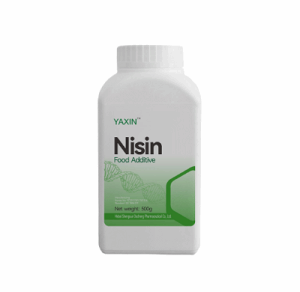
Nisin 500g
The antibacterial mechanism of Nisin does not affect human cells
Nisin exerts its antibacterial effect by destroying the cell membranes of bacteria, especially Gram-positive bacteria such as Staphylococcus aureus and Listeria. However, the cell membrane structure of human cells (such as animal cells) is significantly different from that of bacteria (without a peptidoglycan layer), and Nisin cannot bind to them, thus being non-toxic to human cells.
It has a relatively weak effect on Gram-negative bacteria (such as Escherichia coli) and needs to be used in combination with an acidic environment or chelating agents (such as EDTA) to further reduce the impact on the normal intestinal flora of the human body.
Other supplier products
|
|
Nisin |
Nisin is a natural polypeptide antibacterial substance produced by Streptococcus lactis. Its acute oral toxicity in rats is LD₅₀ > 2000 mg/kg bo... |
|
|
Nisin |
Nisin exhibits outstanding performance in food preservation due to its potent antimicrobial properties, which make it effective against a broad spe... |
|
|
Nisin 500g/1Kg/25Kg |
Narrow Antimicrobial Spectrum:Ineffective against gram - negative bacteria, yeasts, and molds unless combined with other agents.pH - Dependent Acti... |
|
|
Nisin Powder |
Compatibility with Food ProcessingSynergy with Other Preservatives:Works well in combination with other antimicrobials (e.g., lactic acid, EDTA, ly... |
|
|
Natamycin |
·Appearance: Natamycin is a near-white or cream-yellow crystalline powder, odorless and tasteless. ·Solubility: It is practically ins... |
供应产品
Same products