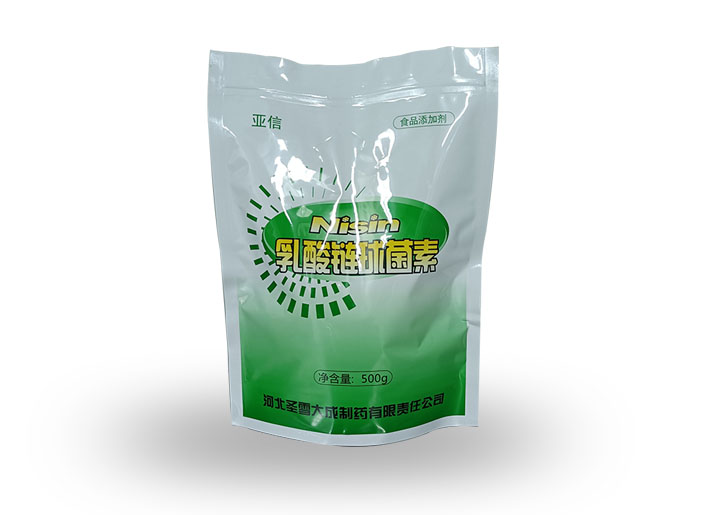
Nisin Raw Material
Nisin is widely approved for use in food globally, with strict safety standards:
- GRAS designation: The FDA (U.S.) and EFSA (EU) have classified nisin as GRAS, with no established acceptable daily intake (ADI) limit—meaning it is safe for consumption at the recommended doses.
- International standards: The Codex Alimentarius Commission (CAC) has set maximum residue limits (MRLs) for nisin in foods, ranging from 0.02–0.1 mg/kg (equivalent to 80–400 IU/kg) depending on the product.
- Safety profile: Nisin is degraded by digestive enzymes (e.g., peptidases) in the human gut, so it is not absorbed into the bloodstream and has no toxic effects. It does not alter the gut microbiota (as it targets only Gram-positive pathogens) and has no known allergenicity.
Other supplier products
|
|
Nisin Powder Price 1kg |
Poor stability in certain environments (e.g., neutral pH, high-fat matrices) can be addressed via modification technologies, which improve stabilit... |
|
|
Nisin Powder |
Key Recommendations for pH - Related StorageDry Storage: Keep nisin powder in a dry, sealed container to prevent moisture - induced pH changes.Solu... |
|
|
Market quotation |
A core advantage of nisin is its outstanding safety profile, which is recognized globally by regulatory authorities (e.g., the U.S. FDA, EU EFSA) a... |
|
|
Nisin in Beverages |
Application in Beverages: Controlling Heat-Resistant Spores and Microbial GrowthBeverages (e.g., fruit juices, beer, functional drinks) face risks ... |
|
|
Colistin Sulfate Soluble Powder 30% |
产品名称:生雪长清 通用名称:硫酸粘菌素可溶性粉活性成分:硫酸粘菌素描述:生雪长清为白色或类白色粉末简介:硫酸粘菌素可溶性粉是一种兽药,用于治疗家畜的细菌感染,特别是家禽和猪。该药物为可溶性粉末,可与饮用水混合制成药物溶液。硫酸粘菌素可溶性粉的主要活性成分是硫酸粘菌素,一种多肽抗生素。硫酸粘菌... |
供应产品
Same products