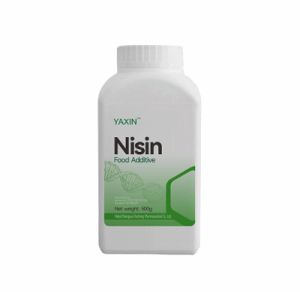
Nisin Raw Material widely approved
Nisin is widely approved for use in food globally, with strict safety standards:
- GRAS designation: The FDA (U.S.) and EFSA (EU) have classified nisin as GRAS, with no established acceptable daily intake (ADI) limit—meaning it is safe for consumption at the recommended doses.
- International standards: The Codex Alimentarius Commission (CAC) has set maximum residue limits (MRLs) for nisin in foods, ranging from 0.02–0.1 mg/kg (equivalent to 80–400 IU/kg) depending on the product.
- Safety profile: Nisin is degraded by digestive enzymes (e.g., peptidases) in the human gut, so it is not absorbed into the bloodstream and has no toxic effects. It does not alter the gut microbiota (as it targets only Gram-positive pathogens) and has no known allergenicity.
Other supplier products
|
|
Natamycin Purchase price |
Natamycin has been allowed to be added to foods in several countries around the world, such as:American countries: The United States officially app... |
|
|
High quality Nisin Powder |
Key Recommendations for pH - Related StorageDry Storage: Keep nisin powder in a dry, sealed container to prevent moisture - induced pH changes.Solu... |
|
|
Nisin 500g 1kg 25kg |
Nisin is a natural antimicrobial peptide that is produced by certain strains of bacteria, particularly Lactococcus lactis. It is a member of the cl... |
|
|
Nisin Wholesale Price 500g |
Nisin can be normally metabolized by the human bodyThe essence of Nisin is a polypeptide composed of 34 amino acids. After entering the human body,... |
|
|
Nisin Supplier |
Solubility: Nisin's solubility varies with pH. For example: In water (pH = 7), its solubility is 49.0 mg/ml In 0.02M hydrochloric acid, its solubil... |
All supplier products
Same products