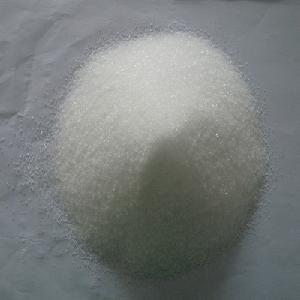
DL-Alanine

While not a direct preservative, DL-Alanine can indirectly help maintain food quality and extend shelf life through two auxiliary mechanisms: 1. Modulating water activity (aᵥ) to reduce microbial growth potential Water activity (aᵥ) is a critical factor for microbial growth—most spoilage bacteria require an aᵥ > 0.85 to proliferate. DL-Alanine is highly soluble in water, and when added to food, it binds to free water molecules (via hydrogen bonding between its amino/carboxyl groups and water). This slightly lowers the food’s aᵥ, creating a less favorable environment for microbial growth. Example: In baked goods (e.g., bread, pastries) or low-moisture snacks (e.g., cereal bars), adding 0.2%–0.5% DL-Alanine can reduce aᵥ by ~0.02–0.05, slowing mold growth and extending shelf life by 2–3 days. However, this effect is mild compared to dedicated humectants (e.g., glycerin) or preservatives (e.g., calcium propionate, which directly inhibits mold). 2. Antioxidant synergy to reduce nutrient degradation and rancidity DL-Alanine can chelate trace metal ions (e.g., iron, copper) present in food. These metal ions act as catalysts for lipid peroxidation (which causes fatty foods to become rancid) and nutrient oxidation (e.g., degradation of vitamin C or B vitamins). By binding these ions, DL-Alanine indirectly slows down oxidative deterioration: Example: In fried snacks (e.g., potato chips) or nut butters, adding small amounts of DL-Alanine (0.1%–0.3%) can delay the development of "rancid off-flavors" by reducing lipid oxidation, extending the product’s sensory shelf life. However, this is a secondary effect—primary antioxidants (e.g., vitamin E, rosemary extract) are still required for robust oxidation control.
Other supplier products
|
|
DL-Alanine |
DL-Alanine is recognized asGenerally Recognized as Safe (GRAS)by major regulatory bodies (e.g., FDA in the U.S., EFSA in the EU, and CFSA in China)... |
|
|
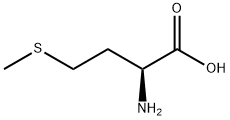
DL-methionine |
The methylthio group is the most distinctive functional group in DL-methionine and can participate in substitution and addition reactions. Alkylati... |
|
|
DL-Alanine |
DL-Alanine’s uses span multiple fields, leveraging its amino acid properties and cost-effectiveness (it is often cheaper to produce than pure... |
|
|
L-Cysteine hydrochloride monohydrate |
L-Cysteine hydrochloride monohydrate is a chemically modified form of the amino acid L-cysteine, widely used in various industries for its unique p... |
|
|
L-lysine monohydrochloride |
The free Cl⁻ ion in the hydrochloride salt form undergoes typical halide ion reactions, which are used for qualitative identification of L-lysine m... |
供应产品
Same products